Fliteboard ride circles the Statue of Liberty in New York Harbor
A Fliteboard circling the Statue of Liberty shows eFoiling’s jump from niche gadget to city-scale culture, with a public launch, 35 mph speeds and major regulation in the mix.
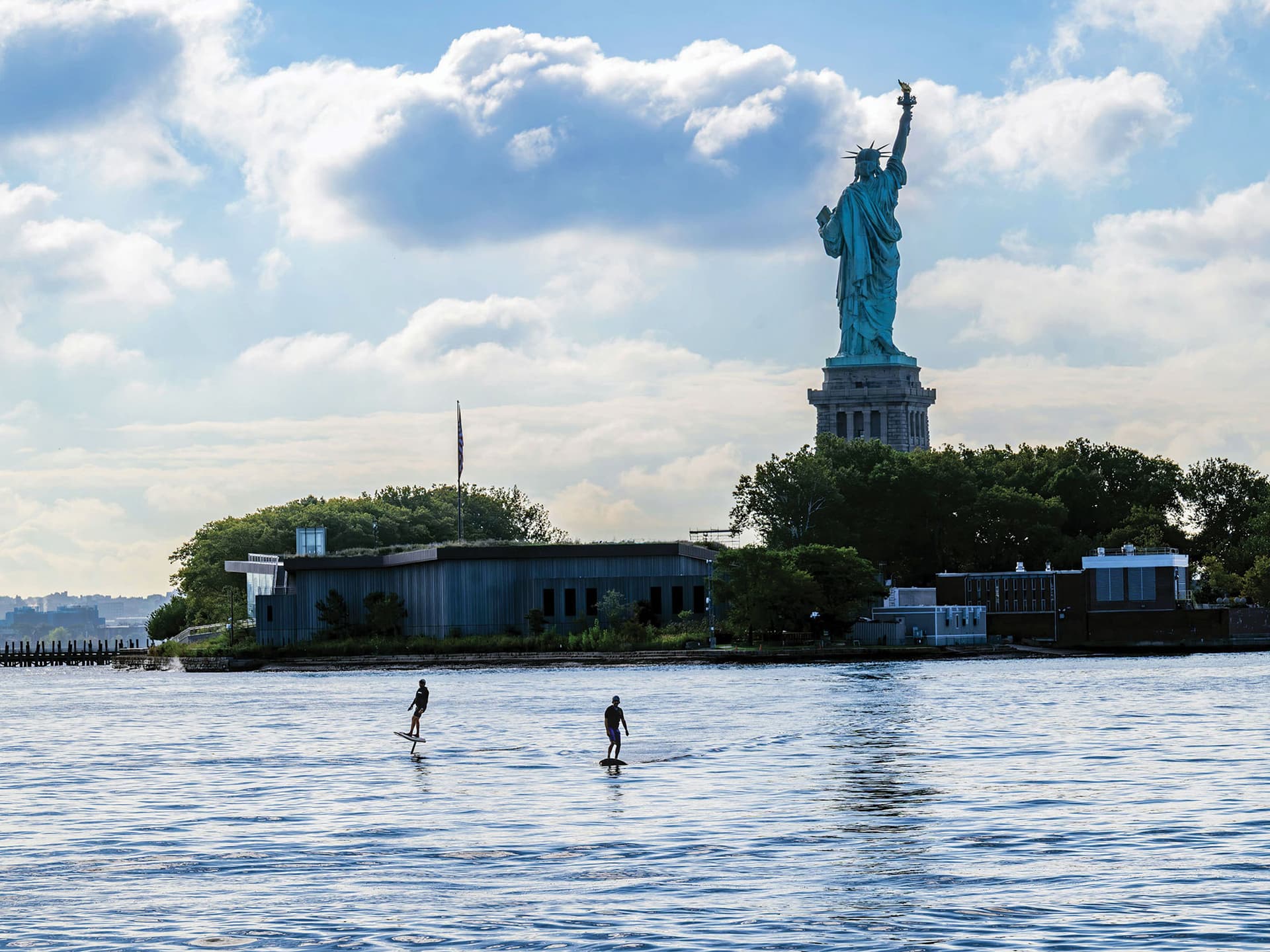
A Fliteboard carving around the Statue of Liberty looks like a stunt, but the real story is bigger: eFoiling is starting to read like a recognizable urban sport, not a novelty reserved for quiet coves and insider circles. The move lands because it happens in New York Harbor, beside a monument that millions know by silhouette alone, and because the board itself is now portable, accessible and polished enough to look at home in that setting.
A public launch point, not a private backdrop
The ride starts on the New Jersey side of New York Harbor, at Liberty Landing State Park, where the public boat ramp and kayak launch put the Hudson River within reach. That matters because the setting is not a private marina or a closed demo pond; it is a real access point in a working waterfront. Rudi Miklosvary, Fliteboard’s vice president of sales, meets the ride there, which gives the scene a commercial edge as well as a sporting one.
Liberty State Park’s official boat launch sits in Parking Lot 2, reinforcing the same point: this is a public harbor entry, not a hidden showcase. When a sport moves into a place like this, it stops being about who can get invited and starts being about who can imagine themselves there. That shift is central to eFoiling’s appeal, because the product has been built around portability and convenience as much as performance.
What changed with eFoiling
The board is described as something that can be carried in a large backpack, loaded into a car and plugged in at the water. That is a big reason the category has grown beyond the old image of a marine toy that needs specialized infrastructure before the fun can begin. Fliteboard’s pitch is also broad on ability, with a learning curve that is manageable enough to make the sport feel reachable rather than exclusive.
At the center of it is a simple machine with a complicated effect: a motorized surfboard with a foil system underneath that works like an airplane wing. Once speed builds, the board and rider lift out of the water, and the whole experience changes from skimming to flying. That is the selling point that matters in a place like New York Harbor, where the visual contrast between heavy landmark and quiet hover does half the work.
How the ride unfolds on the water
The progression is part of the appeal because it is easy to grasp even if the sport itself is still new to many readers. The rider starts by laying flat, uses the trigger on the remote to begin moving, stands up, adjusts weight and then increases speed until the foil generates lift. What looks like a flashy circle around the Statue of Liberty is really a sequence of small technical changes adding up to a moment that feels effortless.
That technical progression helps explain why eFoiling has moved from a curiosity to something closer to a discipline. The ride is not only about balance or speed; it is about the instant when the board stops fighting the water and starts hovering above it. In a harbor this famous, that lift is doing cultural work too, turning a personal-watercraft experience into a public image of motion, control and freedom.
Why the regulation piece matters
The Coast Guard’s policy letter on eFoils and jetboards puts hard numbers around the risk and the regulatory gray area. These mechanically propelled personal hydrofoils can reach speeds in excess of 35 miles per hour, and standard vessel rules do not always fit their design cleanly. That is not a footnote in a story like this; it is the reason location, access and operating conditions matter so much.
The Statue of Liberty setting makes that tension visible. A sport that can move at speed and lift clear of the water is being shown in one of the most heavily managed waterways in the country, where the margin for error is small and the symbolism is huge. The contrast is part of the draw, but it also explains why public launch points and defined operating areas are essential to the sport’s growth.
The harbor gives the story its scale
The Statue of Liberty was officially dedicated on October 28, 1886, and designated a national monument on October 15, 1924. The landmark tied to Frédéric-Auguste Bartholdi’s statue and Richard Morris Hunt’s pedestal has long carried more than tourist value, and in 2023 Statue of Liberty National Monument and Ellis Island drew 3.7 million visitors. Those visitors spent an estimated $250 million in local gateway communities, which shows how much economic weight this harbor carries.
The National Park Service keeps the visitor lane tightly controlled too: Statue City Cruises is the only authorized ticket seller and ferry operator for Liberty and Ellis Islands. That kind of restriction sharpens the visual impact of an eFoil cutting across the same water. The board is not replacing the monument experience, but it is joining the harbor’s public image in a way that makes the sport look less fringe and more culturally legible.
That timing matters even more in the build-up to America’s 250th anniversary celebrations, which are being promoted across the country in 2026, including around New York Harbor. Freedom 250 is already turning the harbor into a civic stage, and the eFoil ride fits that frame cleanly. A sport built around motion, battery power and self-guided access suddenly looks like a modern way to stage American freedom in a place already loaded with that meaning.
From founder idea to bigger marine business
Fliteboard says founder David Trewern originated the idea in 2016, then built dozens of prototypes before flying for the first time. Another marker in the company’s own history is the launch of its second eFoil series in 2019, which shows how quickly the product moved from experiment to platform. That timeline matters because it explains why the boards look so much more refined than a one-off gadget: the category has had years to iterate.
Brunswick Corporation’s acquisition of Fliteboard on September 5, 2023 pushed the brand from founder-led novelty into a larger marine-industry structure. That is the clearest business signal in the story. When a product can travel from prototype-heavy origin, to a public harbor ride near the Statue of Liberty, to a Brunswick-owned platform, it has crossed into the kind of scale that changes how riders, retailers and waterfront cities read it.
This article was produced by Prism’s automated news system from verified source data, official records, and press releases, then run through automated quality and moderation checks before publishing. The system is built and supervised by the people who set the standards it runs under. Read our full AI policy.
Did this article answer your question?