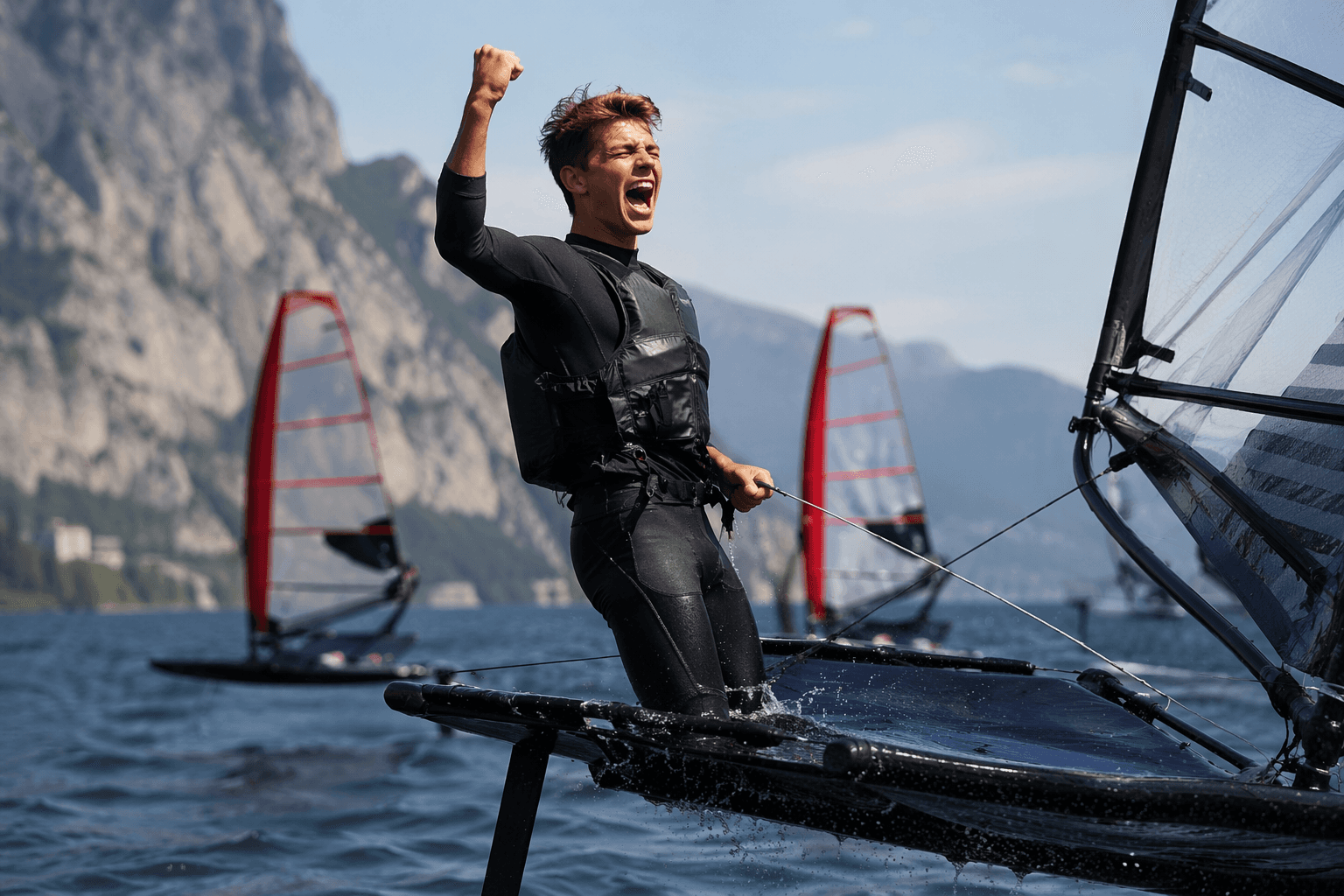
Fliteboard speed guide explains what really determines top-end performance
Fliteboard's speed story is less about a top-speed brag than the setup underneath it, from wing size and board choice to whether the rig is built for racing or control.

What the speed numbers really mean
Fliteboard’s headline speed claim is useful only if it is read as part of a setup, not a standalone stat. The company says a Fliteboard can reach up to 50 km/h, or about 30 mph, with the right configuration, while most eFoils generally sit in the 32 to 48 km/h range, or roughly 20 to 30 mph.
That spread tells the real story: speed on foil is not just about how hard the motor pushes. It is the result of a system, and the board, wing, rider, and water all change how fast the ride feels once the board lifts clear of the surface.
The hardware underneath top-end speed
Fliteboard breaks speed down into thrust, and thrust is more than raw motor power. The propulsion side is shaped by motor output, gearbox or propeller design, and hydrodynamics, which means the engine and foil set work together rather than as separate pieces.
Wing design is one of the biggest variables. Larger wings generate more lift at lower speeds and are easier to manage for beginners, but they also limit top speed. Smaller, more streamlined wings cut drag, carry more pace, and demand more skill because they are less stable when the board is moving quickly.
Board size matters in the same way. Larger boards make takeoff and touchdown calmer, which helps with confidence and balance, while smaller boards move more cleanly once the rider is dialed in. Add rider weight and rider skill to the mix, and the same board can feel leisurely in one hand and aggressive in another.
Why the racing setup is in a different lane
Fliteboard’s current official RACE model pushes the speed conversation into purpose-built territory. The company describes it as its fastest board and says it was co-developed with Mercury Racing for flat-water racing, not wave riding. The RACE setup is quoted at 34 mph, or 55 km/h, and 30 knots, which places it above the general speed band the company uses for most eFoils.
The wing chart reinforces how specific that performance path is. Fliteboard’s wing families include Cruiser, Flyer, Flow, Wave, and Racing, and the Race 700 sits in the Racing category. The company says it performs best in Pro Mode with the propeller guard removed, a detail that makes the tradeoff obvious: more pace, but also a more specialized and less forgiving setup.
That is the clearest reminder for buyers and owners. The question is not simply whether a board is fast, but whether it is fast in a way that matches the rider’s experience, water conditions, and tolerance for instability.
Choosing speed, stability, or efficiency
The best setup depends on what kind of ride comes first. A beginner usually gets more value from controllability and range than from maximum mph, while an advanced rider may want the smallest wing and the cleanest board profile available.
- If stability matters most: look toward larger wings and larger boards. They make takeoff easier, smooth out touchdowns, and reduce the nervousness that comes with learning lift.
- If efficiency matters most: the sweet spot is a balanced setup that keeps drag down without sacrificing too much lift. That is where cruising speed and real-world comfort often beat peak numbers.
- If outright pace matters most: smaller wings, a more performance-oriented board, and a racing-focused setup make the difference. That is where the Race 700 and the RACE board start to make sense.
Fliteboard’s own framing supports that decision-making approach. Speed is presented as a consequence of setup choice, not as an isolated promise on a spec sheet.
The calculator, the model, and the real-world margin of error
Fliteboard’s Foil Time Calculator adds another layer of realism to the speed debate. The company says the software model was checked against real-world rider data and is accurate within 10% in most situations, which is a strong hint that speed claims on foil are always conditional.
That matters because water is never uniform and riders are never identical. A speed estimate built from actual rider data still leaves room for differences in weight, skill, wing choice, and conditions, which is exactly why top-end performance should be read as a range rather than a promise.
It also helps explain why Fliteboard separates the idea of a top speed from the experience of cruising. The point of eFoiling is not only the number on the display. It is the sensation of gliding almost silently above the water, and the best setup is the one that makes that feeling repeatable.
How the category got here
Fliteboard says founder David Trewern had the idea for a motorized hydrofoil in 2016, a lightbulb moment that turned into a company launch in 2018. That same year, Lift Foils says it brought out its own eFoil, and the brand says it invented the category and built the first commercial eFoil eight years ago.
Since then, the community has widened fast. Fliteboard says riders have come into eFoiling from surfing, kitesurfing, snowboarding, skating, wakeboarding, and total beginner backgrounds, which helps explain why the market now stretches from stable entry-level rigs to specialized race machines.
The rules have evolved too. The U.S. Coast Guard issued policy guidance in 2022 stating that mechanically propelled personal hydrofoils, also known as eFoils, are vessels, which means riders may face registration and boating-rule requirements depending on the state. That makes the distinction between the eFoil propulsion unit and the full Fliteboard setup important, because Fliteboard’s FAQ says many people use eFoil to mean the whole ride, even though technically it refers only to the mast and propulsion unit.
The bottom line
Fliteboard’s speed guide is strongest when it shifts the conversation away from bragging rights and toward setup logic. Top-end performance comes from the match between board, wing, propulsion, rider weight, and conditions, and the fastest answer is not always the best one for the water in front of you.
For one rider, the right board is the one that feels stable, predictable, and efficient. For another, it is the one with the smallest wing, the sharpest release, and the most aggressive pace. In eFoiling, speed is real, but fit is what makes it usable.
This article was produced by Prism’s automated news system from verified source data, official records, and press releases, then run through automated quality and moderation checks before publishing. The system is built and supervised by the people who set the standards it runs under. Read our full AI policy.
Did this article answer your question?