Foil Magazine checks how long PWR-Foil batteries really last on water
PWR-Foil’s real ride time is less about the spec sheet than the session you plan. Weight, speed, restarts, and battery choice decide whether you get 45 minutes or nearly 3 hours.
Why autonomy is the real question on water
The sharpest question in electric foiling is not how fast the board goes, but how long the session actually lasts. Foil Magazine’s May 28 checkup on PWR-Foil batteries treats autonomy as the main event, and that is exactly the right frame for riders who care about whether a day on the water feels smooth or battery-anxious.
PWR-Foil’s own lineup shows why the issue matters. The company says its three batteries offer autonomy from 45 minutes to 2 hours 30 minutes depending on size, and its guidance makes clear that the number on the spec sheet is only the starting point. In real use, the rider, the conditions, and the way the craft is ridden all shape what happens next.
What PWR-Foil says each battery really delivers
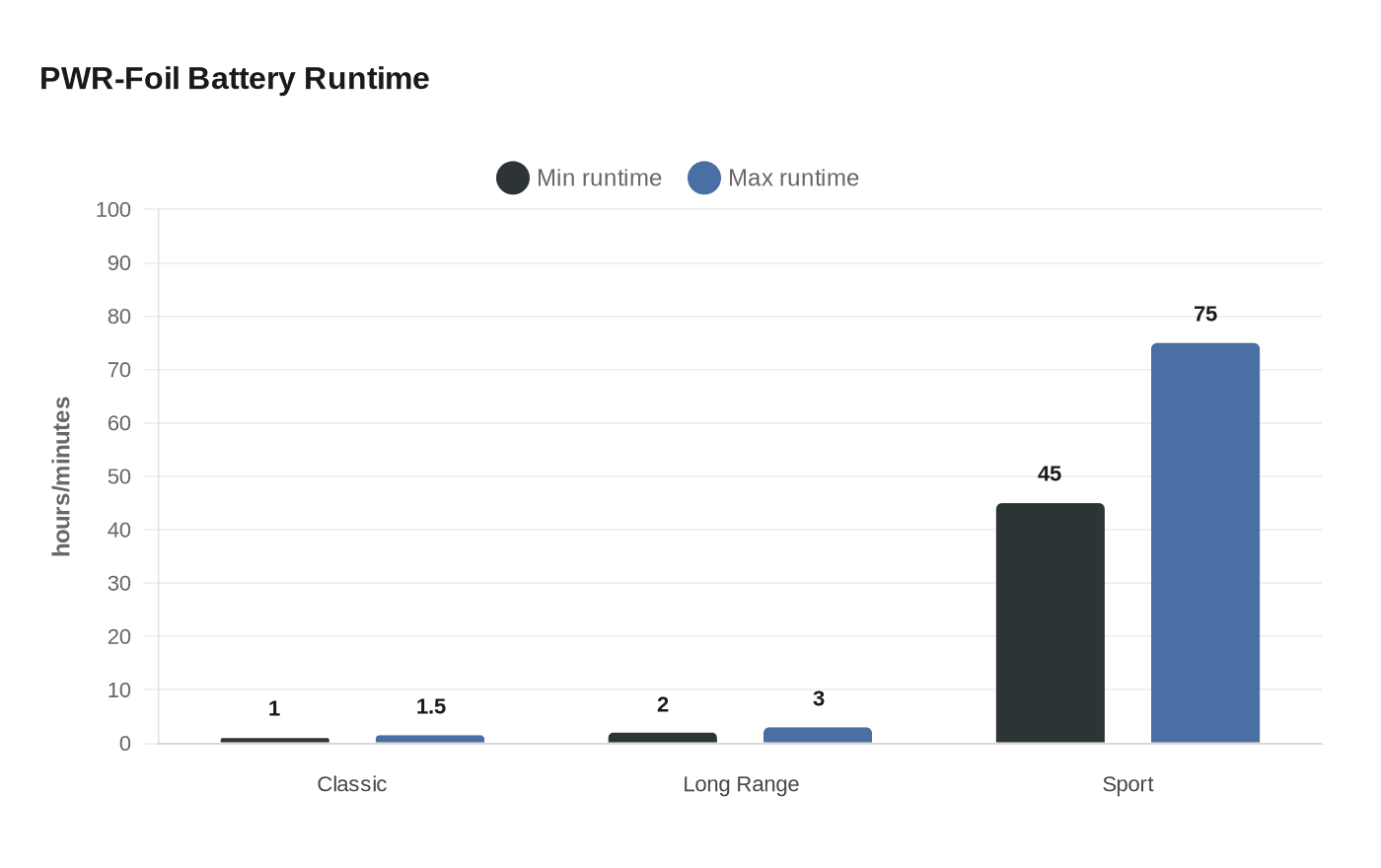
The Classic battery is the baseline reference point. PWR-Foil says it weighs 10.5 kg and delivers about 1 hour to 1 hour 30 minutes for a rider around 75 kg under normal riding conditions. That is a meaningful session, but it is not an all-day pass, and the company’s language makes clear that normal riding is doing some heavy lifting there.
At the other end of the range is the Long Range battery. PWR-Foil says a good rider can fly for roughly 2 to 3 hours with it, which is the kind of runtime that changes how a session is planned. Longer outings become possible, and the battery starts to feel less like a limiting factor and more like part of the day’s setup.
The Sport battery is the lighter, shorter-session option. PWR-Foil says it saves about 30% in weight while delivering roughly 45 to 75 minutes of ride time depending on rider weight and experience. That makes it the most obviously session-specific choice in the lineup, especially for riders who want less heft in transport and do not need the longest possible runtime.
One more operational detail matters here: PWR-Foil says a full charge takes about 40 minutes. That is quick enough to shape a day around multiple outings, but it does not erase the reality that battery management still determines how much time you actually get on the water.

What drains the battery faster than the brochure suggests
The biggest runtime variable is rider weight. Fliteboard says a heavier rider might get about 60 minutes of ride time on the same battery that could deliver up to 90 minutes for a lighter rider, and that difference explains why autonomy numbers are always a range, never a promise. The board is carrying not just the battery, but the rider’s body through water and air.
Riding style matters just as much. Fliteboard says aggressive riding, higher speeds, frequent turns, and jumps drain batteries faster than calm cruising. In other words, a relaxed line across flat water and a hard, stop-start session do not produce the same result, even if the battery pack is identical.
Beginners can also burn through charge faster than expected. Repeated starts, falls, and restarts add friction that does not show up in headline runtime claims, but it shows up quickly in the water. That is why autonomy is not just a battery story. It is a skill, style, and conditions story.
Why battery choice changes ownership value
The real ownership question is not whether the board can fly, but which battery turns the board into the kind of product you will actually use. A battery that is too short can make a session feel rushed; a battery that is too large can add weight and transport hassle that you feel every time you lift the gear, pack the car, or carry it to the water.
That is why PWR-Foil’s older guidance has been so consistent: choose the battery based on the kind of riding you actually do, not only on the biggest number attached to capacity. The Classic option suits normal sessions, the Long Range battery is aimed at longer rides, and the Sport battery fits riders who care more about lighter handling than maximum time on the water.
This is also where autonomy becomes more than a marketing line. It affects whether you plan one focused session or build a whole afternoon around the board. It also affects whether the battery feels like an asset or a compromise, because ride time, weight, and recharge speed are inseparable in e-foiling.
The wider eFoil market is making the same tradeoff
PWR-Foil is not alone in having to balance runtime against portability. Fliteboard’s own range chart tells the same story in different numbers: the Flitecell Nano weighs 6.2 kg and offers up to 45 minutes, the Flitecell Sport weighs 10.6 kg and has 1.6 kWh capacity with up to 1.5 hours of foil time, and the Flitecell Explore weighs 14.5 kg with 2.1 kWh capacity and is built for longer ride time.
That spread shows how the category is evolving. Battery choice is no longer a side note buried under speed claims or board styling. It is part of the riding experience itself, alongside wing choice, board weight, intended conditions, and the practical question of how far from shore you want to be when the session starts to run long.
Fliteboard also says it has more than 300 locations worldwide, and that many people can learn to eFoil in less than one hour. That broader reach matters because it pushes autonomy from a niche owner concern into a mainstream buying decision. Once more riders can try the sport quickly, they start asking the same thing the most experienced buyers ask: how long does the battery really last when the day is not perfect?
The bottom line on PWR-Foil autonomy
Foil Magazine’s autonomy check works because it cuts through the easy part of the pitch. PWR-Foil’s batteries are not just different in size. They are different ways of packaging a session, whether you want a lighter Sport battery, a standard Classic setup, or the longer-running Long Range option.
The practical takeaway is simple. If you ride heavier, push harder, or spend time restarting after falls, your real runtime will come in below the top-line number. If you ride smoothly, keep speeds in check, and match the battery to the day, autonomy becomes a planning tool rather than a problem. That is the real value in the PWR-Foil story: the battery does not just power the board, it shapes the whole session.
This article was produced by Prism’s automated news system from verified source data, official records, and press releases, then run through automated quality and moderation checks before publishing. The system is built and supervised by the people who set the standards it runs under. Read our full AI policy.
Did this article answer your question?