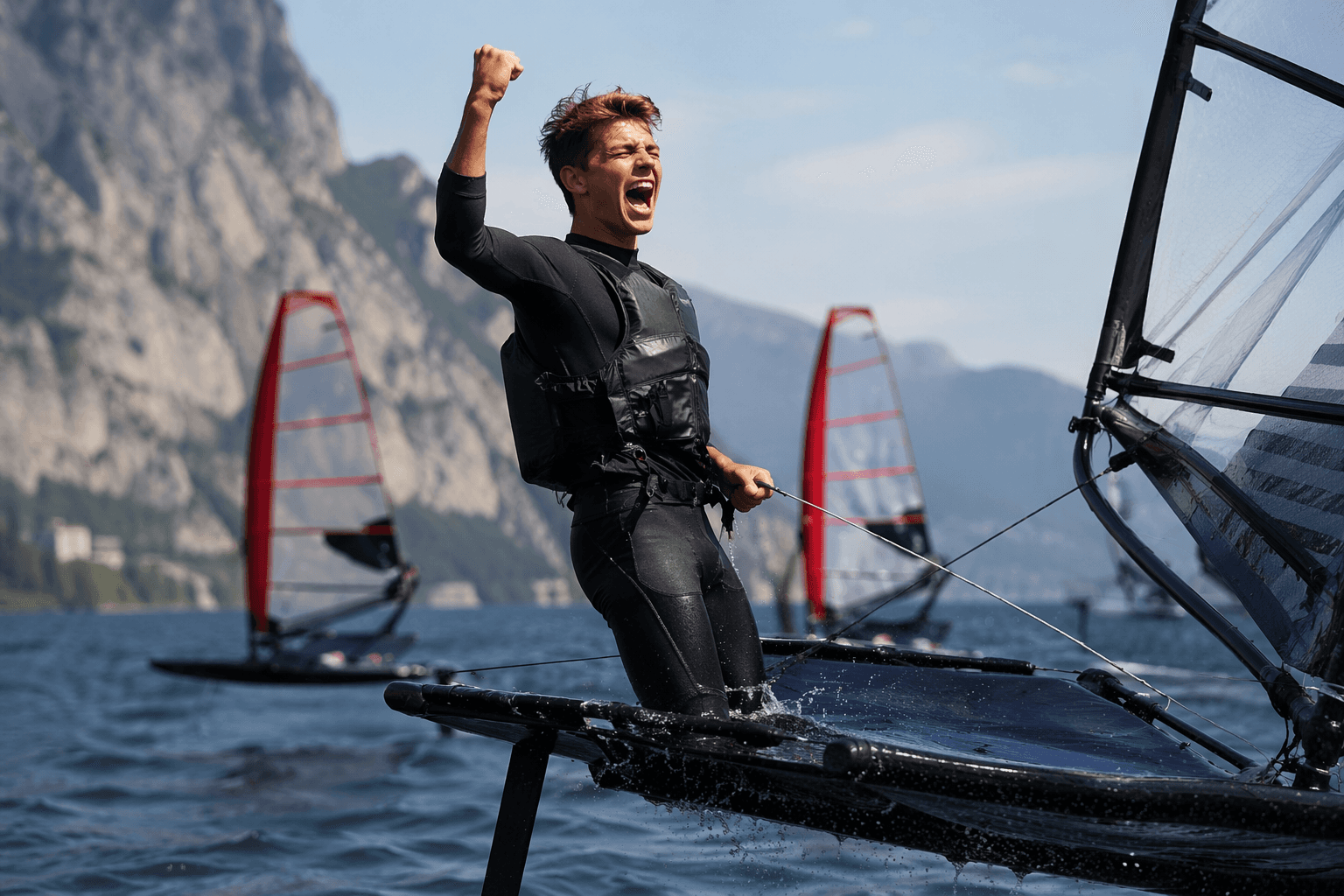
Foil surfing explained, how lift and balance keep riders flying
Foil surfing is a lift-and-balance game, not a rail game. Once the wing engages, tiny stance errors matter more than brute force, especially in weak swell.
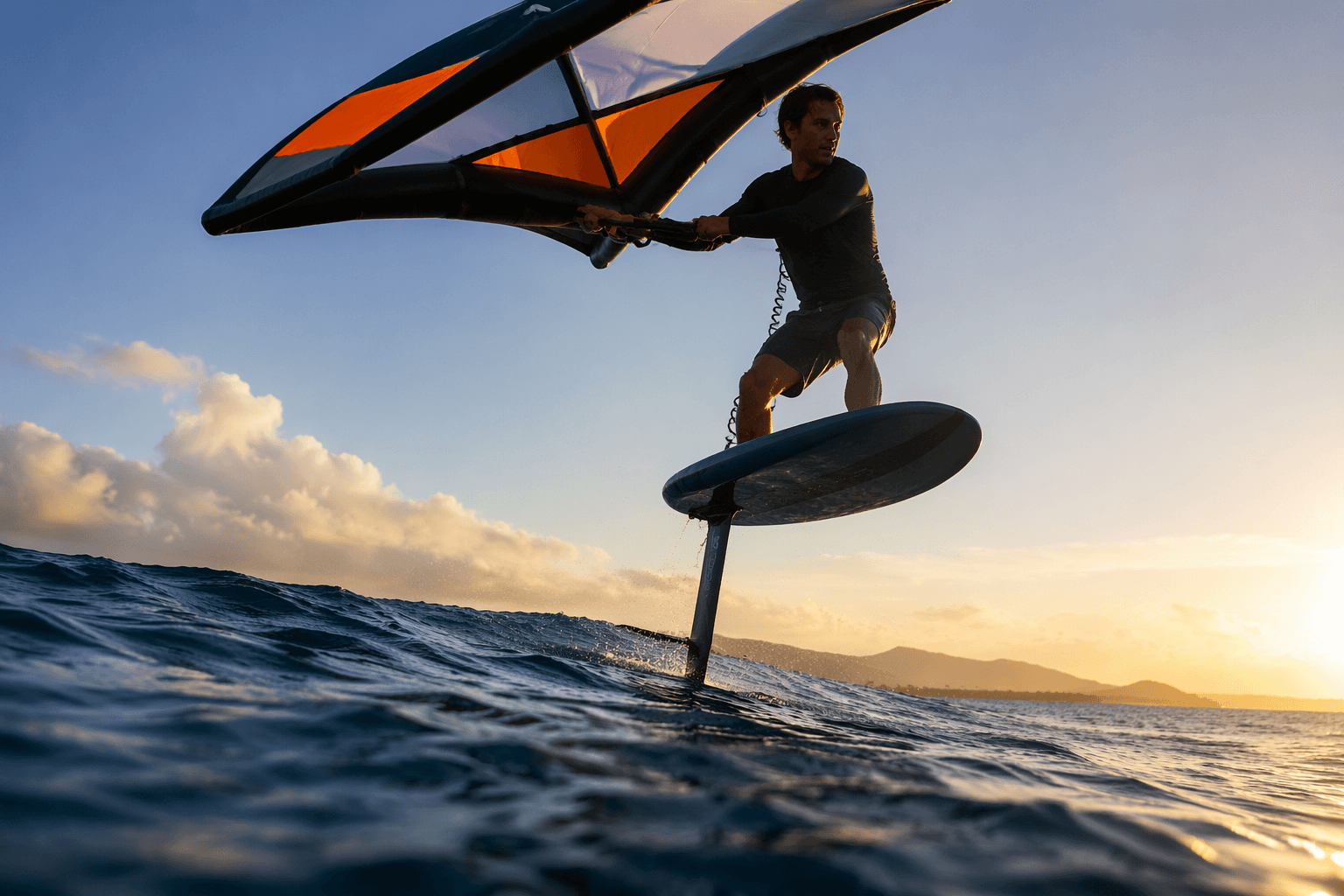
Once the underwater wing finds enough energy from the wave or swell, the hull lifts clear of the surface, drag drops, and the ride turns into a balancing act above the water rather than on it. That is why a foil can work in small, soft surf that would leave a conventional shortboard stranded.
Why a foil board flies
A hydrofoil surfboard is not just a short board with a different fin. It is a surfboard with an underwater wing system built to create lift, and the key change is what happens after the wave starts pushing water past that wing. Instead of staying in displacement mode, the craft can rise into foiling mode, with the hull out of the water and the rider moving over a cleaner, faster platform.
That shift also explains why foil surfing feels so different from traditional surfing. On a regular surfboard, the rail helps you hold an edge and recover when you lean hard into a turn. On a foil board, there is no rail engagement to save a big, sloppy movement, so the rider lives on trim, stance, gaze, and small pressure changes that keep the wing stable.
The three parts that matter most
The setup is easier to understand when you break it into the pieces that actually do the work.
- The board platform, sometimes described as the payload, is the surface you stand on and the part that gets you into position.
- The fuselage is the connector that links the board to the wing system and helps set the overall geometry.
- The wing is the lift-maker, the part that catches water flow and raises the board once there is enough energy under the surface.
That is why foil selection matters so much for the kind of water you want to ride. In low-energy swell or very small waves, the wing is doing the heavy lifting, literally, so the setup can feel alive in conditions that would barely move a standard surfboard. The board itself is the platform; the wing is the reason the ride exists.
Balance starts forward, not centered
The first lesson for anyone stepping onto a foil board is that balance is not the same as on a regular surfboard. Riders paddle with the chest positioned farther forward than they would on a standard board, then stand with feet roughly shoulder-width apart and keep steady pressure on the front foot. The board wants to climb once the foil engages, so the rider has to stay ahead of that motion instead of reacting to it.
In The Foiling Magazine guide, a stance with more than 70 percent of body weight on the front foot usually needs to move farther forward. The rider’s balance depends on subtle weight shifts, not big corrections, and the sweet spot is typically centered over the front wing.
If the board keeps breaching too early or bobbing instead of flying, the problem is often not speed but stance. Riders who understand where lift starts, and where their weight should sit over the front wing, can progress faster because they stop fighting the foil and start managing it.
Why small surf can still feel fast
Foil surfing keeps getting attention because it unlocks sessions that would otherwise look unrideable. A small, rolling wave still has enough energy under the surface to load the wing, so foil riders can draw speed from water movement that a standard board might not convert into a memorable ride. That is a major reason the discipline has spread beyond big-wave novelty and into everyday conditions.
It also changes what “good conditions” means. The goal is not always a steep face or a long open wall; sometimes it is any bit of energy the foil can turn into glide. That is why foil surfing has grown alongside other foiling disciplines like wingfoiling, windsurf foiling, wake foiling, SUP foiling, and tow-assisted big-wave foiling, where the same lift principle is adapted to different water and wind setups.
A sport with deeper roots than its image
The modern look of foil surfing hides a long engineering history. The first hydrofoil patent dates to 1869, granted to Emmanuel Denis Farcot for a rowing-boat concept meant to lift the vessel in the water and reduce draught. Enrico Forlanini built an early powered hydrofoil boat in 1906, and it reached 36.9 knots.
The modern surf version runs through names such as Laird Hamilton, Kai Lenny, and Mango Carafino, riders who helped move hydrofoils from laboratory idea to something that could be surfed.
Safety, crowds, and the rules around motorized foils
The same submerged wing that gives foil surfing its magic also makes it controversial in crowded lineups. A foil can move through water space in a way that makes collisions more serious, and that has turned the sport into a real etiquette problem in shared surf zones. A near-miss foil collision at Chicama in Peru showed how quickly a quiet session can become a public argument about space, respect, and risk.
Beginner safety advice centers on helmets, impact vests, and avoiding shallow or crowded water, while a 2021 medical study on hydrofoil sailing found that the technology increases speed and can expose participants to high-energy trauma. For motorized personal hydrofoils and motorized surfboards, the U.S. Coast Guard went further and issued Policy Letter 01-22 in 2022, a sign that the category had grown important enough to merit formal guidance on law enforcement, titling, and registration.
This article was produced by Prism’s automated news system from verified source data, official records, and press releases, then run through automated quality and moderation checks before publishing. The system is built and supervised by the people who set the standards it runs under. Read our full AI policy.
Did this article answer your question?