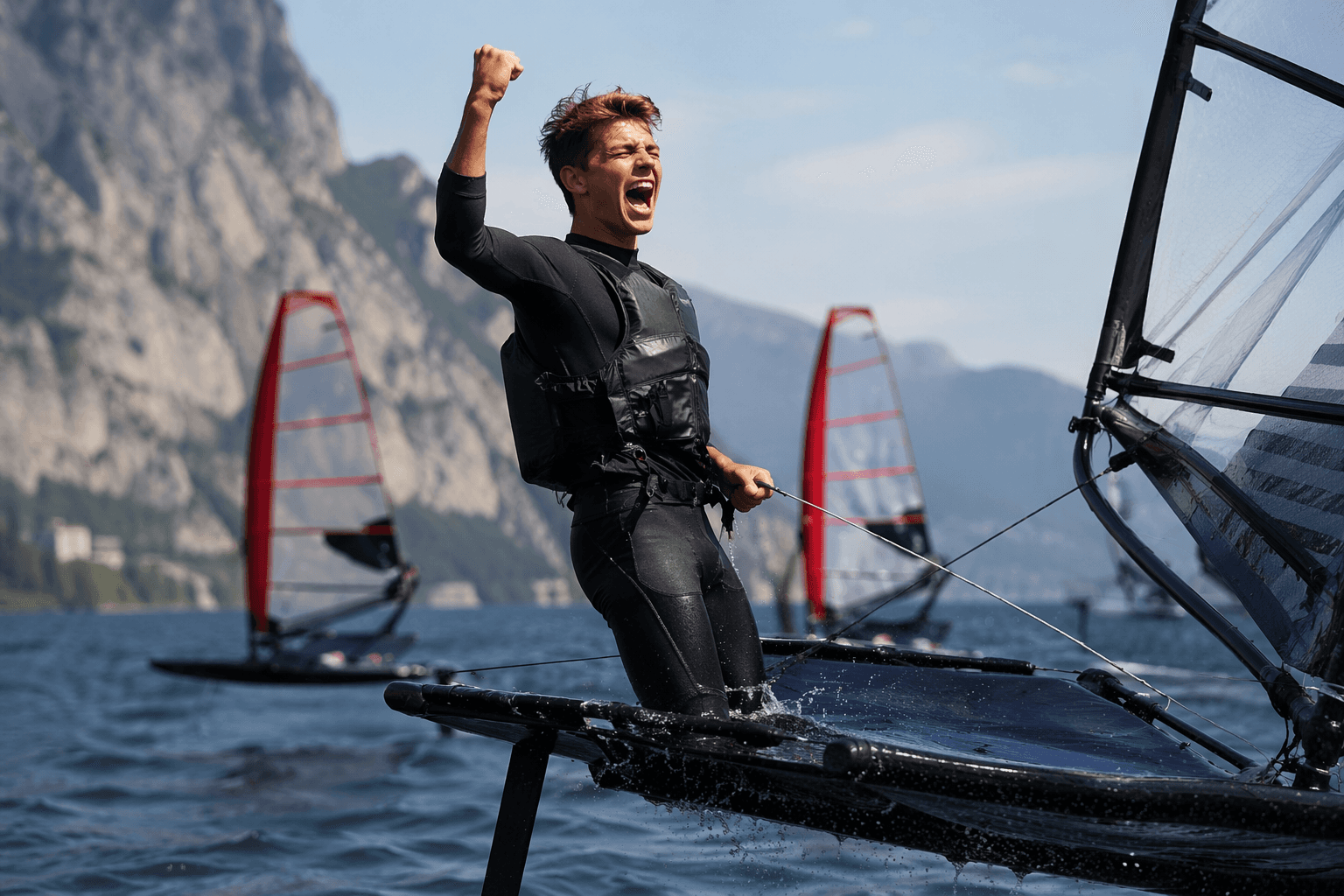
Foiling Week highlights data-driven load sensing for faster, repeatable settings
Foiling Week is proving that the fastest setup can matter more than raw talent. Cyclops-style load sensing is pushing foiling toward repeatable, measured performance.
The fastest boat in Malcesine is not always the one with the loudest pedigree; it is the one whose crew can find the quickest settings, measure them, and hit them again. That is the performance argument at the center of Foiling Week, which runs June 27 to July 5, 2026 on Lake Garda and marks the event’s 13th edition.
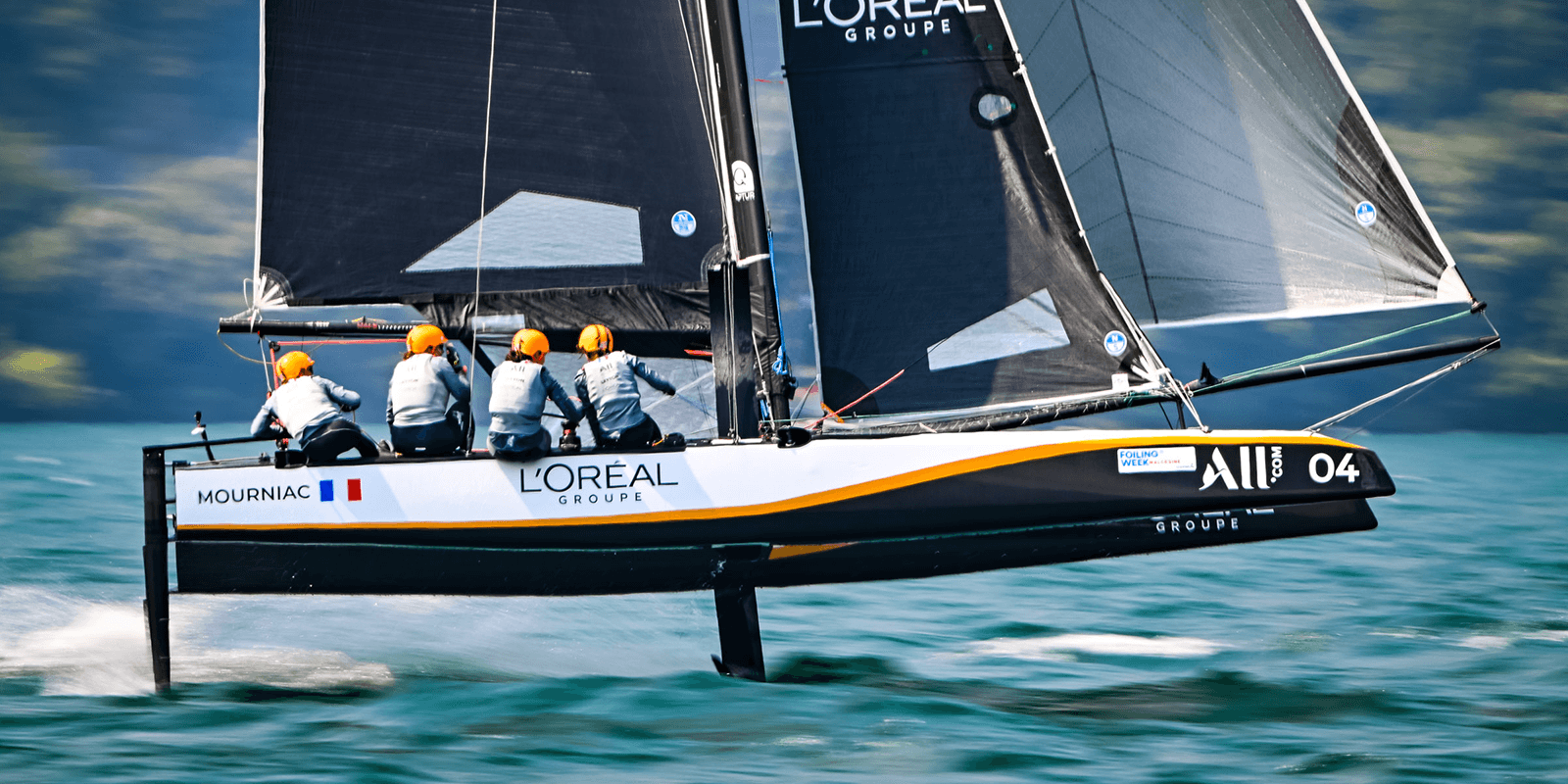
Organizers frame Foiling Week as the world’s premier foiling event and the world’s first event fully dedicated to foiling boats, designers, and builders behind them. The 2026 program stretches well beyond racing, with experiences, an expo, workshops, conferences, boat tests, and community events, while more than 500 foilers, team members, and stakeholders are expected to gather in Malcesine.
Load sensing is becoming the real tuning edge
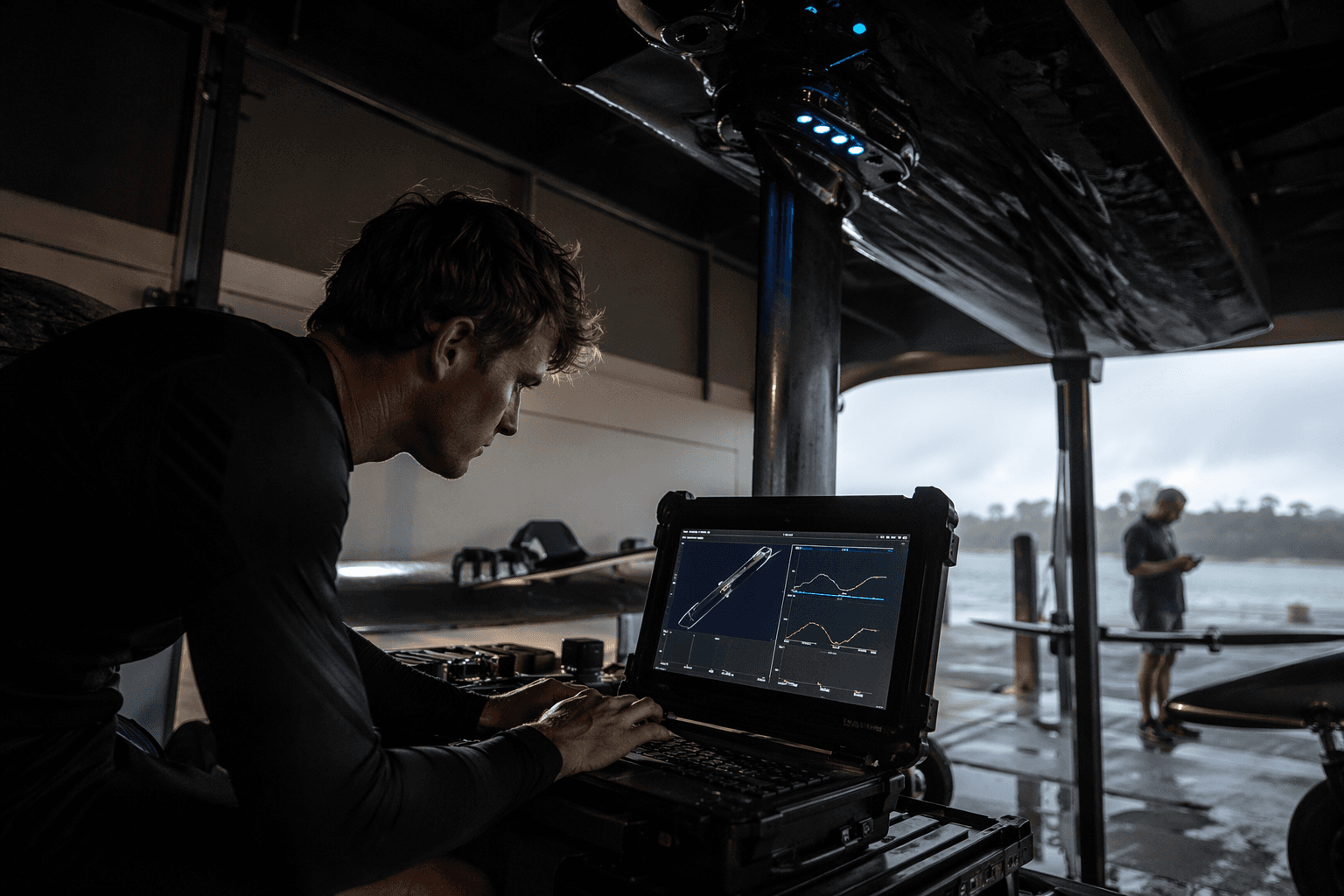
In the most advanced foiling classes, the winning difference is often not a single magic rig tune but the ability to repeat a fast setting with precision. Cyclops Marine’s approach puts a wireless load sensor most commonly in the vang system, then sends the numbers to a Vakaros Atlas 2 display so sailors can see the load live on the water. The point is direct: if a crew knows the exact load that produced speed, it can recreate that setup race after race instead of chasing feel.
That shift matters because foiling rewards small gains that are easy to miss by eye. A sailor who can compare live load data with a target number has a clearer picture of whether the rig is working as intended, and that opens the door to cleaner speed without wasted motion or unnecessary strain. In practice, the data becomes both a performance benchmark and a consistency check.
What the sensor-display pairing changes
- The sensor sits in the vang system, where load reveals a lot about how the rig is working.
- The Atlas 2 can show live readout on the water, so adjustments can be made immediately.
- The same system can log data for review after sailing, turning a race day into a training dataset.
- Instead of guessing at a fast setting, sailors can hit and repeat the number that already proved quick.
That combination moves tuning from instinct toward repeatable engineering. It also changes how coaches talk about speed, because the conversation shifts from “it felt fast” to “it carried the right load at the right moment.” In a sport where precision decides whether a foil stays clean or stalls out, that is a meaningful edge.
Why Foiling Week is the right test bed
Foiling Week’s value goes beyond the racing calendar because the event was built as a place where builders, sailors, and technical teams can compare notes in one crowded week. Born in Malcesine in 2014, the regatta grew alongside foiling itself, and organizer Luca Rizzotti has described that rise in the context of a sport that sat between the Moth class and the large America’s Cup catamarans. That history still shapes the week’s identity: it is a race meeting, a workshop site, and a product-development stage all at once.
The 2026 schedule reflects that mix. Seven days of racing anchor the event, but the surrounding expo, conference sessions, boat tests, and expert-led workshops make the week feel more like a live performance lab than a standard regatta. That matters because foiling gains are not only found in sail trim or steering inputs; they are also found in how teams set up gear, test assumptions, and compare results in real time.
America’s Cup habits are filtering into everyday foiling
The broader foiling ecosystem borrowed its data culture from the America’s Cup, where rapid development and feedback loops are part of the competitive routine. That same mindset now runs through elite foiling classes, and names such as Dylan Fletcher, Ruggero Tita, Hattie Rogers, and Enzo Balanger sit inside that technical culture rather than outside it. Their classes demand exacting tuning, so load data is useful not just as a record of performance, but as a guide to what a sailor should change physically or mechanically.
Hattie Rogers provides the clearest example of why the numbers matter. Load readings can show whether her vang loads are comparable to those of larger or stronger athletes, which gives a crew a concrete way to adjust the boat so it is both faster and less tiring to sail. That is where instrumentation starts affecting sailor progression: the system does not just find speed for one day, it helps sailors understand how to produce that speed with less waste and more repeatability.
What coaches can do with the numbers
1. Compare current loads against the target load that produced the quickest run.
2. Adjust vang tension or related rig settings until the boat returns to that window.
3. Log the result and check whether the setting is repeatable across conditions.
4. Use the data to decide whether the sailor, the gear, or both need to change.
That process changes coaching language. Instead of treating fast settings as a mystery known only by feel, crews can build a shared reference point that survives weather shifts, fatigue, and personnel changes. Over time, that should make progression more structured, because the athlete is learning not only how to sail fast, but how to reproduce the same fast behavior on demand.
Malcesine’s role as foiling’s working capital
The reason Malcesine keeps drawing the sport back is that Foiling Week gives every part of the industry a reason to be there at the same time. Sailors want the racing, builders want the product feedback, and brands want to prove that new tools can survive the pressure of a crowded, high-performance week. The result is a setting where a sensor, a display, and a disciplined tuning routine can matter as much as a new hull shape.
That is the larger story behind Foiling Week 2026. The event still celebrates speed, but the competitive edge is increasingly hiding in the measurement of load, the repetition of settings, and the ability to turn a fast moment into a reliable system. In a sport that keeps chasing cleaner flight, the teams that measure best and repeat what the numbers tell them are the ones most likely to set the pace.
This article was produced by Prism’s automated news system from verified source data, official records, and press releases, then run through automated quality and moderation checks before publishing. The system is built and supervised by the people who set the standards it runs under. Read our full AI policy.
Did this article answer your question?