Manta Foils explains airline battery rules for traveling foilers
The fastest way to miss a foil trip is to ignore the battery label. Manta Foils turns the airport into a watt-hour math problem, and 160 Wh is the cutoff that can sink a journey.
The trip can fall apart at the battery counter long before you reach the launch. Manta Foils’ travel guide treats the battery as the real piece of sports baggage that matters, because airline rules, not board size, decide whether your foil-assist setup gets to Chicama, Mauritius, the North Shore, or a Mediterranean reef break.
The number that controls the whole trip
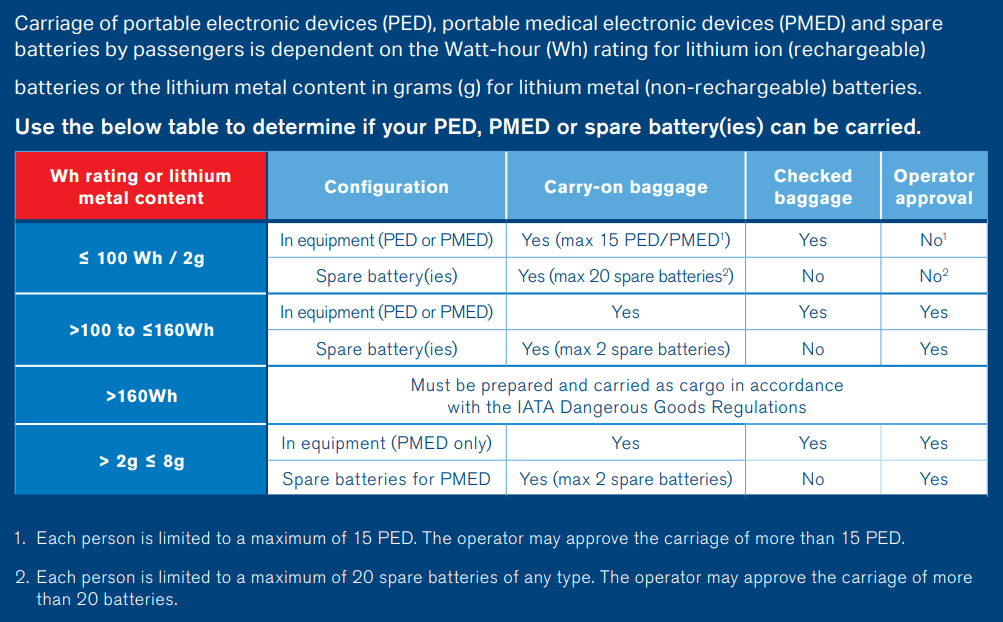
The single most important question is not how powerful your system feels on the water. It is how many watt-hours are printed on the battery. FAA guidance draws a hard line: lithium-ion batteries from 0 to 100 Wh are allowed, batteries from 101 to 160 Wh require air carrier approval, and anything above 160 Wh is forbidden on passenger aircraft. IATA’s 2026 passenger guidance uses the same basic framework, with decisions still centered on the 100 Wh and 160 Wh thresholds.
That is the surprise cutoff that catches even experienced travelers off guard. A pack can be small enough to look harmless and still sit in the approval zone, which means a calm morning at home can become a long delay at check-in if you have not done the math before you leave. The practical rule is simple: the battery label decides whether the trip is easy, conditional, or impossible.
Carry-on, checked bag, or no-go
The next decision is where the battery goes. Spare lithium batteries are generally required to stay in carry-on baggage, not checked baggage, and FAA guidance is especially restrictive for checked bags that contain installed lithium batteries. That matters because many foilers think of the board, mast, wing, and drive system as sports gear first and airline cargo second. The airlines do not make that distinction.
If your battery falls in the 101 to 160 Wh range, FAA guidance says you may carry up to two spare larger lithium-ion batteries per person with airline approval. That makes these systems travel-friendly in theory, but not friction-free in practice. You still need to clear the carrier’s approval process, and that can mean extra time at booking, extra time at the airport, and extra attention from staff who may not see foil-assist gear every day.
What the main systems mean at the airport
Manta’s own TakeOff Evo Air battery is built at 97 Wh per pack, which keeps it fully under the airline threshold. That is the cleanest travel answer in the current market because it avoids the approval layer entirely. If your priority is getting to the water with the least airport drama, this is the kind of number that makes a difference.
Other systems live closer to the edge. Duotone’s 2026 Foil Assist batteries are listed at 159.6 Wh per battery, just under the 160 Wh ceiling, but still inside the approval zone. Duotone also says two batteries must be connected to activate Foil Assist, which adds another layer of planning because you are not just carrying one pack, you are managing a paired system. FliteLab’s AMPCell_142 is listed at 142 Wh and described as subject to airline approval, which puts it in the same travel category: possible, but not effortless.
Waydoo FoilBoost sits on the other side of the line at 216 Wh per pack. That is beyond the passenger-aircraft ceiling, so it has to be handled differently. Once a battery crosses 160 Wh, you are no longer figuring out how to get it into the cabin. You are figuring out whether the system is even compatible with the way you want to travel.
The decision path: carry, check, ship, or rent
When you plan a foil trip, your first move should be to separate equipment by travel burden.
- If the battery is 100 Wh or below, carry it as normal airline-approved gear and keep it in your cabin bag.
- If the battery is 101 to 160 Wh, build in time for airline approval and expect the airport to ask questions.
- If the battery is above 160 Wh, do not assume passenger travel will work. You need a different plan.
That leaves you with four realistic paths. You can carry the right-sized battery yourself, check non-battery gear that is allowed, ship heavier or noncompliant parts ahead, or rent destination gear when the battery math does not work. For riders heading to remote, wind-rich destinations, that decision matters before you book the ticket, not after you arrive at the terminal.
The practical advantage of Manta’s 97 Wh approach is that it reduces the trip to a simpler packing problem. The practical advantage of a 142 Wh or 159.6 Wh system is stronger assist performance, but the tradeoff is airport administration. The practical advantage of a 216 Wh battery is harder to see for a passenger traveler, because the trip itself becomes the obstacle.
Why 12 packs is the useful travel sweet spot
Manta recommends 12 packs per traveler as a practical travel-ready sweet spot. The company says that is enough for roughly three sessions of around 30 minutes of motor time, with surf time in between. That kind of planning matters because a foil trip is rarely just about one launch. You want enough energy to deal with changing wind, a missed tide window, or a second session after lunch without carrying so many batteries that the whole operation becomes a logistics exercise.
The real value of that guidance is that it turns battery planning into session planning. Instead of asking how much power you can physically bring, you are deciding how many useful windows on the water you want to buy with the gear in your bag.
Pack like the airport rules matter, because they do
IATA says spare lithium batteries must be individually protected to prevent short circuits. That is not a minor detail. It is the kind of packing rule that separates a smooth check-in from a bag inspection or a last-minute repack on the floor at the gate. FAA guidance also says batteries carried for further sale or distribution are prohibited, which reinforces the point that this travel model is built for personal riders moving personal gear, not for moving inventory.
The safety backdrop is why the rules feel so strict. The UK Civil Aviation Authority says batteries have caused fires on aircraft and during ground handling, and it says the 2026 ICAO addendum became effective on March 27, 2026. That is the reason the industry is still tightening the playbook around carriage, approval, and short-circuit protection. The rules are not paperwork for its own sake. They are a fire-risk response.
The practical takeaway for traveling foilers
If you want the least stressful path, choose gear that sits at or below 100 Wh per pack and pack it as carry-on with the terminals protected. If you are committed to a stronger battery that falls between 101 and 160 Wh, assume you will need approval and extra time. If your setup is above 160 Wh, treat it as a shipping or destination-rental problem, not a passenger-luggage problem.
That is the core lesson behind Manta Foils’ guide. The modern foil trip is no longer just about board choice, mast length, or wing feel. It is about whether your battery survives the airport before you ever get to the swell.
This article was produced by Prism’s automated news system from verified source data, official records, and press releases, then run through automated quality and moderation checks before publishing. The system is built and supervised by the people who set the standards it runs under. Read our full AI policy.
Did this article answer your question?