Maui drives downwind foiling's rise as world tour takes shape
Maui is becoming downwind foiling’s proving ground as the sport moves toward a first true world ranking. Kai Thompson’s interview points to a season of bigger standards, bigger travel, and a more structured future.
Maui becomes the reference point
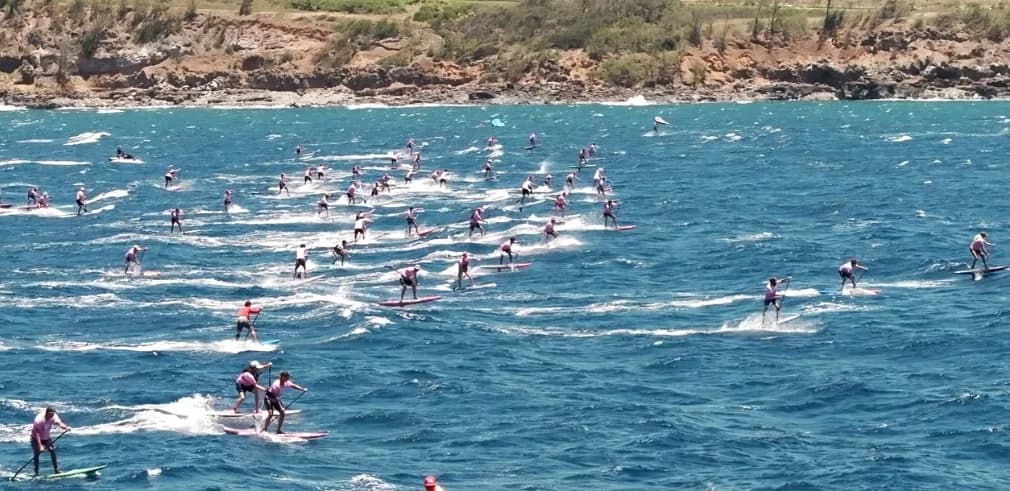
Kai Thompson’s interview lands at the exact moment downwind foiling stops feeling like a loose collection of big days on the water and starts looking like a real competitive circuit. Maui sits at the center of that shift. Stand Up Magazin describes the island as one of the global epicenters of downwind foiling, and the reason is easy to see: the Maliko Run has become the sport’s most recognizable test piece, a roughly 13 km, or 9 mile, downwind line from Maliko Gulch to Kahului Harbor or Kanaha Beach Park, depending on the event setup.
That course matters because it measures more than speed. It rewards reading trade-wind bumps, linking glides efficiently, and making clean decisions under pressure. In a discipline still defining its standards, Maui functions like a proving ground where the best riders expose what is actually working, not just what looks good on a social clip.
Why Thompson’s view matters
Thompson’s importance goes beyond one result or one stop on the calendar. The interview positions him as a rider who has spent recent seasons traveling to events, racing top competitors, and watching the sport evolve from inside the pack. That matters because downwind foiling is no longer only about isolated local knowledge. It is becoming a travel sport, and riders who move between venues are the ones seeing how the performance bar changes from one coastline to the next.
His published rider profile supports that point. It shows results on venues outside Hawaii, including France, which reinforces the idea that the best downwind foil athletes are already living on an international circuit. That circuit experience is now part of the competitive identity of the sport, not an added bonus.
The sport is shifting from scene to structure
The biggest change is not just athletic. It is organizational. A new Downwind Foil World Tour says it is launching the sport’s first official global ranking system, with elite races in Hawaii, France, and Australia feeding one leaderboard. That is the kind of development that changes how riders plan seasons, how organizers position events, and how fans understand who is really at the top.
A ranking system gives the sport something it has long lacked: continuity. Instead of treating each race as a standalone challenge, the world tour creates a comparative framework across different venues and conditions. That is a major step toward a more legible discipline, and it signals that downwind foiling is trying to build the same kind of competitive spine that other ocean sports already have.
Koa Kai turns the Hawaiian calendar into a points race
Hawaii’s own calendar is also tightening. The 2026 Koa Kai series is being expanded into a five-race, points-based foil series across Maui, Molokai, and Oahu, giving the region another layer of structure beneath the emerging world tour. Stand Up Magazin reported in March 2026 that the Koa Kai Crown would span more than 80 miles of racing between July 5 and July 20, 2026, and would add the Kamalo Downwind Paddle Race to the lineup.
That matters because it turns Hawaiian downwind foiling into a season rather than a string of isolated showcases. A points format rewards consistency, not just one peak performance. It also raises the value of every start, every transfer, and every equipment choice, because riders now have to think across multiple events, multiple islands, and changing water states.
Paddle Imua shows how the pipeline is expanding
Paddle Imua is another sign that the sport is moving into a more organized phase. In 2025, it drew international competitors and local legends and was described as a key warm-up event for elite ocean athletes. In 2026, Paddle Imua is listed as one of the first events in the Koa Kai Triple Crown, which tells you how quickly a warm-up race can become part of a larger competitive architecture.
That progression says a lot about where downwind foiling is headed. The sport is starting to build a pipeline from local ocean knowledge to regional series to world-level comparison. Events like Paddle Imua are no longer just good prep. They are now part of the system that helps define who is ready for the bigger calendar.
What serious riders should take from this moment
For riders trying to move faster in the sport, the takeaway is not abstract. The new structure rewards versatility, travel fitness, and setup discipline. As more races connect across Hawaii, France, and Australia, the margin for being locked into one style or one venue gets smaller.
A few practical lessons stand out:
- Maui remains the benchmark because the Maliko Run forces riders to handle real trade-wind bump management on a course that is long enough to expose weakness.
- A points-based season means consistency matters more than one breakout session.
- International travel is becoming part of the job description for serious downwind foilers.
- Equipment decisions are no longer local preferences alone. As the same riders chase results across different oceans, boards, foils, and setups have to work in a wider range of conditions.
That is where the performance standard is changing. The best riders are not just the ones who fly fastest on one perfect day. They are the ones who can keep delivering as the venue, the wind, and the event stakes change.
The business and cultural stakes are rising together
Downwind foiling is also crossing into a more recognizable business phase. A world ranking system makes the sport easier to sponsor, easier to follow, and easier to build around a calendar. That does not erase its roots in ocean culture, but it does give the discipline the scaffolding it needs if riders want a realistic professional path.
Thompson’s interview gets to the heart of that tension. The sport still carries the feel of a crew-driven, conditions-first ocean pursuit, yet it is increasingly asking the same questions that more established sports ask: How many tours can it support? What level of equipment development will separate the top tier? Can riders build a living around the discipline, or will the travel load and event density outpace the support structure?
Those questions are not theoretical anymore. With Maui acting as a proving ground, Koa Kai turning into a points series, and the Downwind Foil World Tour organizing elite races into one ranking, the sport is clearly trying to move from inspiration to infrastructure. That is the inflection point Thompson’s comments capture so well. Downwind foiling is no longer just growing. It is learning how to organize its own future.
This article was produced by Prism’s automated news system from verified source data, official records, and press releases, then run through automated quality and moderation checks before publishing. The system is built and supervised by the people who set the standards it runs under. Read our full AI policy.
Did this article answer your question?