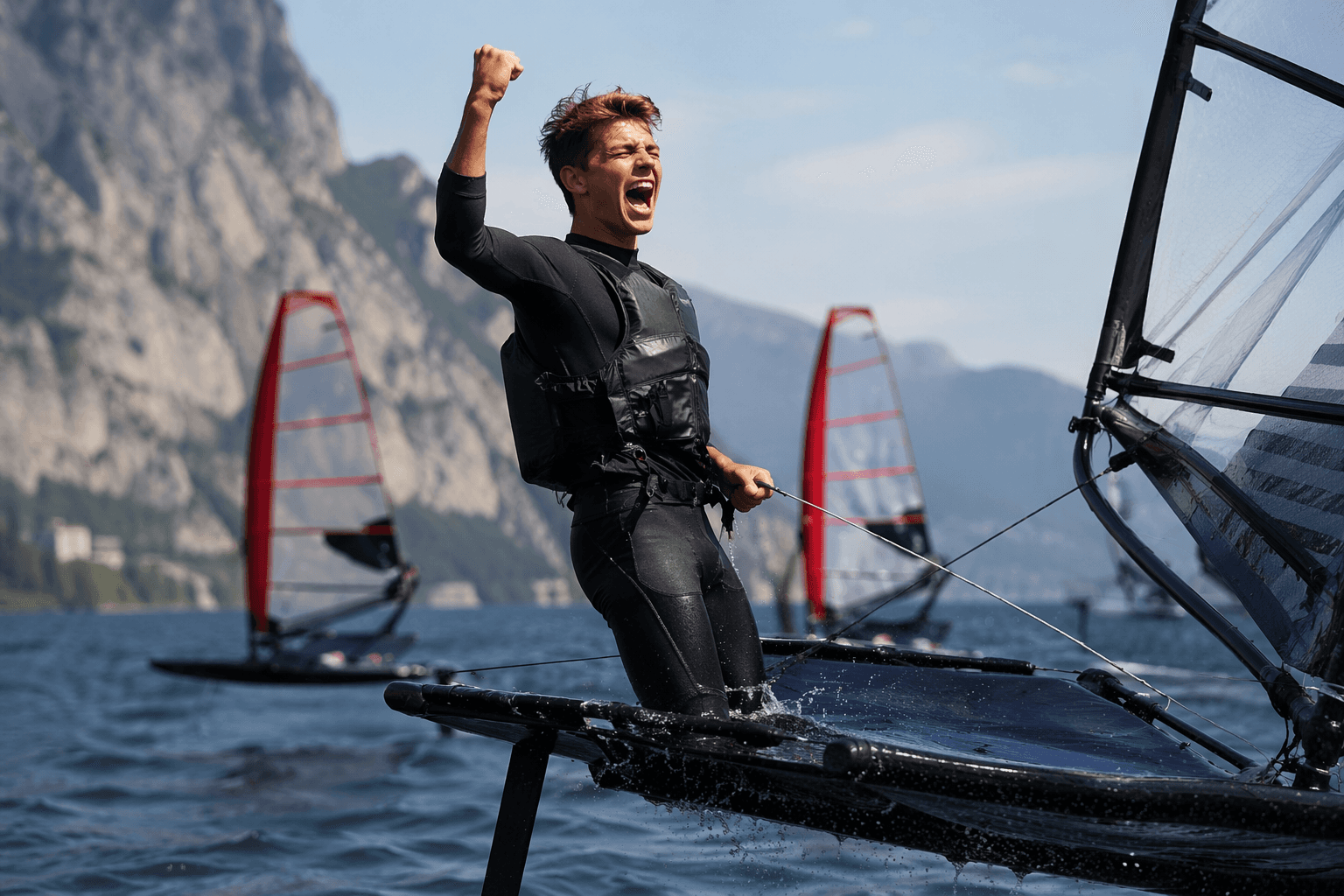
North Horizon foilboard promises earlier lift for downwind sessions
North’s Horizon aimed at riders who bog down before takeoff, using a long, narrow carbon hull to get flying earlier without making the board feel dead.
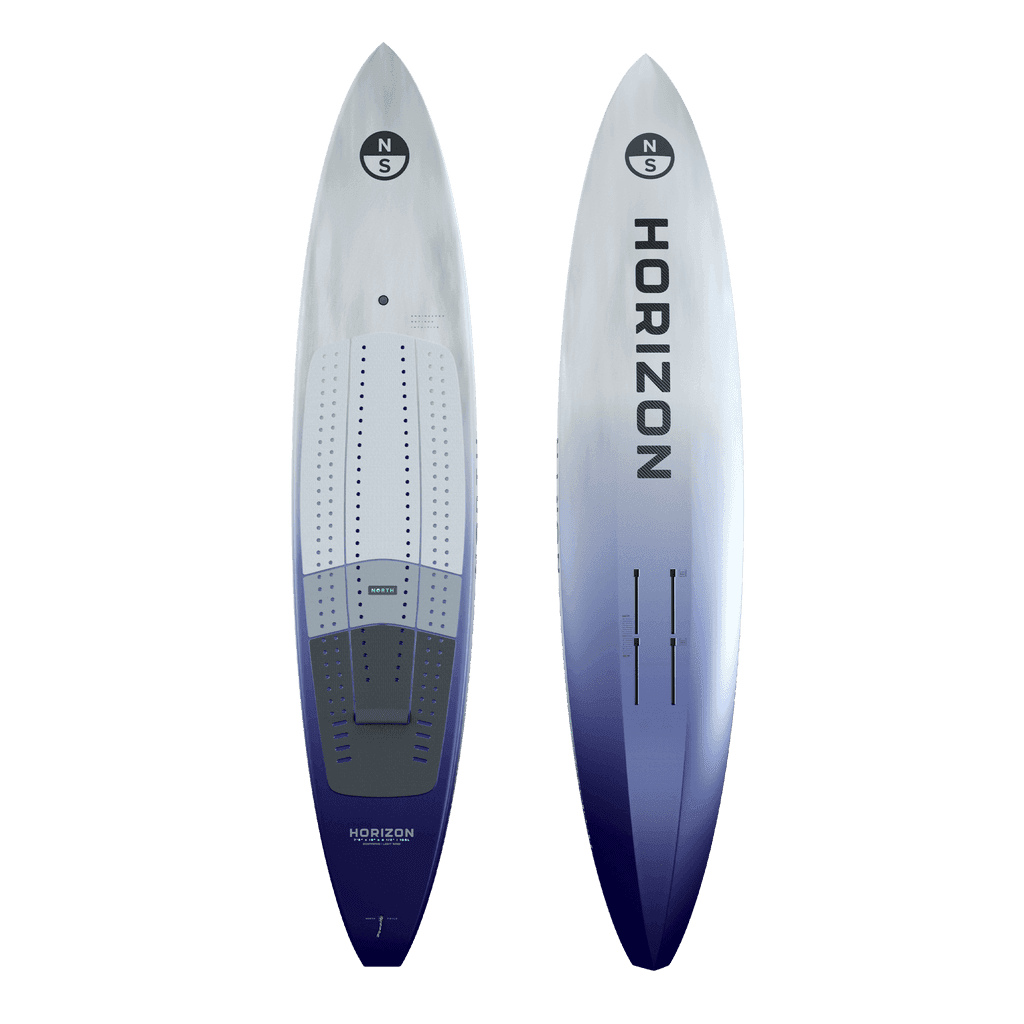
North built the Horizon for the part of the session that decides everything: the slow, awkward speed-building phase before the foil lifts. The board was aimed at riders in downwind, prone, wing, tow-kite and SUP foil-surfing, plus lightwind wingfoiling, and its pitch was simple enough to matter on the beach and in the bumps: earlier lift with less effort, without turning the board into a clumsy compromise.
Launched on April 9, 2024, the Horizon came in four sizes, 6'10 at 95 liters, 7'5 at 105 liters, 7'10 at 115 liters and 8'4 at 125 liters. That range made the board feel like a crossover tool rather than a one-rider specialty shape. Smaller and lighter riders had a shorter option; heavier riders and more committed downwind riders had the longer, higher-volume builds that gave them more runway before the foil took over.
The shape explained the intent. North described an efficient displacement hull, a pulled-in tail, forgiving forward rails, sharper rails behind the foil and a slightly concave deck. The board stayed in displacement mode until lift-out, which mattered because the biggest battle in real downwind sessions is not the glide after takeoff. It is the messy stretch before release, when the board has to accelerate without stalling, slap or forcing the rider to muscle every bump.
North also leaned on construction to keep the board from feeling cumbersome. The Horizon used 100 percent carbon with an internal PVC stringer, a combination meant to keep swing weight low and the response crisp underfoot. North said the volume distribution reduced wetted area and drag, while the hull let the nose penetrate water without slamming, a detail that should make touchdowns calmer and pumping feel linked to the foil instead of like a fight with the board.

Chucho Nonnot put the appeal in surfer language, calling downwinding “an evolution of surfing,” while saying the Horizon gave him more speed on paddle-ups and felt super light when pumping. Mike Raper said North wanted to respect the early downwind designs developed in Maui and refine those ideas in the South Pacific with shaper Jaimie Scott. That lineage matters, because downwind boards are being judged against the Maliko run on Maui, where boards have to paddle fast, pop up quickly and handle serious conditions.
North also signaled how the Horizon was meant to work in the water: as part of a system. The company recommended pairing it with the Downwind Front Wing Series or the SF Surf Series, a clue that the board was built to help riders connect bumps earlier, carry speed cleaner and leave less of the session to brute force.
This article was produced by Prism’s automated news system from verified source data, official records, and press releases, then run through automated quality and moderation checks before publishing. The system is built and supervised by the people who set the standards it runs under. Read our full AI policy.
Did this article answer your question?