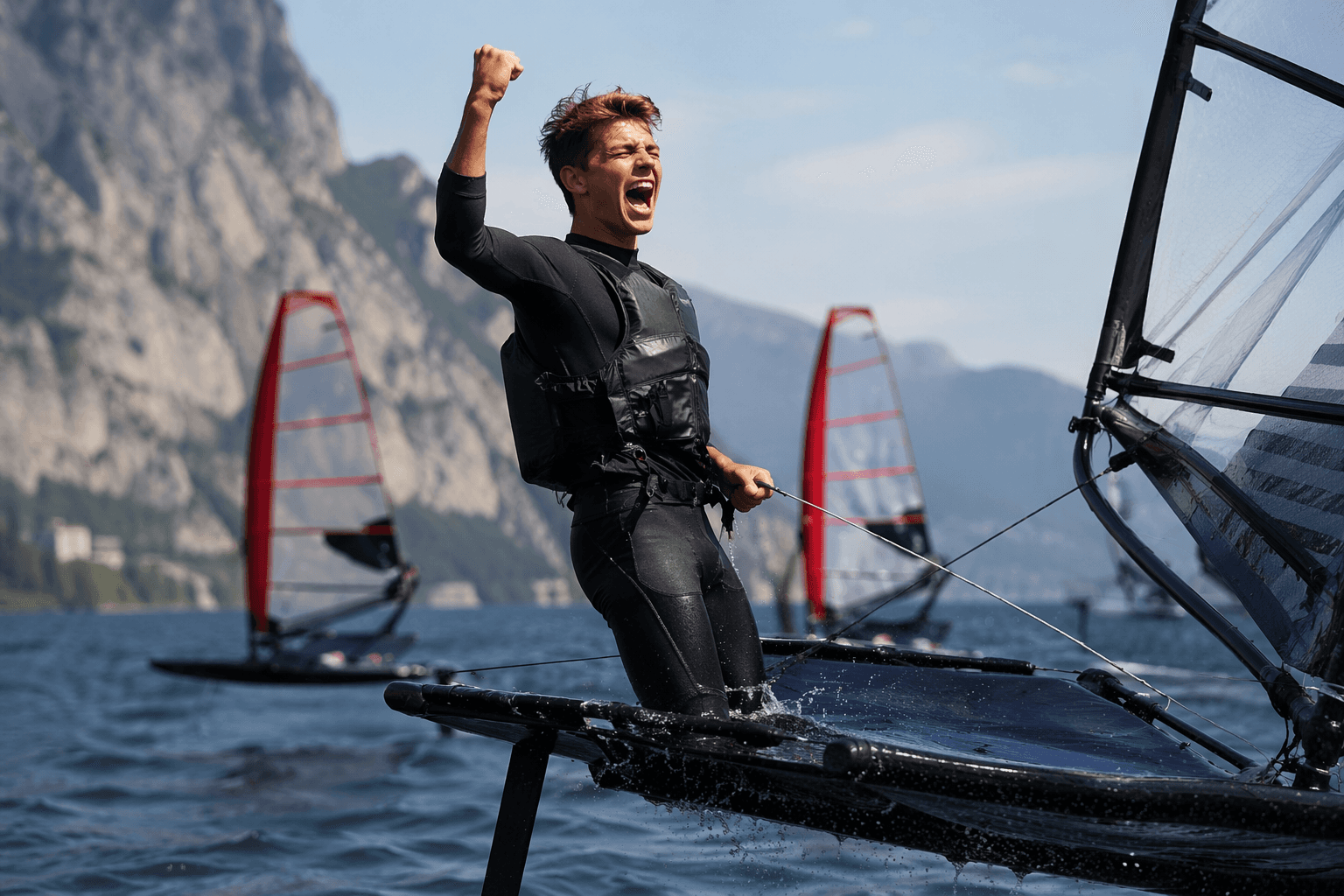
North’s Rover parawing aims to solve upwind, swell riding and return trips
Rover pushes parawinging past novelty: one canopy for the upwind grind, swell riding and the trip back home.

North’s Rover is a sign that parawinging is leaving the novelty stage behind. Instead of behaving like a one-way downwind toy, it is being positioned as a freeride tool that can get you upwind, let you surf the swell, and bring you back to where you started without turning the session into a retrieval mission.
What the Rover is actually solving
That loop matters because it changes the whole business of the session. In the first wave of parawings, the appeal was simple: launch fast, get on foil, and collapse the wing for hands-free downwind riding. The Rover is built for a different promise. North is trying to make parawinging feel more like a complete water tool, one that carries power on the way out, stays manageable while you are riding, and still gives you enough control to return upwind when the run is over.
North’s own launch language leans hard into that idea. The Rover is framed as something that can power upwind, then let you ride swell or carve down the coast hands-free. That is the key shift in the category maturity story: the product is no longer just about glide, but about solving the whole route.
How the Rover differs from the first parawing wave
North’s lineup makes the split clearer. The Ranger is the downwind specialist, a lightweight single-skin parawing built for quick foil starts and hands-free downwind riding. The Rover sits above it as the more versatile, upwind-capable all-rounder, which tells you exactly how North sees the category developing.
That distinction matters for buyers. The first wave of parawings rewarded riders who already had a specific downwind mission. The Rover is aimed at freeride progression riders who want smoother glide, balanced power and intuitive control, with less compromise when conditions shift. In other words, it is not trying to replace the Ranger so much as widen the lane for people who want more than one use case from a single canopy.
What “upwind, downwind and back again” means on the water
For a foiler, those three phases are the difference between a specialty session and a practical system. Upwind means driving toward the wind so you can choose your entry point, manage your drift and avoid being stranded far down the coast. Downwind means using swell, wind and board speed to link runs with the wing collapsed or nearly depowered. Back again is the real test: enough control and efficiency to sail back to the start without a rescue pickup or a long walk.
That is where the Rover’s setup starts to make sense. North pairs the canopy with a carbon 4-line bar, a vertical control bar feel, a front-line slider ring and an integrated depower tab. Together, those details are meant to help the rider manage power cleanly during transitions and collapse the wing more predictably when hands-free riding begins.
Why the construction points to a more serious tool
North’s material choices are not the kind of features that sell on hype alone. The Rover uses D-Ribs, flexible battens, an extra-short bridle and braided Dyneema bridle lines, all aimed at keeping the canopy loaded and efficient while preserving control. Coverage of the launch also notes a lightweight hybrid canopy, a precision bridle system and semi-depowered handling, which reinforces the idea that this is being built as a stable, repeatable riding platform rather than a stripped-down curiosity.

There is also a practical comfort angle. The Rover comes with a single-point harness loop and a backpack that can be worn over a buoyancy vest, which matters when sessions stretch longer and packdown becomes part of the ride plan. That is the sort of detail that separates a prototype-feeling product from one designed for real use across changing conditions.
Who the Rover is for
The Rover looks aimed at riders who want freeride progression without committing to a one-direction downwind specialty. If you want one canopy system that can handle a lot of water, a lot of wind and a lot of session types, this is the cleaner fit in North’s range. It is also the kind of product that makes sense for riders who are already competent on foil and want more range, more return capability and less dependence on perfect downstream logistics.
Marley Franco, the rider voice North uses in the launch, says the Rover shines from light winds to crazy strong conditions. That is not just marketing color. It reflects the product’s all-condition pitch and the broader move toward gear that can stretch a session across a wider band of weather instead of serving one narrow niche.
The size chart tells the real story
The published wind range table is one of the clearest signs that North is treating this as a practical system, not a niche experiment. The Rover comes in 2.4m, 2.9m, 3.5m, 4.2m, 5.0m and 6.0m sizes, with wind ranges listed as follows:
- 2.4m: 25 to 40+ knots
- 2.9m: 20 to 35 knots
- 3.5m: 16 to 26 knots
- 4.2m: 14 to 22 knots
- 5.0m: 10 to 15 knots
- 6.0m: 8 to 12 knots
That spread is wide enough to make the Rover feel like a serious quiver option rather than an exotic add-on. A rider who wants a single system for everything from low-end cruising to high-wind control can actually start to think in terms of matching size to session rather than chasing one perfect condition.
What North is signaling about the market
North is not treating Rover as a side note. Its parawinging page places the Rover alongside the Ranger in a broader parawinging lineup, and the brand has also backed the launch with a North-branded video on YouTube. The message is clear: parawinging is becoming a product family, not just a single trick.
That is the deeper business story behind the gear. The category is maturing into separate jobs, separate riders and separate purchase decisions. The Ranger serves the downwind purist; the Rover serves the rider who wants continuous power, retrievable range and a better answer to the question every foiler eventually asks: how do I get out, ride hard and make it back with the least friction? North’s answer is a freeride parawing that treats the whole loop as the product.
This article was produced by Prism’s automated news system from verified source data, official records, and press releases, then run through automated quality and moderation checks before publishing. The system is built and supervised by the people who set the standards it runs under. Read our full AI policy.
Did this article answer your question?