SiFly says beginner-friendly eFoils make hydrofoiling more accessible
SiFly’s latest eFoil guide says the beginner trap is chasing speed instead of stability. The smarter first setup is a forgiving board, controlled power, and a short learning curve.

The biggest eFoil myth is that you need to look advanced before you can start
SiFly’s new guide, *5 eFoil Myths Debunked*, goes straight at the assumption that electric hydrofoiling is only for surfers, adrenaline junkies, or riders who already know the water. That is the wrong filter. The company’s point is simpler and more useful: beginners do not need waves, wind, or years of boardsport experience to get moving. They need the right board, controlled power, a stable platform, and instruction that keeps the first session calm instead of chaotic.
That framing matters because the first purchase shapes the whole experience. SiFly’s message is not to buy the fastest setup you can afford. It is to buy the setup that keeps you balanced long enough to learn, because confidence comes from stability first, not from pretending you are already chasing top-end performance.
Myth one: every eFoil rides the same
That is where a lot of first-time buyers go wrong. SiFly says board size, volume, material, foil wing setup, mast length, battery, and rider skill all change the ride. In practical terms, that means a board that feels locked-in and forgiving for a novice can feel slow to an experienced rider, and a high-performance setup can punish a newcomer before the learning starts.
For buyers, the takeaway is blunt: choose for confidence, not bragging rights. SiFly points beginners and families toward the SiFly Lite, a soft-top option built to be forgiving, and the Rider+, which uses a larger outline for gentler cruising. Those are not just marketing labels. They are signals that the platform is designed to make the first rides calmer, steadier, and easier to repeat.
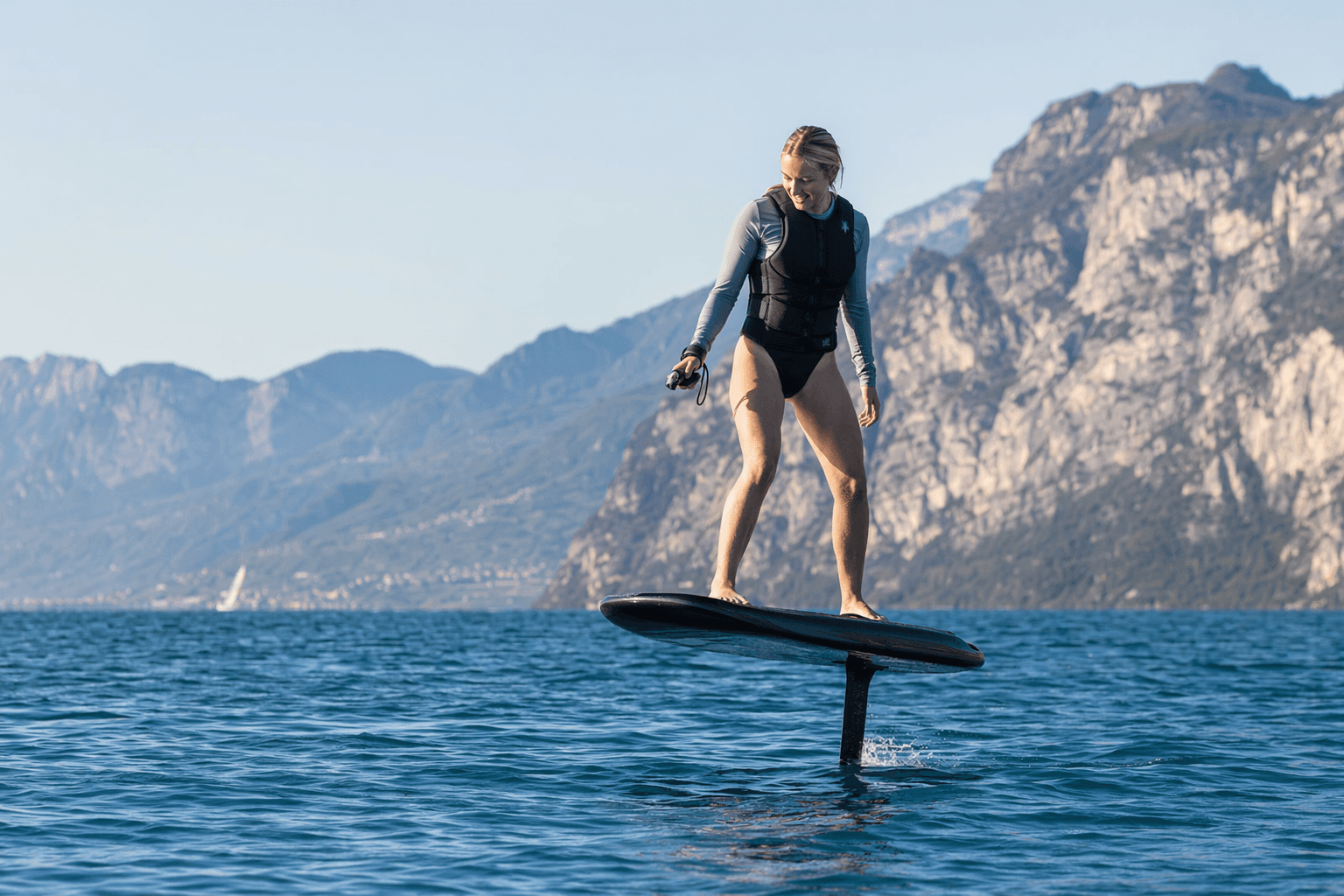
Myth two: the learning curve is too steep
The learning curve is real, but it is not a wall. SiFly’s beginner guidance lays out the progression most newcomers need: lie on the board, kneel, stand, lift, then learn height control. That sequence is the right way to think about progression because each step builds balance before speed becomes a factor.
The goal is not to force flight on the first push. It is to stay relaxed, move deliberately, and let the board do the work. SiFly says many beginners stand within 30 minutes and glide confidently in under two hours. Other lesson providers say a standard session can run about two hours and some total beginners can achieve controlled flight in their first lesson. That does not mean everyone is instantly flying like a pro. It does mean the sport is accessible faster than its reputation suggests.
What a beginner-friendly session looks like in practice
A smart first-session plan is less about performance and more about sequence. The rider starts with the board stable and the power controlled, then progresses only when each step feels repeatable. That approach keeps the session from turning into a fight with the gear.
- Start on a board built for stability, not speed
- Keep power controlled until kneeling and standing feel automatic
- Use the first flight attempts to learn height control, not chase top speed
- Treat progress as a series of short wins, not one dramatic launch
That is the real beginner path. It is technical, but it is manageable, and the right board choice shortens the distance between first contact and first real glide.
The regulatory reality: eFoils are not toys
Another myth SiFly’s guide helps puncture is the idea that eFoils live outside normal boating rules. They do not. The U.S. Coast Guard’s 2022 guidance treats mechanically propelled personal hydrofoils, including eFoils, as vessels subject to registration and titling requirements in the United States. Operators are also expected to carry the vessel registration and comply with applicable safety rules, including PFD, lighting, and sound-device requirements where they apply.
That matters for anyone buying an eFoil for the first time, especially if the plan is family use, rentals, or resort riding. Hawaii’s summary of the Coast Guard policy goes even further, stating that as of October 5, 2022, eFoil and jetboard operators must carry registration and comply with PFD, fire extinguisher, sound device, and lighting requirements. The point is not to scare off newcomers. It is to make sure the first ride starts with the right paperwork and the right safety gear, because this is a regulated watercraft, not just a novelty board.
Why the accessibility pitch is happening now
The category is still young. Sources tracking eFoil history say the sport had its global commercial debut in mid-2018, even though early development goes back to the late 2000s. That youth explains why the market still spends so much time educating buyers. New riders are not just choosing between brands. They are learning what kind of watercraft this is, how it fits their ability, and what setup helps them progress safely.
That is also why beginner-focused products have become such a major part of the pitch. Fliteboard markets its Flitescooter as something complete beginners can learn in minutes. Lift Foils says its LIFT5 F is built for beginner riders with durability, forgiveness, and stable flight from day one. SiFly is tapping into the same trend, but its angle is especially practical: start with stability, and the sport feels more like a progression than a stunt.
The bottom line for first-time buyers
The mistake is assuming eFoiling is one uniform challenge and that the answer is to buy the most aggressive setup available. SiFly’s guide makes the stronger case: beginner success depends on matching the board to the rider, the session, and the learning stage. A soft-top, forgiving board like the SiFly Lite or a larger, easier-cruising platform like the Rider+ can turn the first session from intimidating into workable.
That is the real shift in the market. Beginner-friendly eFoils are not dumbing the sport down. They are making it possible for more riders to learn the right way, with enough stability to stand, enough control to lift, and enough margin to keep coming back for the next session.
Know something we missed? Have a correction or additional information?
Submit a Tip