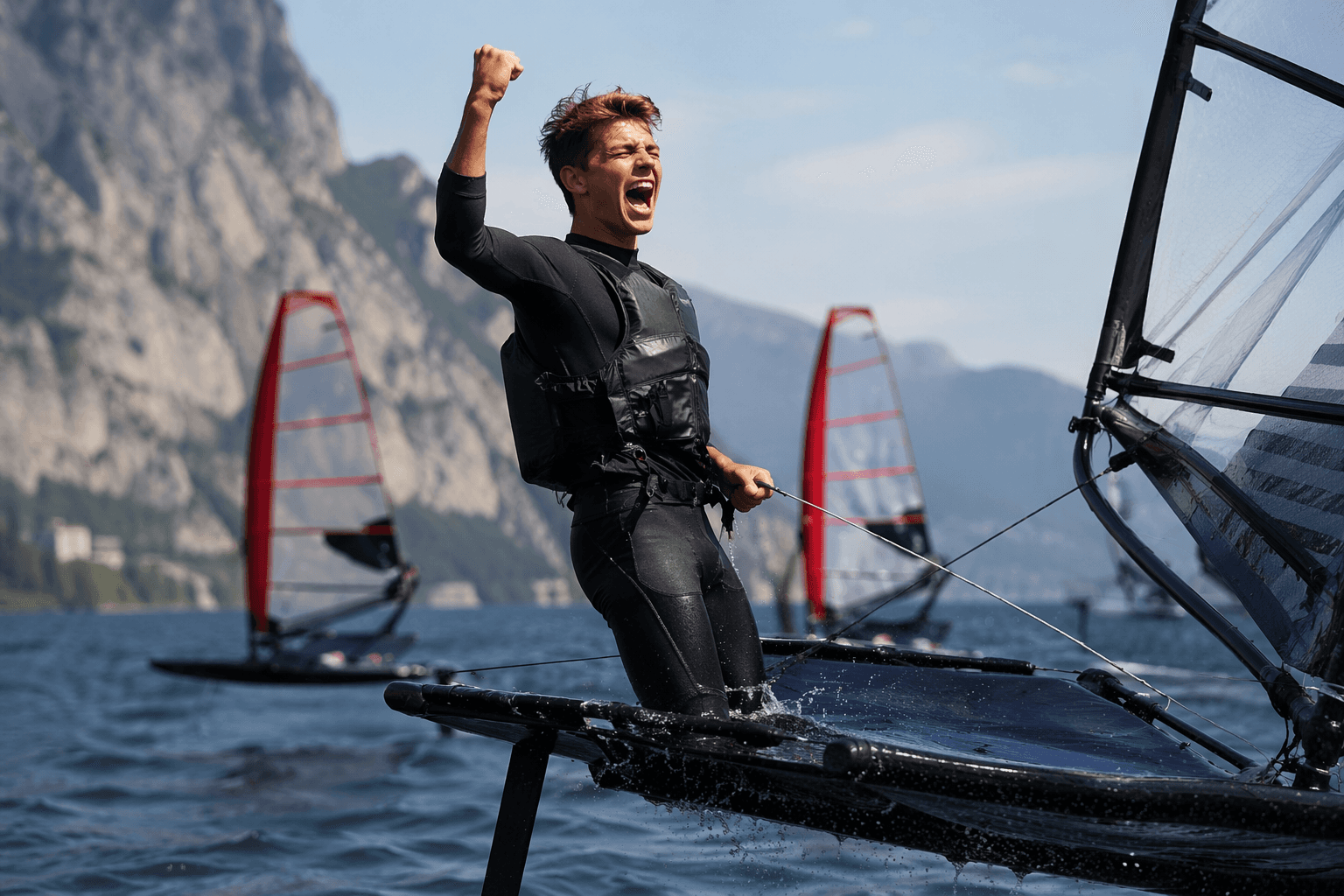
Starboard X-15 foilboard targets one-design wingfoil racing speed
Starboard’s X-15 is built for one-design wingfoil racing, where drag, release, and touchdown recovery matter more than all-purpose comfort.

The X-15 is built for the front pack
Starboard’s X-15 Class Foilboard is not trying to be everyone’s board. It is built as a narrow, race-first tool for one-design wingfoil competition, where the difference between clearing a mark in the lead and chasing from behind can come down to a fraction of a knot. The whole design brief is about speed, release, and control under pressure, not all-around cruising comfort.
That matters because one-design racing changes the value of equipment. When everyone is on a tightly controlled platform, the board advantage does not disappear, but it gets squeezed into finer margins: drag reduction, launch efficiency, stability through maneuvers, and the ability to recover cleanly after a touchdown. In other words, the fight moves away from who owns the biggest hardware edge and toward who can tune, execute, and react best when the race gets tight.
How the shape creates speed
The X-15’s performance story starts with its outline. The board is described as having a very aerodynamic profile, with a shape tuned to reduce drag while still giving early takeoff and efficient low-lift flight. That combination is the core of modern wingfoil racing, because a board that lifts early and stays composed once flying lets the rider stay on pace without wasting energy forcing the foil to work.
Starboard has also built the nose, hull, and tail geometry around racing use. The goal is to help the rider accelerate quickly, remain stable once airborne, and recover with minimal loss of momentum after a touchdown. In a sport where a bad landing can break a lead or hand over a lane, that kind of forgiveness is not a comfort feature. It is a competitive weapon.
The board’s ultra-rigid carbon construction is part of that same logic. A stiffer platform is meant to transmit rider input efficiently, which matters when every pump, trim adjustment, and micro-correction is feeding into speed. In one-design racing, those small responses can be the difference between holding the front pack and watching it sail away.
What the X-15 family adds to the picture
Starboard’s wider X-15 lineup shows that the race identity is not a one-off concept. The family is offered in 68L, 82L, and 95L versions, all built around Carbon Reflex Sandwich construction. That range suggests a deliberately controlled spread, not a sprawling freeride catalog, and it keeps the board family focused on racers who want a purpose-built platform rather than a do-everything shape.
The rest of the design language reinforces that message. Precision footstrap placement, a recessed standing area, and a Tuttle-style foil connection all point toward the same end: a locked-in, competition-ready setup that minimizes wasted movement and keeps the rider connected to the board and foil. Starboard is not chasing casual versatility here. It is building around the demands of riders who want repeatable starts, clean trim, and a platform they can trust at race pace.

Those details also matter because wingfoil racing is increasingly shaped by how standardized the equipment becomes. Once the board is stripped back to a race-specific format, the rider’s input, foil pairing, stance discipline, and tactical decisions become more visible. The board still matters, but it matters in the way a well-drilled race car chassis matters: less about flash, more about how consistently it lets the driver perform.
Why one-design shifts the competitive edge
The X-15 is a useful case study in how one-design boards alter the balance of power. In an open equipment class, riders can look for outright advantages in shape or materials. In a one-design environment, that path narrows, and the edge shifts toward setup precision, starting technique, and how cleanly a rider handles transitions and recoveries.
That makes the racing more tactical and, in some ways, more democratic. A rider without access to the newest experimental shape can still stay in touch if they are better at timing, lane choice, and preserving speed through maneuvers. But it also raises the importance of tuning and execution, because the small differences that remain become more visible when the equipment is standardized. The board does not level the field completely. It changes where the field is won.
For competitive riders, that is the real takeaway. The X-15 is built for a scene where speed is measured not just by top-end pace, but by how little momentum you lose in every transition. If the course is short, the pack is tight, and the margins are tiny, the board’s drag reduction and touchdown recovery can matter as much as raw acceleration.
Who should care beyond the racers
Non-elite riders should care about the X-15 if they want a read on where wingfoil racing is headed. This is not a board for casual freeride sessions, and it is not trying to be a universal platform. But it does signal the direction of the sport, especially as the X-15 class is being treated as a benchmark for World Sailing’s one-design wingfoil racing path.
That benchmark status matters because race equipment often influences what comes next in broader board design. The X-15’s emphasis on rigid carbon construction, aerodynamic efficiency, recessed standing position, and a tight volume range suggests a future where competition boards become more specialized, more standardized, and more focused on repeatable speed than on broad utility. For riders who do not plan to race at the top level, the board still tells an important story: the sport is moving toward a place where technique and discipline will matter more than chasing the flashiest shape.
The X-15 is, at heart, a statement about where wingfoil racing is going. It narrows the equipment race so the human race becomes more visible, and that is exactly why it stands out.
This article was produced by Prism’s automated news system from verified source data, official records, and press releases, then run through automated quality and moderation checks before publishing. The system is built and supervised by the people who set the standards it runs under. Read our full AI policy.
Did this article answer your question?