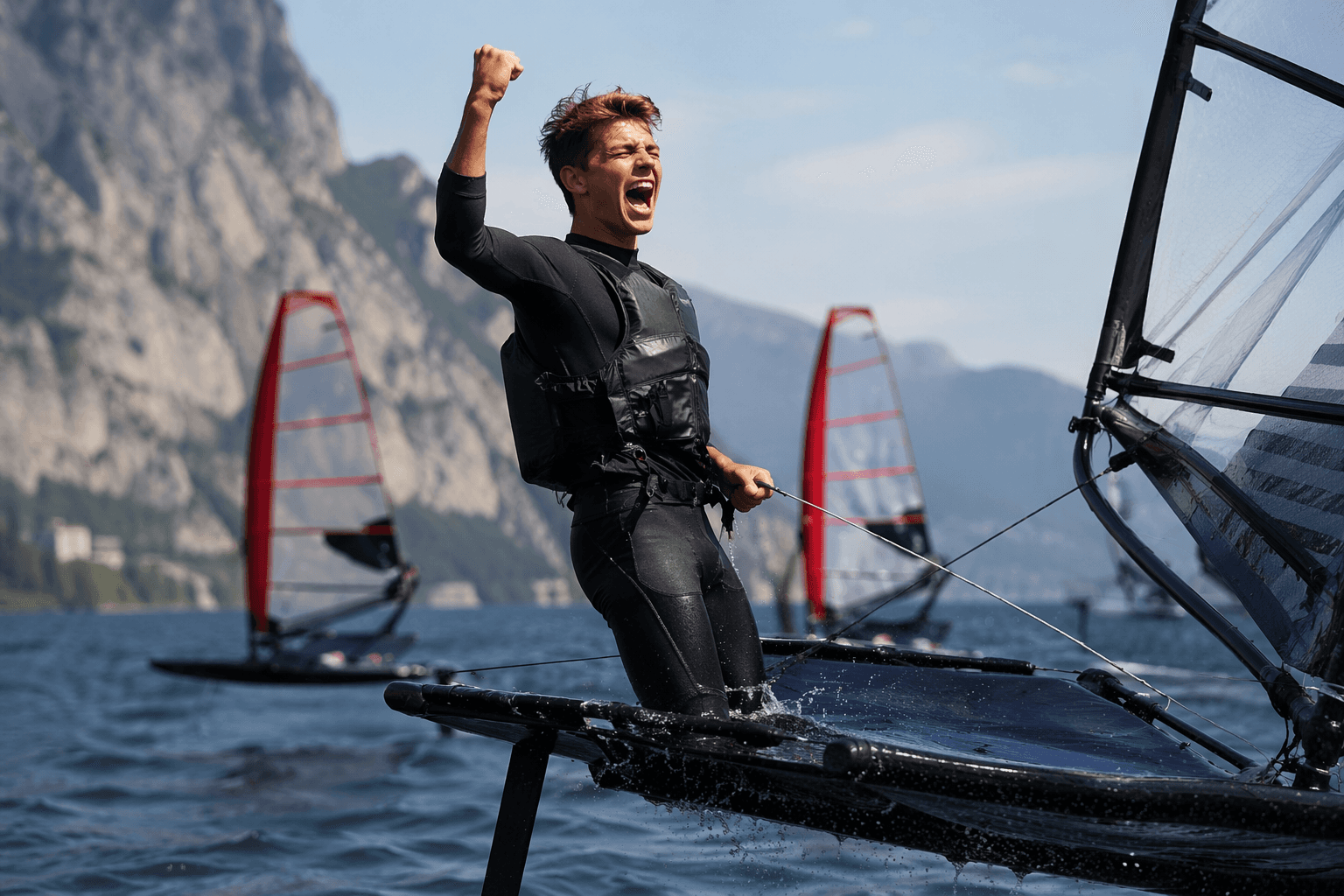
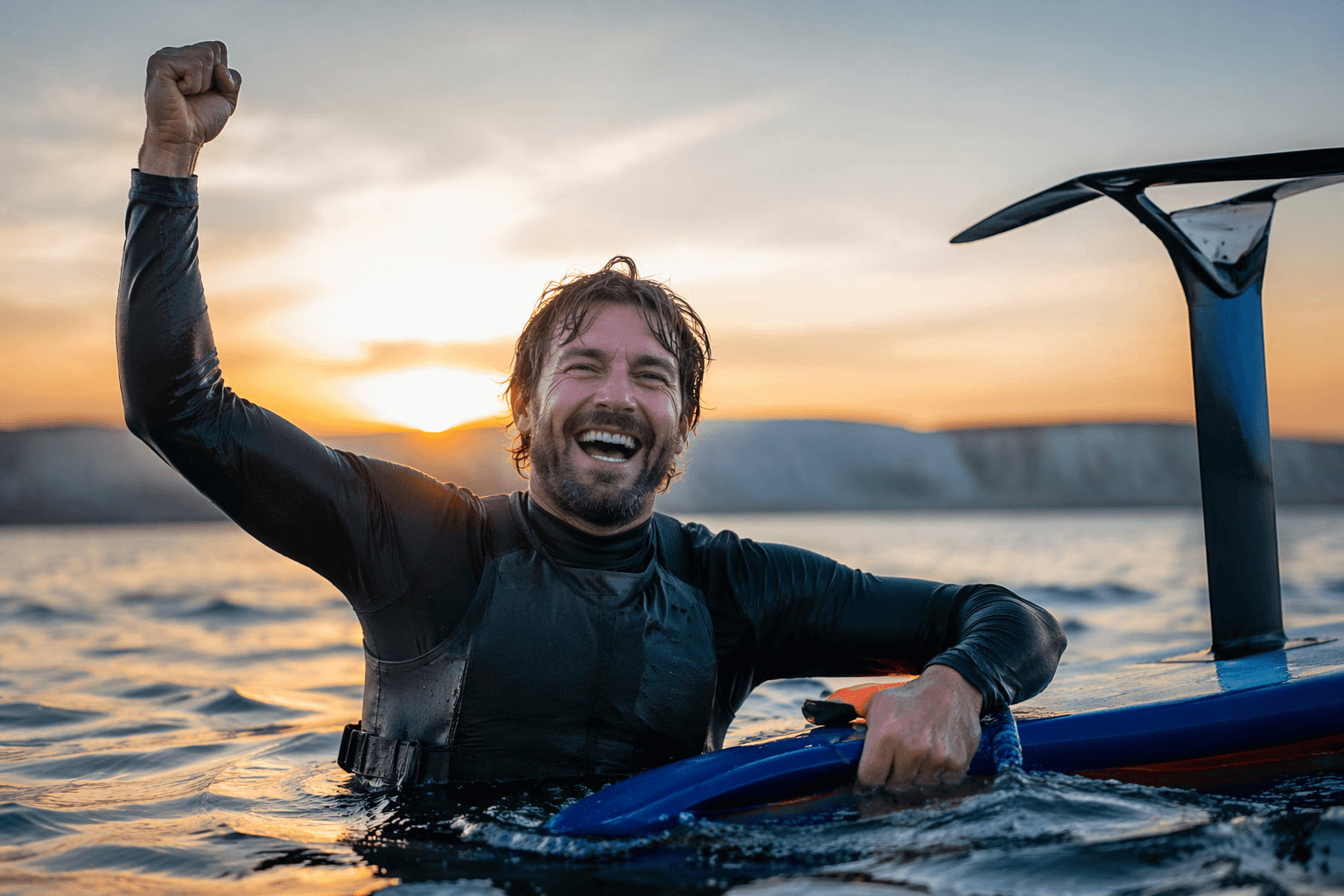
Tom Court tackles the Isle of Wight’s dangerous mascaret on foil
Tom Court's mascaret run is a lesson in reading moving water, not chasing spectacle. The Isle of Wight's tidal geometry turns every mistake into a safety issue.
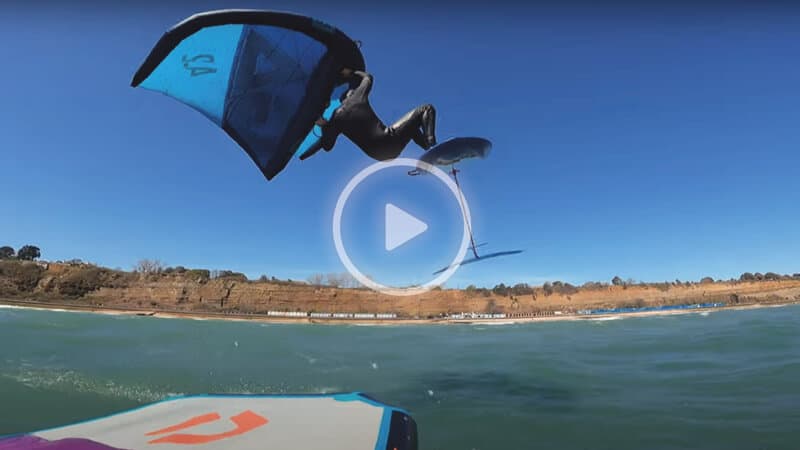
Why the mascaret changes the game
Tom Court’s foil session on the Isle of Wight is not a standard surf-foil hit. It is a case study in what happens when a rider meets a tidal bore, a moving series of waves that pushes upstream as the tide rises and flips the river’s flow behind it. That is a very different problem from gliding cleanly down a swell line, because the water is not just moving fast, it is reorganizing itself under the board.
That is why the mascaret feels so demanding. Researchers note that tidal bores usually appear at spring tides, move about two to three times as fast as the normal tidal current, and in some cases continue upstream for about half an hour after high water. On a foil, that means the timing window is narrow, the pace can jump suddenly, and the wrong line choice can leave even an experienced rider trapped in confused water instead of carried by the bore.
Why the Isle of Wight is such a strong test
The Isle of Wight makes this session especially revealing because its waterways are shaped by tide-driven terrain. The island’s north-flowing rivers and creeks include the Eastern Yar, Western Yar, Newtown River, Medina and Wootton Creek, all part of a coastal system where tidal movement matters as much as surf shape. Historical accounts describe the island as once linked to the mainland through the Solent River system, until sea intrusion into the channel around 2000 BC reshaped the landscape.
That history matters because it explains why the island produces water that is so sensitive to tide, funneling, and estuary geometry. The Isle of Wight History Centre describes these waterways as sharing tidal mudflats, shingle, saltmarsh and varying amounts of fringing woodland, features that can channel flow, slow it, or make it chaotic from one bank to another. For a foil rider, that means the environment is never flat, never neutral, and never simple.
What Court brings to the session
Court is not approaching the mascaret as a casual tourist. He is a professional free-ride athlete and coach whose work spans kitesurfing, wing foiling, surf foiling and e-foiling, and he has repeatedly described the Isle of Wight as home base. That local familiarity gives the session a different meaning: this is an athlete using his own coastline as a laboratory for one of the hardest moving-water problems in foiling.
His choice also broadens the conversation around British foiling. Instead of only celebrating open-ocean runs or clean surf breaks, the story shows how the sport is pushing into tide-driven terrain where reading water becomes as important as speed. In that sense, the mascaret is less a stunt than a stress test for judgment, board control and confidence under pressure.
What the bore teaches about foil control
A tidal bore rewards riders who understand that the wave is not static. The surface can look organized from a distance, but the actual ride depends on the rider staying in the right pocket of the current while the water continues to surge inland. That means every movement, from takeoff angle to foil height, has to be made with the bore’s acceleration in mind.
For experienced foilers, the biggest lesson is that timing beats brute effort. If the rider enters too early, the flow may be too messy to hold a line; too late, and the energy window has already passed. The best runs happen when the foil and the bore are synced, letting the rider stay balanced on a fast, living wall of water instead of fighting it.
A few practical takeaways stand out:

- Study the tide, not just the swell. A bore is a tidal event first, and its power comes from the rising tide pushing upstream.
- Read the flow lines before committing. The right channel can carry speed cleanly, while the wrong part of the river can turn turbulent fast.
- Keep the foil low and controlled. In unstable water, small height errors can become big crashes.
- Respect the timing window. Bores can be predicted to within minutes when tide times are known, but rainfall and river conditions can still change the ride.
- Treat the session as a one-way decision. Once the current starts moving, recovery options shrink quickly.
Why this environment is so unforgiving
The difficulty of a bore is not just speed. It is the combination of a fast-moving wave train, changing depth, and a river or estuary that is reacting to the tide in real time. Scientific sources point to major reference bores such as the Seine mascaret in France, the Qiantang River bore in China and the Severn Bore in the United Kingdom, which gives Court’s session a global context rather than a purely local one.
The Qiantang bore can reach nearly 9 metres, according to Britannica, which shows how extreme these systems can become. The University of Queensland also notes that the Seine mascaret was documented as far back as the 7th and 9th centuries AD, proof that humans have been studying and chasing these events for centuries because they are so unusual. Court’s ride sits in that same tradition of curiosity and respect: a search for precision in water that refuses to stay still.
The broader lesson for foilers
What makes this story valuable is that it reframes extreme foiling as a discipline of interpretation. The reward is not simply hanging onto a wave longer than expected; it is proving that a rider can understand the shape of a tide, the behavior of a river mouth and the limits of the foil itself. That skill set matters far beyond the Isle of Wight, because every estuary, bore and tide race demands the same mix of patience and control.
Court’s mascaret run shows why these sessions deserve careful study. They are not repeatable in the casual sense, and they are not meant to be copied without local knowledge and the right conditions. They are, however, a sharp reminder that the most advanced side of foil surfing begins where the water stops behaving like a normal surf break and starts behaving like moving geography.
This article was produced by Prism’s automated news system from verified source data, official records, and press releases, then run through automated quality and moderation checks before publishing. The system is built and supervised by the people who set the standards it runs under. Read our full AI policy.
Did this article answer your question?