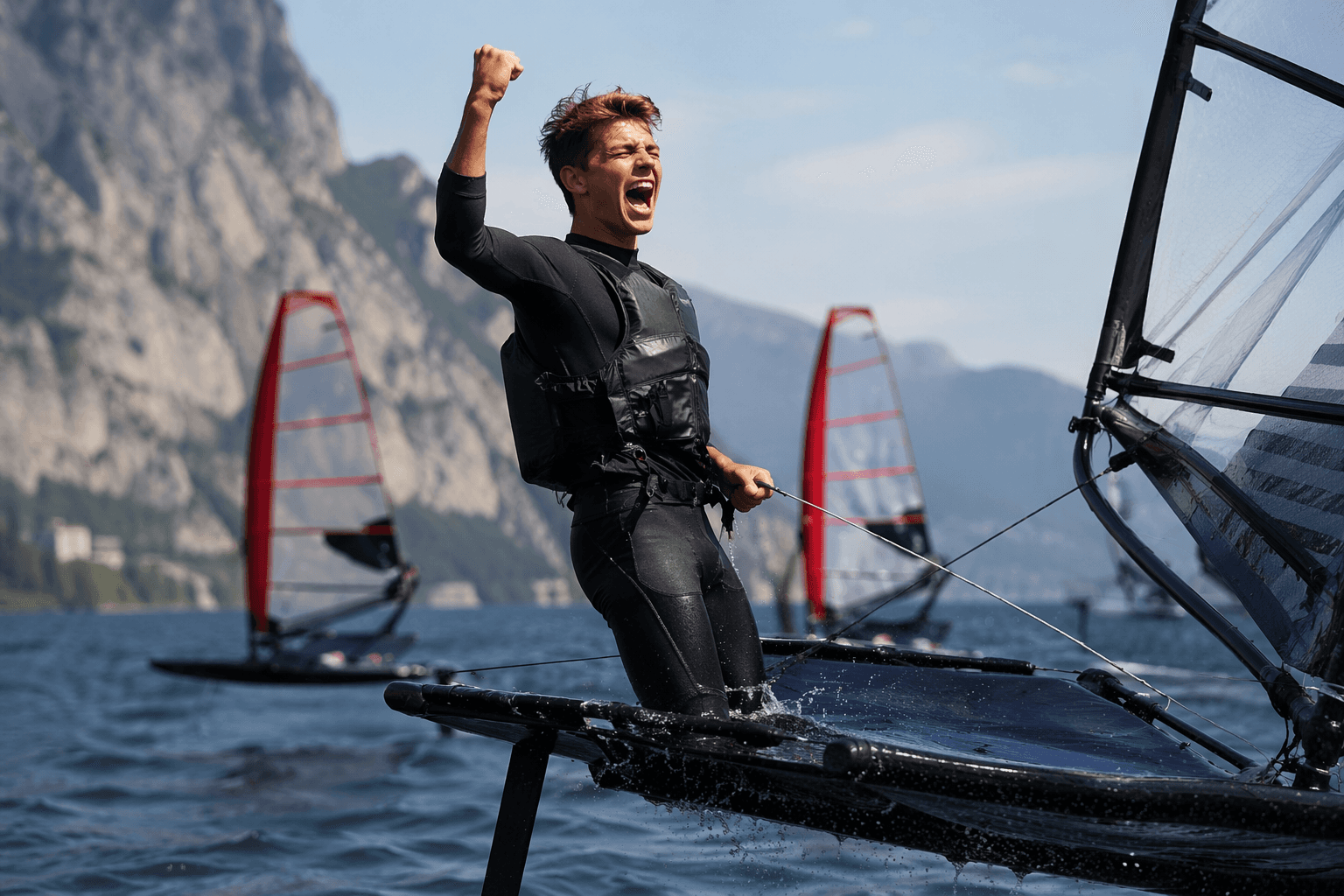
World Sailing recognizes X-15 as first official wingfoil class
World Sailing’s X-15 recognition gave wingfoiling its first official one-design class, setting up five world titles and a clearer global ranking path.

World Sailing’s recognition of the X-15 on June 11 gave wingfoiling something it had never formally had before: its first official one-design class. That changes the sport’s architecture immediately. The X-15 is now the benchmark class under World Sailing, with standardized equipment, a clearer ranking framework and a pathway that can carry riders from clubs into a governed international calendar.
For racers, the most important shift is that the X-15 reduces the equipment arms race that has long defined fast-growing foil disciplines. Instead of every serious event rewarding the latest workaround, the class creates a single platform that judges performance within the same system. It is also set to crown five world champions at its first world championships in 2026, which gives elite riders a concrete target and gives the discipline a results structure that can be compared from one event to the next.
For organizers, the recognition matters just as much. A one-design class under World Sailing gives clubs and race directors a shared rulebook and a recognizable standard, which makes it easier to build events that connect to a wider ladder. The class is being framed as a benchmark worldwide, and that makes wingfoil racing more durable than a collection of isolated showcases. Instead of relying on one-off formats, the sport now has a class identity that can anchor entries, scoring and progression.

The X-15 was not built like a frozen old-school one-design. It was developed through collaboration between top athletes, America’s Cup designers and high-tech industry partners, with Starboard founder Svein Rasmussen pushing the project from its first trial event at Foiling Week in Lake Garda. That background matters for brands because it signals a narrower, more controlled lane for innovation. The question is no longer who can build the most specialized edge, but who can serve a class that is now officially recognized and globally portable.
Starboard has also tied the class to a sustainability pitch. The company says it calculates event travel and equipment-production emissions, then plants mangroves with the WIF foundation to draw down twice the total emissions. It is also using a plastic credit prize pool, a detail that fits the sport’s effort to present itself as modern, responsible and scalable.

The bigger picture is bigger than one board or one rig. With more than 8,000 sailing clubs in play as the stated growth target, the X-15 now sits at the center of a clearer ladder for wingfoiling. That can open the door to more structured competition, but it also concentrates the discipline around a single platform that will shape what riders buy, how organizers stage events and which brands matter most.
This article was produced by Prism’s automated news system from verified source data, official records, and press releases, then run through automated quality and moderation checks before publishing. The system is built and supervised by the people who set the standards it runs under. Read our full AI policy.
Did this article answer your question?