Bolognese HEMA tradition questioned as modern myth or historic school
Bolognese fencing looks less like one frozen school than a label built from related texts, and that changes how modern HEMA clubs drill, interpret, and prep.
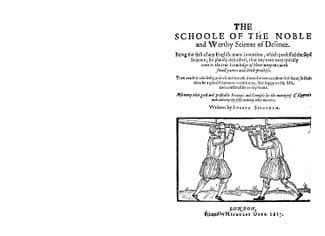
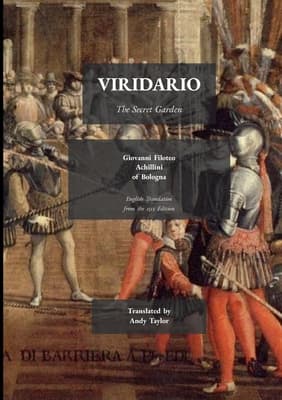
Giovanni Filoteo Achillini completed the Viridario in December 1504. Bolognese fencing keeps getting sold as a clean school, but the sources are messier than that. The real fight is not over whether Bologna produced good swordsmen; it is over when a cluster of treatises became a tradition, and whether that tradition is historical fact or a modern training label that still works in the salle.
What the label is really measuring
The question in Acta Periodica Duellatorum is whether the Bolognese tradition is an ancient lineage or a modern myth. The point is not to “explode a myth,” but to pin down when and how the Bolognese idea was defined, and to test whether some modern assumptions created a tradition contemporaries did not explicitly recognize as such. The modern Bolognese picture rests on commonalities among five sixteenth-century texts, not on a single canonical manual with a neat founder’s signature.
In modern HEMA, “Bolognese” can function like a division in a bracket, a practical way to group related material for training and competition. But if the label starts pretending that Marozzo, Manciolino, dall’Agocchie, and the anonymous Ravenna manuscript all represent one identical system, it stops being a category and starts becoming a shortcut.
The paper trail starts before the famous names
The chronology pushes the story earlier than most casual summaries do. The Viridario was printed in Bologna in 1513. Its fencing section covers sword-and-buckler and contains 25 techniques, and those techniques are closely related to Antonio Manciolino’s later material. Achillini also says he used an “original” text that was later stolen from him, though he does not name the author.
The Viridario does not present itself as part of a neat Bolognese lineage. The sources did not all advertise the school identity modern fencers now apply to them. The same problem shows up in the anonymous Ravenna manuscript, MSS Ravenna M-345/M-346, which is probably from the beginning of the sixteenth century. It includes medieval weapons and armor alongside later Bolognese material, a mix that complicates any story that treats early Bolognese fencing as a closed, finished system.
Some scholars have speculated that Guido Antonio di Luca wrote the Ravenna manuscript, but that attribution is not widely supported. The manuscript shows how hard it is to draw a clean line between medieval weapon work and the later Bolognese material that HEMA players now treat as a distinct family.
Marozzo, Manciolino, and dall’Agocchie do not say the same thing
The surviving masters most relevant to modern practice are Antonio Manciolino, Achille Marozzo, and Giovanni dall’Agocchie. Marozzo was born in San Giovanni in Persiceto, a possession of Bologna, and studied fencing in the school of Guido Antonio di Luca. Manciolino seems to have been Bolognese by birth and may also have been a student of Guido Antonio di Luca, which puts both men in the same orbit before their manuals ever hit print.
Manciolino appears in 1531. Marozzo’s Opera Nova first appears in Modena in 1536, then is reset and reprinted in Bologna in the 1540s, printed again in Venice in 1550 and 1567-68, revised by Marozzo’s son and reissued in 1568-69, and reprinted again in 1615. Dall’Agocchie’s Dell’Arte di Scrima Libri Tre arrives in Venice in 1572, and its emphasis shifts toward a more thrust-oriented style.
If Bolognese fencing were a frozen code, the manuals would not drift in emphasis across the century. Instead, the sources show a family of methods adapting over time. The older Dardi school was already present in Bologna in the fifteenth century. Marozzo’s Opera Nova is the most extensive treatise of the Dardi, or Bolognese, school and one of the most influential fencing manuals of the sixteenth century.
Why modern clubs should care about the difference
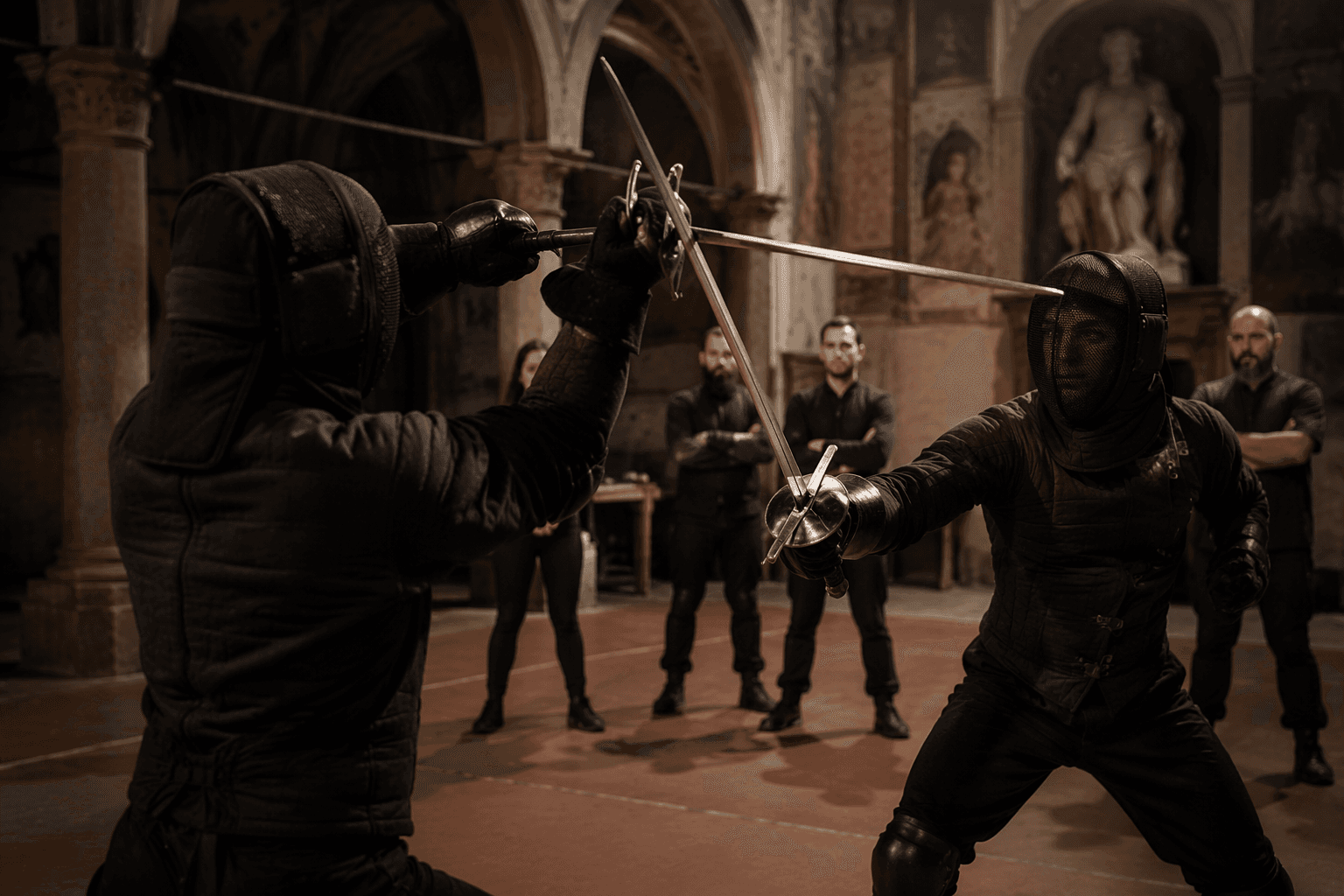
These masters were not just collecting isolated tricks; they were teaching a system grounded in time, distance, action, and Aristotelian logic. That means a club that treats Bolognese as a grab bag of flashy plays is missing the actual engine of the material.
In practice, that pushes instructors toward three habits:
- Separate source families without pretending they are unrelated. Sword-and-buckler from the Viridario and Manciolino is not the same training problem as Marozzo’s broader corpus, and dall’Agocchie’s thrust-forward tendencies change how measure and initiative are tested.
- Drill principles, not only sequences. If time, distance, and action are the backbone, then tempo drills, pressure in measure, and decision-making under blade contact belong at the center of training.
- Prep tournaments with source-specific expectations. A fencer who only knows one reconstructed “Bolognese style” can get exposed when an opponent works from Marozzo’s broader tempo game or dall’Agocchie’s more thrust-oriented approach.
Wiktenauer began in 2009 and is named for Johannes Liechtenauer. It distinguishes between a master’s teachings and the books or manuscripts that contain them.
What survives after the argument
Filippo Dardi is often credited as the founder of the Bolognese school, but the available evidence does not demonstrate that.
This article was produced by Prism’s automated news system from verified source data, official records, and press releases, then run through automated quality and moderation checks before publishing. The system is built and supervised by the people who set the standards it runs under. Read our full AI policy.
Did this article answer your question?