Five Master Strikes that define German longsword fencing
The five Master Strikes turn German longsword into a system: each cut seizes initiative, answers a specific guard, and keeps you dangerous in the bind.
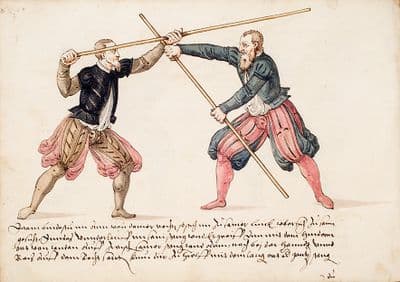
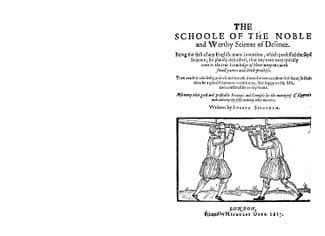
German longsword stops looking like a loose series of cuts when the five Meisterhau, or Master Strikes, are treated as a decision tree instead of a vocabulary list. The tradition tied to Johannes Liechtenauer is one of the best-documented early modern fencing systems, preserved across manuscripts and books for nearly three centuries, and its logic is built for Blossfechten, unarmored combat, not plate armor. Joachim Meyer, born on 16 August 1537 and dead by February 1571, stands at the end of that line as the last major figure in the tradition, bridging the medieval roots visible in the oldest dated Liechtenauer manuscript from 1452 and the more explicit Renaissance codification in Meyer’s 1570 Kunst des fechtens and his 1561 manual for Georg Johann I, Count Palatine of Veldenz.
Zornhau
The Zornhau is the clearest entry point into the system because it answers the most common problem in sparring: an opponent has already committed, and you still need to take the center back. In the language of Vor and Nach, it is a strike that does not just meet the attack, but tries to keep the initiative alive in the same motion. That makes it a useful test in drilling, because you can ask one simple question of every repetition: did the cut merely stop the threat, or did it leave you with your own threat still in play?
For modern bouts, the Zornhau is where the whole framework starts to make tactical sense. A fighter who can make the incoming line answerable while keeping pressure on the opponent is no longer fencing by reaction alone. The strike becomes less about the shape of the cut and more about whether the cut forces the other fencer to yield timing, blade position, or space.
Krumphau
The Krumphau solves a different problem: high structure. Wiktenauer ties it to Ochs, the high guard, which makes its purpose easy to see in sparring when an opponent likes to sit tall with the hands high and dare you to enter directly. The value of the Krumphau is that it does not waste time trying to pry open the guard from the most obvious angle; it changes the angle of the contest itself.

That is why the strike matters as a competitive tool. If an opponent keeps winning the line from Ochs, the Krumphau gives you a way to break that habit by attacking the geometry that supports it. In bout review, it is worth asking whether the strike forced a guard change, won the blade, or made the opponent’s preferred high-cover posture useless before the exchange could settle.
Schielhau
The Schielhau is the answer to a midline problem, and Wiktenauer links it directly to Pflug. Where the Krumphau attacks the structure of a high guard, the Schielhau pressures a lower, more contained posture that often invites measured, technical fencing. It is one of the best examples of why the Master Strikes are not decorative names but functional tools: the strike exists because a specific defensive shape needs a specific kind of disruption.
In practice, the Schielhau is valuable when a bout turns into a contest over patience. Fighters who sit in Pflug often want to control the entry and force the other side to overcommit, so the strike has to deny that comfort quickly. If the action stays honest to the tradition, the cut should not simply land on the target area; it should also collapse the opponent’s plan for a clean riposte.
Zwerchhau
The Zwerchhau addresses another frequent tournament problem: an opponent who fights from the roof, especially in Vom Tag. Wiktenauer’s pairing is useful because it shows how specific the Master Strikes can be, and how little they resemble vague “special moves.” The Zwerchhau is designed to punish a high, overhead posture by changing the line of attack and making the top of the exchange dangerous for the person who thought they owned it.
That is also why it fits so naturally into coaching. A fencer can drill the Zwerchhau against any habit of dropping the hands late or lifting the blade too slowly, because the strike rewards speed, angle, and control of the crossing line. In a live exchange, it can turn a simple guard into a liability, which is exactly what a competitive system should do.
Scheitelhau
The Scheitelhau finishes the set by solving the lowest guard problem, and Wiktenauer links it to Alber. If the previous strikes are about taking away high and middle structures, the Scheitelhau is the direct answer to a low invitation that tempts a lazy attack. It is also the most literal reminder that the Master Strikes are about initiative, because a low guard often invites an opponent to reach first and lose first.
That matters in modern HEMA because the system is not built to win by safe distance alone. The ARMA tradition treats the strikes as useful in Blossfechten precisely because they let you remain threatening while you defend or recover the line, rather than backing out and hoping the exchange resets in your favor. Modern practitioners still lean on that logic because there is no single extant, authoritative fencing tradition to copy intact, only source-based reconstruction that varies by manuscript and school. The five Master Strikes endure because they turn that uncertainty into a usable framework: each one gives the fighter a concrete problem to solve, a concrete guard to attack, and a concrete way to tell in drilling whether the line has been won or merely touched.
This article was produced by Prism’s automated news system from verified source data, official records, and press releases, then run through automated quality and moderation checks before publishing. The system is built and supervised by the people who set the standards it runs under. Read our full AI policy.
Did this article answer your question?