Gladiatoria manuscripts reveal a complete German armored combat system
Gladiatoria is armored HEMA in sequence, not fragments: spear, ecranches, sword, dagger, and ground work reveal how a judicial duel was meant to be fought.
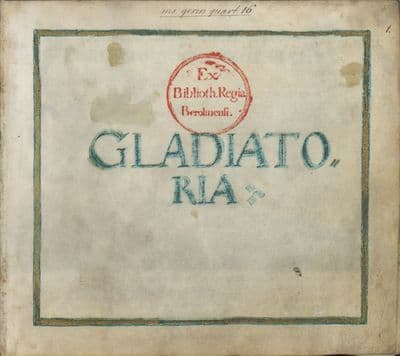
The Kraków manuscript is a 116-page illuminated fight book with large paintings and brief New High German text. It lays out a full combat ladder, from spear and small shields called ecranches, to swords, then daggers on foot and on the ground. That makes Gladiatoria the clearest German armored-fighting blueprint: it does not drip out a few flashy techniques and leave the rest to guesswork, and the system feels like a judicial duel being staged step by step rather than a modern points bout.
A complete fighting sequence, not a grab bag
In the surviving manuscripts, the combat does not begin with close-range scrambling or end with a single signature blow. It moves through reach, binding, transition, and finish because armor changes what counts as a solution, and Gladiatoria is built around those changes.
In blossfechten, speed, line, and clean blade work dominate more of the exchange. In Gladiatoria, the armor pushes the fight toward control, leverage, and the ability to keep working after the first contact fails. Once a visored helmet limits visibility and armor reduces the value of cuts, the fighter has to think about target priorities, grappling entries, and how to keep the initiative when the bout turns into clinch work or a fall to the ground.
Five witnesses, one tradition
The Gladiatoria group is known today through five surviving versions: New Haven MS U860.F46 1450, Vienna MS KK5013, Kraków MS Germ. quart. 16, Wolfenbüttel Cod. Guelf. 78.2 Aug. 2º, and Paris MS Cl. 23842. The Kraków manuscript is the one that gave the group its name, and that title page is the naming source for the whole family.
The Kraków codex is especially useful because it organizes the material cleanly into spear in armor, sword in armor, dagger in armor, and wrestling. The large paintings and brief New High German text make it one of the most readable witnesses for anyone trying to understand how the system is assembled. Other versions add longshield material or extra dagger material, but the Kraków book gives the clearest picture of the underlying sequence.
Why the New Haven manuscript changed the story
The New Haven manuscript was once believed lost and was only identified again after Yale digitized its holdings in the early 21st century. Scholars then tied it back to the family by showing that the manuscript from New Haven is the same one that had disappeared from Gotha, and the manuscript history includes a reconstruction from cut leaves and bifolia after it had been dismembered in the mid-20th century.
Yale’s catalog lists the New Haven volume as parchment with 43 leaves and text below the illustrations. All combatants wear closed visored helmets, and the art was executed in pen and watercolor, probably by one artist.
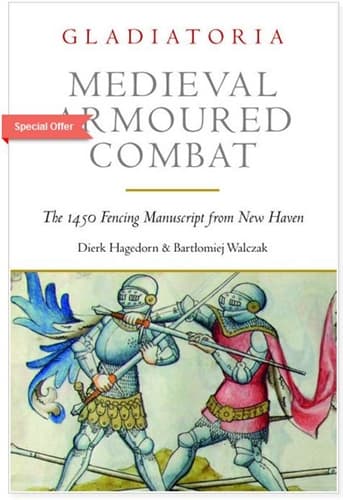
The University of Hamburg’s Centre for the Study of Manuscript Cultures traces the first part of the manuscript, part of what specialists call the Gladiatoria group, through decades of loss before its rediscovery. Yale’s catalog identifies the New Haven manuscript as seeming to have been written by the same scribe as the Vienna version, linking it to a connected manuscript culture rather than isolated copies that merely resemble one another.
Armored combat under legal pressure
The sequence in Gladiatoria makes the most sense when it is read against judicial combat. Judicial dueling ran in the Holy Roman Empire from the eleventh through the fifteenth centuries, while the Fourth Lateran Council of 1215 condemned the practice and created a long legal tension between canon law and regional custom. That legal tension helps explain why a martial text might care so much about ritualized phases, legal staging, and an orderly transition from spear work to the dagger finish.
The fighter in armor is moving through a formalized contest in which reach, closing, standing grapple, and ground struggle all carry meaning.
How it fits the wider German fight-book world
Gladiatoria is contemporary with the Liechtenauer tradition, but it is not directly influenced by it. That gives modern readers a German armored tradition that is related to the better-known long-sword world without being reduced to it. The practical result is a broader view of late-medieval German martial culture: one tradition focused on longsword pedagogy, another on the armored problems of a judicial duel.
Talhoffer belongs in the same conversation. Fifteenth-century fight books attributed to Hans Talhoffer are widely recognized for judicial-duel material, so Gladiatoria is not a curiosity on the edge of the field. It sits inside a larger manuscript culture that visualized formal combat for legal and social purposes, with a more continuous sequence than many readers expect from armored sources.
Why the scholarship matters to fighters now
The modern study of Gladiatoria is not only about recovering pages and attributing hands. A scholarly review of Dierk Hagedorn and Bartłomiej Walczak’s edition praised it for bringing previously unedited material into bilingual German-English form and for adding essays on the Gladiatoria group, fight books, and arms and armor. The edition gives HEMA readers a more stable text base for interpreting the armored exchange.
This article was produced by Prism’s automated news system from verified source data, official records, and press releases, then run through automated quality and moderation checks before publishing. The system is built and supervised by the people who set the standards it runs under. Read our full AI policy.
Did this article answer your question?