HEMA polearms reveal a broader curriculum beyond swords
HEMA’s polearm work rewires the whole sport: spear, staff, halberd, and poleaxe teach distance, grappling, and battlefield logic swords can’t.
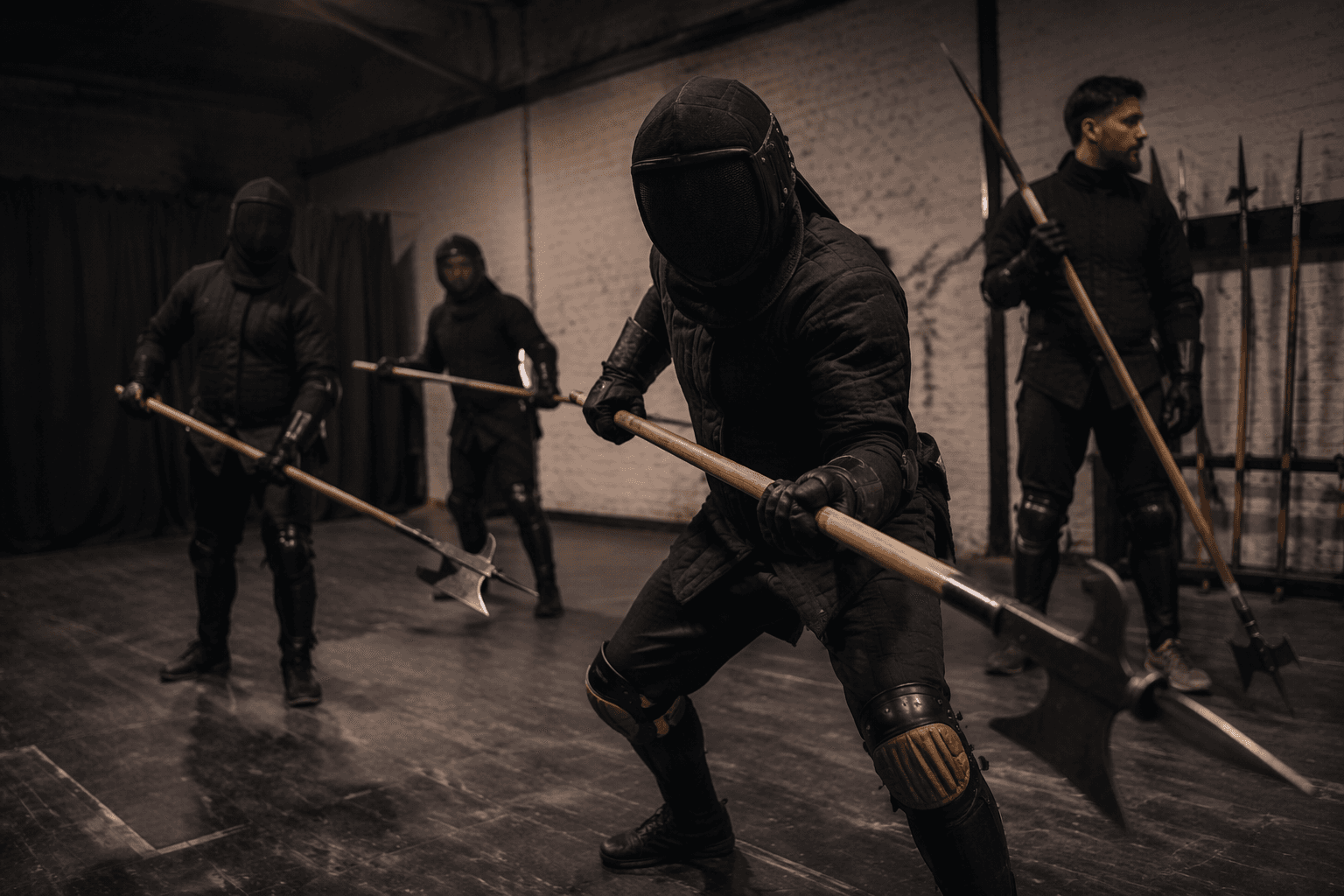
Wiktenauer’s pole-weapon category lists 24 pages, a quick corrective to the idea that HEMA is mostly a sword sport. Spend time with the spear, quarterstaff, halberd, and poleaxe and the curriculum gets bigger, the measure gets longer, and the footwork gets less forgiving. The spear is one of the oldest weapons in existence, and the quarterstaff is a simple wooden shaft that can teach body mechanics while still working as a serious weapon in the hands of peasants and travelers.
Polearms are not a side branch
The modern fixation on longsword hides how often historical European fighters trained with weapons built for reach, not romance. Polearms solve problems that sidearms cannot, especially once armor, mounted opponents, and crowded battle lines enter the picture. A spear, halberd, or poleaxe forces the fighter to manage distance first, then the opening, then the hands, which is why these weapons are such a clean test of timing and control in club practice.
That range also makes the category unusually useful for teaching fundamentals. The same body mechanics that keep a quarterstaff alive at close range help with the first beat on a spear and the haft work on a halberd. In practical terms, polearms make a student prove they can hold line, enter safely, and stay balanced while the opponent is still outside easy striking distance.
The source base is bigger than most people think
Wiktenauer is an ongoing collaboration among scholars and practitioners, with an index complete through the end of the 16th century. The HEMA Alliance calls it the largest library of Historical European Martial Arts manuscripts and books in the world, with a free public repository.
Andre Paurenfeyndt’s *Ergrundung Ritterlicher Kunst der Fechterey* was printed in Vienna in 1516 and is likely the earliest printed fencing treatise to include illustrations. Its pole-weapon section runs from pages 59 to 65. Staff and polearm work sat inside a broader fencing education rather than outside it. Paurenfeyndt wrote for beginning fencers, and the section is practical by design, with techniques and counters instead of vague theory.
The manuals treat polearms as core skill work
Paulus Hector Mair’s quarterstaff section is extensive and beautifully illustrated, and it covers how to stand, strike, parry, and grapple. The staff is more than a striking stick. It is a platform for distance, hand fighting, and clinch work.
Fiore de’i Liberi pushes the same logic even earlier. His spear material begins with the extended lance and shows multiple masters in guards that are closely related to sword guards, with defense built around a step and a beat. One line from the tradition is blunt: “Six Masters stand in guard with it, And with a step and a beat, they suddenly strike.”
Fiore’s sword-vs-spear material sharpens the lesson by showing how a fighter beats aside an incoming weapon and answers immediately. The spear section reads less like a battlefield curiosity and more like a timing drill with lethal consequences. Fiore’s manuscript is the earliest known Italian fencing manual and one of only two from its era then known.
From short staff to pike, the curriculum keeps expanding
Joachim Meyer makes the ladder explicit. Born on 16 August 1537 and dead by February 1571, Meyer treated the staff as a bridge rather than a dead end. His 1561 manuscript, MS Bibl. 2465, was created for Georg Johann I, Count Palatine of Veldenz, and his staff material begins with the short staff as a training tool for other pole weapons before moving to the halberd and then to the long staff representing the pike.
Managing a short staff teaches the entry mechanics that matter for halberd and pike. Handling the longer weapons means solving the same problems at a harsher scale: longer timing windows, wider lines, and less room for mistakes.
Why the battlefield context still matters in the salle
The halberd was a foot-soldier’s weapon especially popular in Germany and Switzerland. A Swiss example in the Metropolitan Museum of Art collection is a “signature weapon” of Switzerland, and the weapon is tied to the ability of non-noble infantry to confront cavalry-heavy armies. Its head combines an axe-like blade, an apical spike, and a beak, built for more than one problem at once.
The poleaxe extends that same logic in western Europe. The poleaxe was the western European equivalent of the halberd, designed for hacking, stabbing, and piercing armor plates.
What polearms test now
In modern training, polearms expose weaknesses fast. They reward clean structure, punish lazy entries, and demand that a fighter control measure before they can hunt for a finish. That makes them especially valuable in clubs and tournaments, where fighters have to manage a spear line, shift a halberd, or keep a quarterstaff alive through pressure.
This article was produced by Prism’s automated news system from verified source data, official records, and press releases, then run through automated quality and moderation checks before publishing. The system is built and supervised by the people who set the standards it runs under. Read our full AI policy.
Did this article answer your question?