Histfenc examines HEMA gear evolution and the stubborn bib gap problem
HEMA gear now spans masks, jackets, gloves, and specialized layers, yet the bib gap still tests neck protection. HEMA Ratings adds a second lesson: read rank carefully.
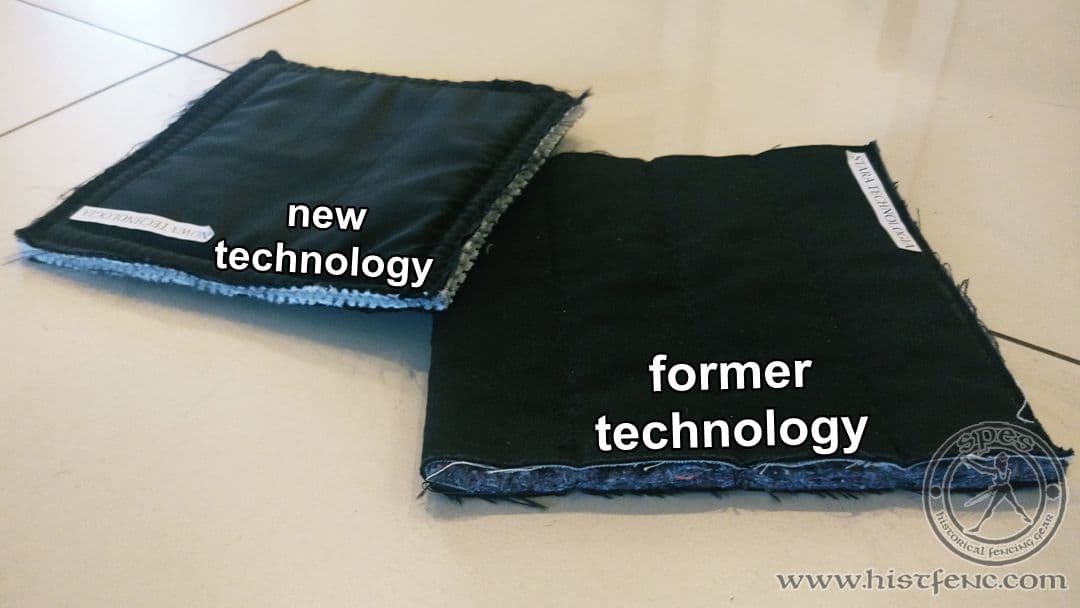
The gap between a mask bib and a fencer's throat remains one of HEMA's sharpest protection problems in a market that now stretches from jackets, pants, gloves, plastic covers, and head covers to purpose-built masks like the Gajardoni Kombat Mask and the SPES Historical Line. At the same time, HEMA Ratings turns tournament results into weighted ratings and rank.
Purpose-built gear is the sign of a maturing sport
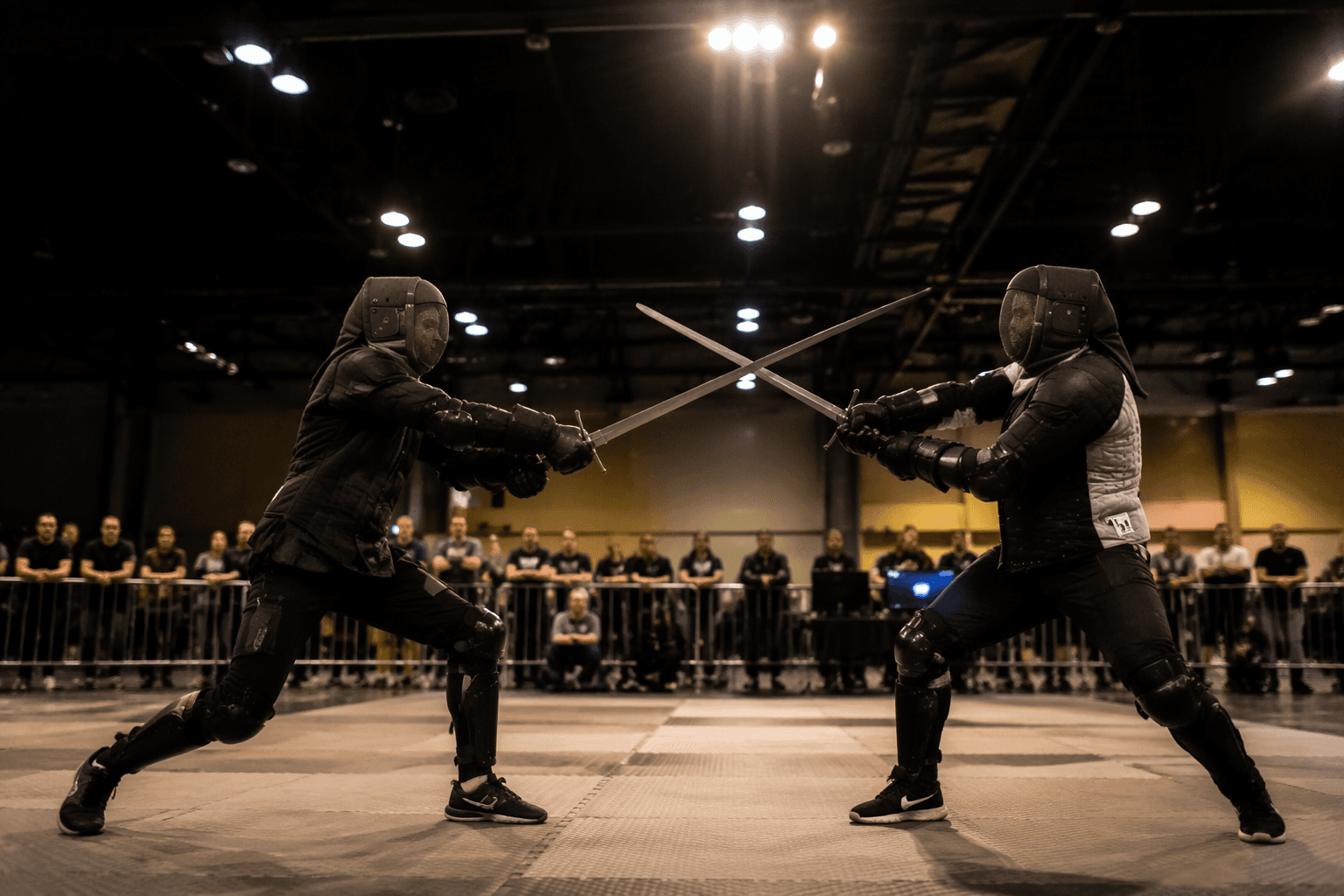
HEMA no longer lives on borrowed kit and improvised padding alone. The equipment ecosystem is built around the real demands of fencing hard and training often, with separate layers doing different jobs rather than one oversized piece trying to solve everything. Jackets absorb cuts and bruising, gloves protect the hands, masks defend the head, and the smaller pieces, including plastic covers and head covers, help the whole stack work together.
Weapons vary, target areas vary, and training goals vary from light technical work to full-speed exchanges with repeated impacts. A good kit is not just "thick enough"; it has to hold up under constant contact, preserve mobility, and stay compatible with the rest of the fence. The move toward purpose-built items shows a market that has moved far beyond the sport's improvised beginnings.
The bib gap is still the sharp edge of neck protection
The stubborn problem in all of this is the interface between the mask bib and the throat or neck. Histfenc's "The BIB GAP TRAP! 4 ways of increasing neck protection in HEMA" centers on the gap where separate pieces meet, because that's where protection can fail first. A head strike is not the only danger in HEMA; thrusts, wraps, and close-in blade work keep the neck under pressure from angles a straight-on face test does not capture.
The bib gap is a system problem, not a single-product problem. Coverage, overlap, sealing, and compatibility matter together, and the wrong combination can leave a weak spot even when every individual item looks strong on its own. The sport's gear culture keeps evolving because fighters keep finding the places where a mask, bib, jacket collar, and body posture do not quite line up.
Reading HEMA Ratings without mistaking it for a pure leaderboard
HEMA Ratings collects results from as many HEMA tournaments as possible and presents ratings based on those results. It uses the Glicko-2 algorithm, created by Harvard statistics professor Mark Glickman, and the site shows two numbers: a weighted rating and a rank.
Glickman describes Glicko-2 as an improvement on the original Glicko system he created in 1995. In his Glicko-2 paper, he writes that each player has a rating, rating deviation, and volatility. Rating deviation, or RD, is the model's way of showing uncertainty, while volatility captures how much a player's rating is expected to swing. In plain terms, the number beside a fighter's name is not a frozen truth; it is an estimate that gets sharper as the system sees more bouts.
A January 26, 2024 GD4H analysis called HEMA Ratings one of the strongest tools for initial tournament seedings and skill tiers. A tournament director wants a practical way to sort a field before the first blade is drawn, and a weighted rating gives that. Rank adds the broader comparison, but the weight behind the number is what keeps a one-weekend result from pretending to explain a whole career.
How to read an upset when the numbers lag behind the floor
A useful way to think about Glicko-2 in event season is through a few real competition scenarios. If a newer longsword fighter enters a HEMA Ratings month in which 169 fighters compete, and that month includes 723 fights across 5 tournaments at 3 events in 3 countries, an early run of wins can move the weighted rating quickly because the model still has a lot to learn about that athlete. If the same fighter then runs into a veteran with a lower RD, the veteran's number may move more slowly even after a rough afternoon, because the system has far more history to work with.
The opposite can also happen. A seasoned sabre specialist can lose a close bout in a HEMA Ratings monthly pool of 41 fighters that logged 168 fights from one event, and the rank may barely budge because the model is smoothing against a long record. That is not the system ignoring a visible upset; it is the system refusing to treat one result as a total rewrite. The July 2026 data also show 30 fighters in women’s and underrepresented-genders longsword out of 1,152 active fighters, with 127 fights from 2 events in 2 countries.
Why category pages matter as much as the headline rank
HEMA Ratings does not flatten the sport into one universal table. It maintains separate pages for longsword, rapier and dagger, single rapier, sabre, sword and buckler, single sidesword, and singlestick, which reflects the way HEMA actually competes: by weapon, by ruleset, and often by very different tactical demands. A fencer can be sharp in one discipline and still be rebuilding their profile in another.
The site is a shared competitive tool, with pages that note support from the people using it and a club structure that ties ratings back to actual training groups. The numbers help seed tournaments, track skill tiers, and give an emerging scene a common language.
This article was produced by Prism’s automated news system from verified source data, official records, and press releases, then run through automated quality and moderation checks before publishing. The system is built and supervised by the people who set the standards it runs under. Read our full AI policy.
Did this article answer your question?