How printed fencing books standardized Historical European Martial Arts
Printed fencing books did more than preserve HEMA. They narrowed the archive, spread it beyond courts, and quietly decided which techniques modern clubs keep rebuilding.

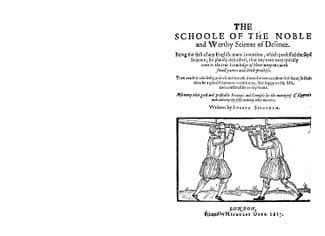
Historical European Martial Arts is built on a weird advantage: the sport can still read its old playbook. Once fencing treatises moved from hand-copied manuscripts into printed books, a martial method could travel farther than one master’s salle, survive in more copies, and become legible to students centuries later. That shift matters because modern HEMA is not reconstructing the whole fighting world of Europe. It is reconstructing the part that print made durable enough to survive.
Why the medium matters
Until the mid-15th century, books were copied by hand, which kept martial knowledge expensive, slow to circulate, and tightly controlled. The paper revolution and the print revolution changed that fast, and the numbers tell the story: by 1500, Europe had produced more than 9 million books, and early presses had distributed roughly 10 million books in nearly 40,000 titles. Before printing, manuscript books in Europe were counted in the thousands. After printing, reading matter expanded on a scale that helped education spread among the middle classes.
That is the real foundation of modern HEMA reconstruction. The archive got bigger, but it also got more standardized. Diagrams, engravings, and printed text did something a single copied manuscript could not: they fixed a method in repeatable form. Once a fencing system appeared in print, it could outlive the school that produced it, which is why today’s practitioners spend so much time working from books instead of lineages.
The books did not serve only nobles
The Metropolitan Museum of Art’s survey of illustrated fencing books from 1500 to 1800 makes the social reach of those texts hard to miss. Early fencing books were practical self-defense works for nobles, but they also circulated among burghers, merchants, and craftsmen. The Met notes that formalized arms training was widely practiced by sons of the middle class, and that illustrated fencing books by highly regarded Masters of Arms helped spread martial literacy beyond aristocratic households.
That broader audience matters for HEMA today because it explains why the surviving material is not just courtly, aristocratic, or ceremonial. These books were not sealed inside palace walls. They were part of a growing urban reading culture, and by about 1650 the increase in reading matter had both resulted from and promoted education among the middle classes. In practical terms, that means modern clubs are not just recovering elite dueling habits. They are inheriting a print culture built for people who needed fighting knowledge in a more public, more mobile world.
What survived is broad, but not neutral
The Met’s catalogue shows just how wide the printed source base really is. Sixteenth-century fencing books range across longsword, rapier, dagger, shield, cloak, spear, halberd, quarterstaff, and even unarmed combat. By the early seventeenth century, the rapier increasingly becomes the gentleman’s weapon of choice. That shift is one reason the modern source corpus feels uneven: HEMA has a deep bench in some weapon sets and a thinner one in others, not because those other arts were unimportant, but because print preserved some fashions more cleanly than others.
That is the blind spot fighters have to keep in mind. Printed manuals overrepresent what was worth illustrating, marketing, and reissuing. They are excellent at preserving methods that had social prestige, clear pedagogy, or eye-catching iconography. They are less helpful when the historical reality was messier, local, or transmitted orally. If a technique was common but never widely printed, it can vanish from the modern conversation. If a style was lavishly illustrated, it can look bigger in today’s reconstruction culture than it was in actual use.
Thibault and Capo Ferro show what print rewarded
Girard Thibault’s Academie de l’Espée, printed in Leiden in 1628, is the most obvious example of how print turned martial instruction into a durable artifact. The Metropolitan Museum describes it as generally acknowledged to be the most lavish and artistically accomplished fencing book ever produced. Its collection record says it was sponsored by King Louis XIII of France and other European rulers, and it contains forty-six double-page plates signed by sixteen Flemish engravers. Wiktenauer goes even further, calling it arguably the most elaborate fencing manual ever written.
That kind of production value matters because it made the system portable and memorable. A book with that level of visual discipline does not just explain a style, it freezes it. Ridolfo Capo Ferro’s Gran Simulacro dell’Arte e dell’Uso della Scherma, first printed in Siena in 1610, offers a different but equally important example. It is a rapier manual, but it also treats the cloak, dagger, and rotella shield. That mix shows the real usefulness of printed fencing books for HEMA today: they do not only preserve a weapon, they preserve a whole tactical ecosystem around it.
The older manuscript layer never disappeared
Print did not erase manuscript culture. It absorbed it, translated it, and made some of it easier to find. The Metropolitan Museum identifies Hans Talhoffer’s Fechtbuch, written in the 1440s, as one of the earliest surviving European fencing manuals. It also places Talhoffer inside the Liechtenauer tradition, the cryptic verse-based martial instruction associated with Johannes Liechtenauer, an itinerant master swordsman of the fourteenth century.
That continuity is important. HEMA is often described as a recovery project built on books, but the deepest roots are older than print. Talhoffer shows the bridge between a semi-secretive master-to-student system and the later world of reproducible manuals. Gustav Hergsell’s 1893 facsimile edition then pushed Talhoffer into modern awareness, making him the best-known fifteenth-century master to modern fencing historians and HEMA students. The result is a source tree with two trunks: manuscript inheritance and printed standardization.
What modern clubs are really reconstructing
If you strip away the romance, modern HEMA clubs are mostly reconstructing what the book market made survivable. That means the field is naturally strongest where the historical record was most legible: longsword systems, rapier theory, dagger work, and the companion weapons that printed manuals liked to show beside them. It also means the field can drift toward what looks complete on the page rather than what was most common in the fight hall.
The practical advantage is obvious. Printed fencing books gave modern students something closer to a shared rulebook, not a single authoritative canon but a library of competing, evolving methods. The cost is just as obvious: the sport’s picture of historical fighting is shaped by what printers could sell, what engravers could draw, and what educated buyers wanted to own. That is why the best HEMA interpretation starts with the books, but it does not stop there.
This article was produced by Prism’s automated news system from verified source data, official records, and press releases, then run through automated quality and moderation checks before publishing. The system is built and supervised by the people who set the standards it runs under. Read our full AI policy.
Did this article answer your question?