Le Jeu de la Hache reveals HEMA’s earliest poleaxe treatise
The earliest poleaxe treatise keeps shaping HEMA drills: a tighter 1460-1485 dating, a disputed weapon typology, and rubber simulators dominate practice.

Le Jeu de la Hache is still changing how Historical European Martial Arts handles armored poleaxe work because it is the earliest extant treatise devoted exclusively to the weapon. The 2017 critical edition by Olivier Dupuis and Vincent Deluz tightened the manuscript’s date to the third quarter of the 15th century, between 1460 and 1485, and placed its origin in Flanders or Wallonia, in the orbit of the dukes of Burgundy.
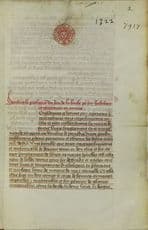
That dating matters in gyms and on tournament fields because the text is not a clean, illustrated manual with every motion spelled out. The Bibliothèque nationale de France catalogues it as MS Français 1996 under the title La Doctrine et l'industrie du noble jeu de la hache et la maniere de battaillier, and the manuscript remains unillustrated, with blank spaces where miniatures were likely intended. HEMA reference material treats that absence as part of the challenge: the source preserves a system, but not a complete visual script.
The core dispute is the weapon itself. Anne-Caroline Le Coultre’s study of current practice notes that Le Jeu de la Hache presents pollaxe fighting in armor, but the text never defines the business end with enough precision to settle whether the relevant blade should be read as a cutting edge or as a hammer or raven’s beak. That ambiguity shapes how practitioners drill hook-and-control actions, how they interpret striking targets on plate armor, and how they think about closing distance in armored bouts.
Le Coultre’s survey found that rubber simulators are the most common tools used for this source, with wood and metal also in circulation. That is the practical bridge between manuscript and salle: safety pushes clubs toward softer trainers, while realism keeps pressure on makers to reproduce the poleaxe’s leverage, reach, and hooked controls. The source also sits naturally beside other armored-combat reconstructions from Fiore dei Liberi, Hans Talhoffer, and Pietro Monte, where smashing, prying, and hooking matter as much as the cut.
The scholarship has a clear line of progression. Sydney Anglo produced the first major edition and translation in 1991, through the Society of Antiquaries in London, and it remained the standard reference for 26 years before the 2017 critical edition added a detailed glossary, notes on ambiguous passages, and refined terminology such as tour de bras and demy hache. For HEMA schools, that is not archive work for its own sake. It changes how the weapon is named, how it is simulated, and how armored poleaxe training is built today.
This article was produced by Prism’s automated news system from verified source data, official records, and press releases, then run through automated quality and moderation checks before publishing. The system is built and supervised by the people who set the standards it runs under. Read our full AI policy.
Did this article answer your question?