Paulus Hector Mair's De arte athletica preserved fencing knowledge in 17 libri
17 libri, three copies, one archivist: Mair’s fencing compendium kept older systems alive, but his edits and prestige reshaped what HEMA inherits.
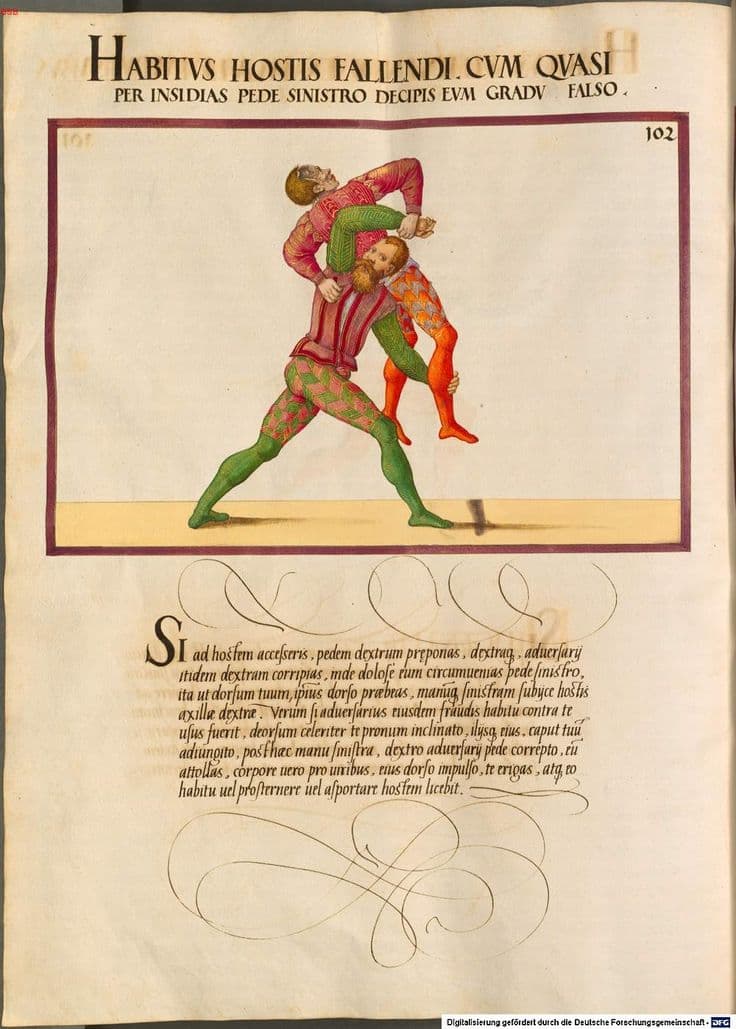
In two volumes and 17 libri, Paulus Hector Mair assembled older text and image sources into De arte athletica and had two fencers check the material in practice. For modern HEMA, the work matters because Mair treated fencing as something to be gathered, ordered, and preserved before it disappeared.
Mair built an archive, not just a manual
Paulus Hector Mair was born in 1517 and died in 1579, and he was no casual collector on the edge of the sport. He worked in Augsburg as a civic official, city scribe, and civil servant, and De arte athletica was an expensive, status-driven project rooted in urban elite culture. He compiled the work in the mid-16th century from older written and visual sources, some of which he personally owned, to create a fuller and more exact presentation of fencing.
That makes Mair useful to HEMA readers, but not a neutral witness. He was preserving material, but he was also choosing it, organizing it, and deciding how it should be seen.
What the 17 libri preserve
The scale of the work is part of its appeal. De arte athletica survives in three manuscript copies, each in two volumes, and each copy runs to roughly 1,200 pages. The structure is systematic, with section and image numbering and an index, which gives the manuscript the feel of a carefully managed reference work rather than a loose miscellany.

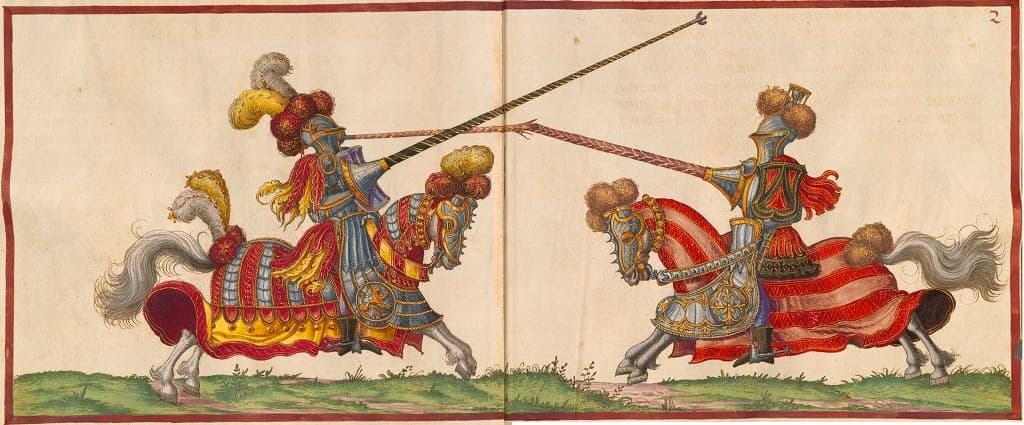
The contents span about 17 weapon-forms, ranging from the two-handed sword and rapier to armored combat, sickle, and scythe. Individual forms contain anywhere from 8 to 136 illustrated techniques, so Mair was not preserving a single style or a single weapon. He was trying to build an encyclopedia of fighting systems across different weapons, contexts, and lineages.
The older German masters survive inside that architecture because Mair copied and reframed them. Johannes Liechtenauer, Johannes Lecküchner, Andre Lignitzer, and Ott Jud remain visible in the tradition because Mair decided they belonged in one master file. Many techniques are preserved not as a clean, direct inheritance, but as material filtered through Mair’s editorial hand.
Three manuscripts, three different books
The surviving copies are not identical twins. The Dresden two-volume set is commonly dated to 1542 and is held by the Sächsische Landesbibliothek - Staats- und Universitätsbibliothek Dresden. The Munich copy is commonly dated to the 1540s and is held by the Bavarian State Library, while the Vienna copy is commonly dated to the 1550s and survives in the Austrian National Library.
Those copies also differ in character. The Munich version is the most luxurious, the Vienna version includes explanatory texts in both Latin and German, and the Dresden and Vienna copies differ in total page count, image count, and language use.
Mair sold the Munich manuscript to Duke Albrecht V of Bavaria in 1567 for 800 florins.
Why HEMA still reads Mair with caution
The practical check by two hired fencers is one of the most revealing details in the record. Mair did not want the text and images to sit only on the page. He wanted the archive to meet living bodies.
But that same impulse also limits how “neutral” the source can be. Mair compiled, standardized, and likely reshaped what he inherited through numbering, indexing, selection, and presentation. Modern edited volumes and translations devoted to his longsword and dusack material show how central he remains, yet they also confirm that readers still have to interpret, compare, and test before they can turn his pages into practice.
The end of the man behind the archive
Mair’s own career ended in scandal. Augsburg executed him on December 10, 1579, for embezzlement, and allegations ranged from 32,000 to 40,000 guilders over a long civic career. An inventory of his possessions began on December 14, 1579.
This article was produced by Prism’s automated news system from verified source data, official records, and press releases, then run through automated quality and moderation checks before publishing. The system is built and supervised by the people who set the standards it runs under. Read our full AI policy.
Did this article answer your question?