SoCal Swordfight rules show HEMA bouts are local, not universal scripts
SoCal Swordfight makes the core HEMA truth plain: the same touch can score differently once local judges, timing windows, and afterblow rules take over.

A clean hit at one HEMA event can become a double, or even an afterblow loss, at the next ring over. SoCal Swordfight’s longsword rules make that explicit: the bouts are built to showcase and develop skill in unarmored combat in the KdF tradition, not to simulate a sword duel, and the rule document can still change before the event starts. That is the competitive reality in Southern California and across the United States, where Historical European Martial Arts is shaped less by a single canon than by local choices that change what fighters train for and what the brackets reward.
How SoCal Swordfight turns results into matchups
SoCal Swordfight does not leave early-round chaos to chance. Fighters are seeded into tiers based on previous tournament results, which pushes competitors into more meaningful matches instead of a random mismatch parade. The same event also requires a cutting qualification for Open Steel Longsword, and that qualification stays valid for two years, so a fighter’s preparation can carry forward across seasons instead of resetting every weekend.
That mix matters because it changes the incentive structure before a blade is even raised. A competitor who knows seeding will reflect prior results has reason to care about every earlier placement, not just the final podium. The two-year cutting qualification adds another layer, rewarding athletes who can prove the control and consistency needed for a weapon class that demands more than point-fighting speed.
Why the judging crew changes the look of the bout
HEMA Scorecard, the free online tournament-management platform used across the community, treats officiating as a shared job rather than a single all-seeing call. Its match templates often use one director and two judges, though some bouts can run with just a director and one judge when staffing is short. In practice, that means the ring is split into specialized eyes instead of one referee making every judgment alone.
The roles are narrow on purpose. The assistant director watches tempo and whether an afterblow was defended, while line judges focus on their assigned fighter and whether that fighter hit at all. The director and assistant director watch both fighters together and decide on hits, timing, doubles, and related calls. In a three-minute pool match run on a continuous clock, including judging time, that division of labor can decide whether a cautious exchange gets rewarded, penalized, or called dead on the spot.
Some rulesets built into HEMA Scorecard also end pool bouts after three double hits or when a fencer reaches nine points. That alone changes the feel of a ring. A fighter who wants to grind for clean singles over time has to manage the clock, the double-hit threshold, and the point race all at once, because the format can shut down a tactical drift long before one person “dominates” in a casual sense.
Afterblows are where HEMA gets brutally local
The cleanest illustration of HEMA’s local rule logic is the afterblow. In one HEMA Scorecard ruleset, an afterblow is an immediate single-action counterattack that lands on the body or head of the attacker, and it deducts one point rather than scoring separately. Another HEMA Scorecard ruleset says officials award the highest-scoring blow within one tempo of the initial hit, which means the exchange is still live after the first contact if the follow-up lands quickly enough.
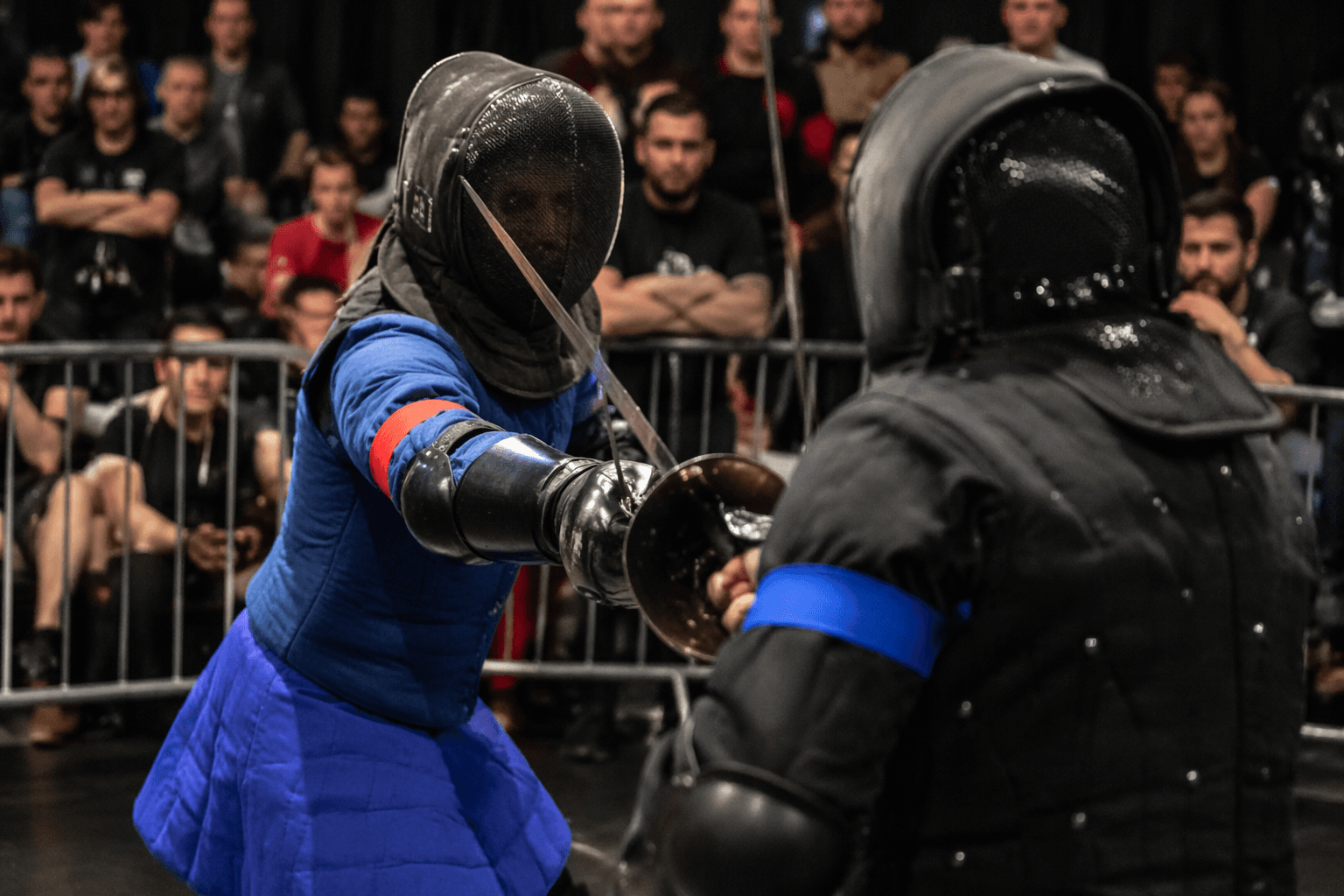
That makes afterblow training a built-in test of control. A fighter can land first and still lose ground if the reply comes back in the permitted window and on a better target. In other words, HEMA is not only asking who struck first, but whether the striker preserved enough structure to survive the answer. That rewards compact recoveries, disciplined point choices, and the habit of exiting an exchange with a guard intact.
The style implications are immediate. Some competitors train for burst entries and fast pressure because a point is a point. Others spend more time on follow-through and defense because the scoring window can turn a successful hit into a costly trade. The same blade work can look brilliant or reckless depending on the event’s afterblow language, which is exactly why HEMA bouts feel inconsistent from one tournament to the next.
Safety rules are part of the script too
Before the competitive questions come the equipment questions. TAoS Fight Camp requires staff to inspect and approve all protective gear and weapons before competition begins, and it allows no exposed skin. Its longsword list is specific: a puncture-resistant jacket and pants, rigid elbow and knee protection, a gorget, a mask with back-of-head protection, heavy plated gloves, and a longsword with safe flex and a blade no longer than 40 inches from crossguard to tip.
That safety baseline shapes the sport as much as any scoring chart. A black card can also mean immediate removal from the entire tournament, at the discretion of the Head Judge or Tournament Director. So even when a bout is about historical technique and tactical finesse, the event still sits inside a modern system of compliance, escalation, and immediate consequence. The sword may be old in spirit, but the authority structure is unmistakably present-day.
The bigger HEMA culture is built on variation
HEMA Scorecard can change its rules up to the start of a tournament, and major changes are announced on the platform. That flexibility is not a bug. It is part of how the sport keeps adapting to different organizers, weapons, and competitive priorities without pretending every event is the same. A fighter stepping into one format may be rewarding clean control and another may be rewarding pressure, speed, or the ability to keep scoring while staying safe from an afterblow.
The HEMA Alliance frames that wider world as a global community dedicated to excellence, freedom, and variety in the pursuit of Historical European Martial Arts. That philosophy explains why the scene can support so many rule packages at once. HEMA is connected by shared lineage and shared practice, but the bout itself is local, the judging crew is human, and the scoring philosophy is what turns a strike into a point, a double, or a warning.
This article was produced by Prism’s automated news system from verified source data, official records, and press releases, then run through automated quality and moderation checks before publishing. The system is built and supervised by the people who set the standards it runs under. Read our full AI policy.
Did this article answer your question?