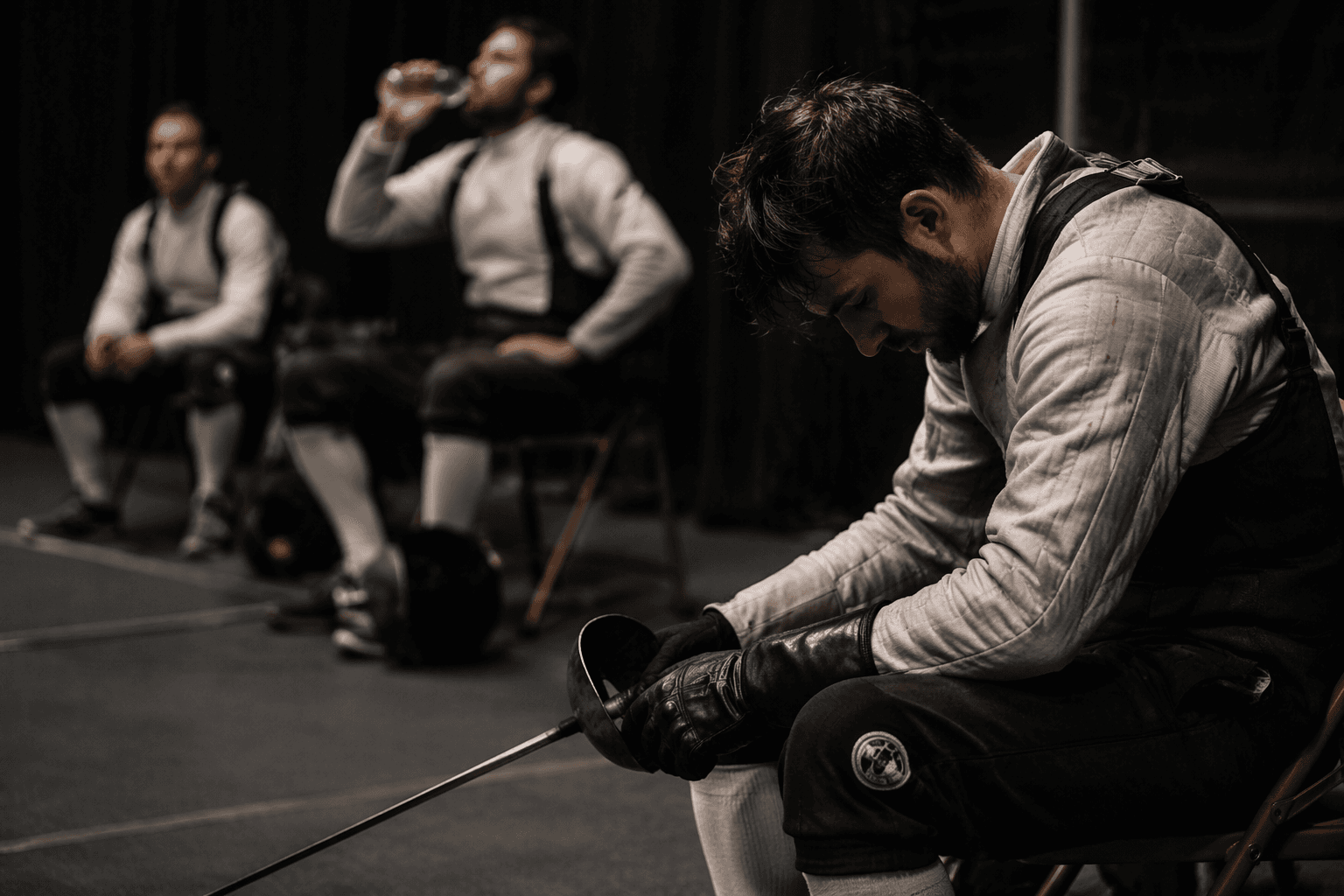
Swordfish became HEMA's premier proving ground in Sweden
Swordfish turned Swedish HEMA into the sport’s measuring stick, where record fields, livestreams, and elite results all became part of the standard.
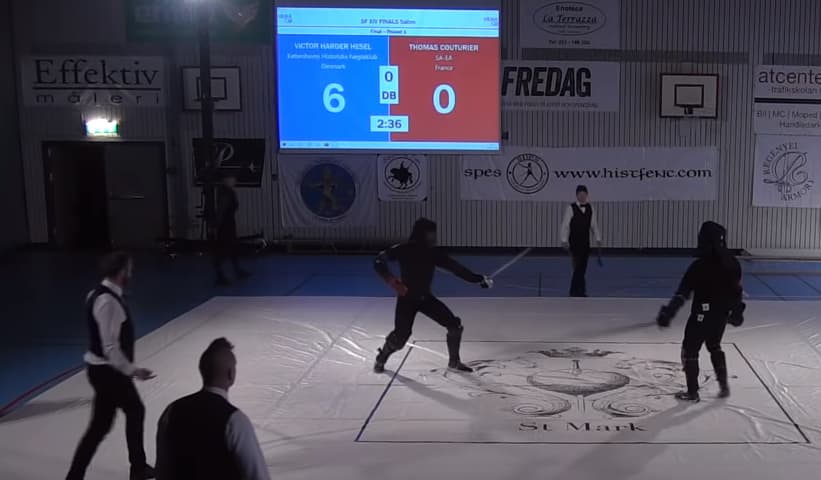
Swordfish became the event that fighters use to measure themselves because it stopped being just a tournament and turned into HEMA’s public benchmark. It began in Malmö in 2006, settled into an annual fall rhythm in Gothenburg, and grew into the largest event in the scene as described by HEMA Copenhagen. The result is a competition that matters far beyond one weekend: a strong Swordfish showing signals that a fighter can handle the deepest fields, the toughest judging, and the most visible stage in historical fencing.
The tournament that set the standard
Swordfish’s weight comes from repetition and scale. Göteborgs Historiska Fäktskola, GHFS, says the event has run annually since 2006, and its own records show Swordfish 2008 held from October 31 to November 2 in Gothenburg, hosted by Gothenburg Historical Fencing School. That continuity matters in a sport where prestige is often built by who shows up, how deep the brackets run, and whether the event can keep drawing elite opponents year after year.
GHFS also frames itself as one of the world’s foremost clubs for HEMA, which helps explain why Swordfish sits inside a broader institutional base rather than functioning as a one-off showcase. HEMA Copenhagen adds another layer by describing Swordfish as the largest event in HEMA and noting that it has been held in Sweden. Taken together, those details make Swordfish feel less like a single competition and more like the reference point around which the Swedish and international scenes organize their expectations.
Why the results carry more weight than the trophy
A good Swordfish result means something because the field has repeatedly been deep and international. GHFS says Swordfish 2012 featured a record 82 fighters in the open longsword division, with entrants coming from across Europe and North America. That kind of turnout changes how a result is read: winning is not just about surviving one bracket, but about coming through a field broad enough to stress-test style, conditioning, and tactical adaptability.
The event also spans more than one weapon and more than one kind of competitive test. HEMA Copenhagen notes that Swordfish tournaments often include many competitions in several weapons, along with workshops and classes. That mix matters because HEMA judges are not only watching points and placements, they are watching whether a fighter can translate technique across formats and whether a club can produce athletes who understand the sport’s technical breadth.
The livestream era changed Swordfish’s reach
Swordfish’s influence widened sharply when it moved online. Historical Fencer says Swordfish 2011 was the first major HEMA event to livestream competitions, and also the first event to have a professional livestream broadcasting finals on the internet as they unfolded. That was a turning point for a niche martial arts community that had mostly depended on in-person observation, post-event clips, and rumor-driven reputation.
The broadcast era gave HEMA a new way to build memory. Historical Fencer says hundreds of thousands of people have watched Swordfish fights during and after the event, and it identifies Scott Hellroth and Matt Galas as early livestream commentators. Those names matter because they helped turn the event into a shared media experience, not just a local competition. From that point on, a fighter’s Swordfish run could be studied, replayed, and debated by people who were never in the hall in Gothenburg.
The fighters who made Swordfish a measuring stick
Swordfish’s reputation is also carried by the athletes who keep returning to it. Historical Fencer describes Dennis Ljungqvist as a three-time Swordfish longsword champion, a fighter with twelve Swordfish medals in total and the world’s number one ranking according to HEMA Ratings. That combination of titles and ranking is exactly why Swordfish functions as a measuring stick: the event is not only where reputations are made, but where the sport’s top names go to confirm them.
Ljungqvist’s record shows how the event rewards consistency as much as peak performance. Multiple medals over time suggest that Swordfish punishes one-off brilliance and favors fighters who can keep producing across years, brackets, and rule sets. In a sport still defining its competitive identity, that kind of repeat success becomes a stronger signal than a single seasonal upset.
From club culture to national structure
Swordfish also tracks the sport’s institutional growth in Sweden. GHFS says the Swedish HEMA Federation, SvHEMAF, was formally founded on January 28, 2012, and that Swordfish 2013 was organized with the federation. That links the tournament to the moment HEMA started hardening from a club-driven scene into a more structured competitive landscape.
The next step came in 2015, when GHFS says HEMASM, held in Uppsala by SvHEMAF, became the first official national HEMA championship worldwide. Swordfish did not create that national framework by itself, but it helped prove there was enough depth, audience, and organizational maturity to support it. In that sense, Swordfish was both a tournament and a rehearsal space for the sport’s future governance.
The media trail around the event
Swordfish also crossed into wider public view earlier than many niche combat sports events do. GHFS’s forum references coverage from Göteborgs-Posten and a Swedish Channel 4 report from Swordfish 2008, showing that the event had already become newsworthy outside the fencing world. Historical Fencer’s archive adds an Al-Jazeera report from Swordfish 2014 in Gothenburg featuring Axel Pettersson and Jessica Finley, which pushed the event even further beyond its home scene.
That media trail matters because it confirms what the rankings and brackets already suggested: Swordfish had become the place where HEMA could be explained to outsiders. Local press, national TV, and international coverage each helped fix the event’s image as a serious proving ground rather than a novelty.
Swordfish still stands at the center of HEMA because it combines elite competition, instructional depth, and media visibility in one annual package. Since 2006, it has offered the sport its clearest standard: if you can perform there, in that field, under that spotlight, the result travels with you.
This article was produced by Prism’s automated news system from verified source data, official records, and press releases, then run through automated quality and moderation checks before publishing. The system is built and supervised by the people who set the standards it runs under. Read our full AI policy.
Did this article answer your question?