Why Fiore dei Liberi still shapes modern HEMA six centuries later
Fiore's Flower of Battle still drives HEMA because one manuscript spans sword, dagger, pollaxe, unarmed work, and mounted combat. That breadth still fuels arguments over technique.
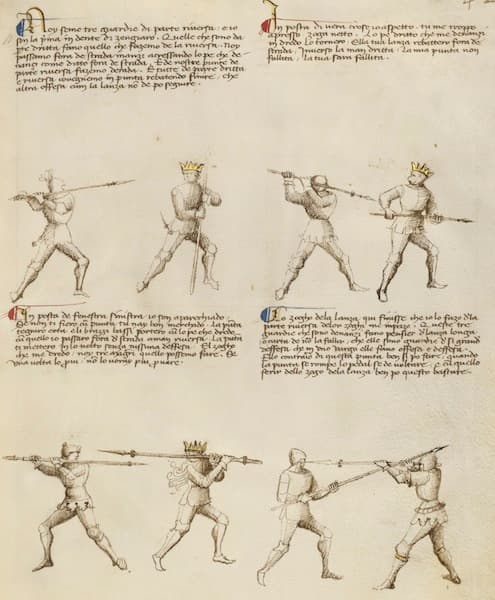
The J. Paul Getty Museum’s copy of Fiore dei Liberi’s Flower of Battle survives as a lavish illuminated manuscript with 47 folios, 2 flyleaves, 307 pen drawings, one decorated border, and two decorated initials. Its pages map a fighting system broad enough to keep instructors debating source authority, sequencing, and technique long after the first tournament pool has started.
The manuscript family that modern HEMA keeps returning to
Fiore’s treatise survives in more than one important witness, and those copies do not simply duplicate each other in a way that settles every question. The Getty manuscript, the Morgan manuscript, and a former copy from the Pisani-Dossi collection are the earliest illuminated copies of Fiore’s treatise, and Fiore was likely born around 1350 in Friuli in northeastern Italy. At least five copies once existed and four have been rediscovered, which is enough material to preserve the art but not enough to eliminate disagreement.
The Academy of European Medieval Martial Arts treats Fiore’s prologue as the only reliable biographical source for him, so practitioners spend as much time reconstructing the fencing system as they do the man behind it. Modern scholarship can place him in context, but the living argument in the salle is about where one version of a play begins, how much weight to give a caption versus an image, and which manuscript should decide when the surviving evidence diverges.
Why armizare still feels like a complete training system
He organized combat as a connected curriculum. Modern HEMA often uses the word armizare as shorthand for his system, and that shorthand makes sense because the treatise moves across grappling, dagger control, swordplay, polearms, and horse work without treating any of them as an isolated specialty.
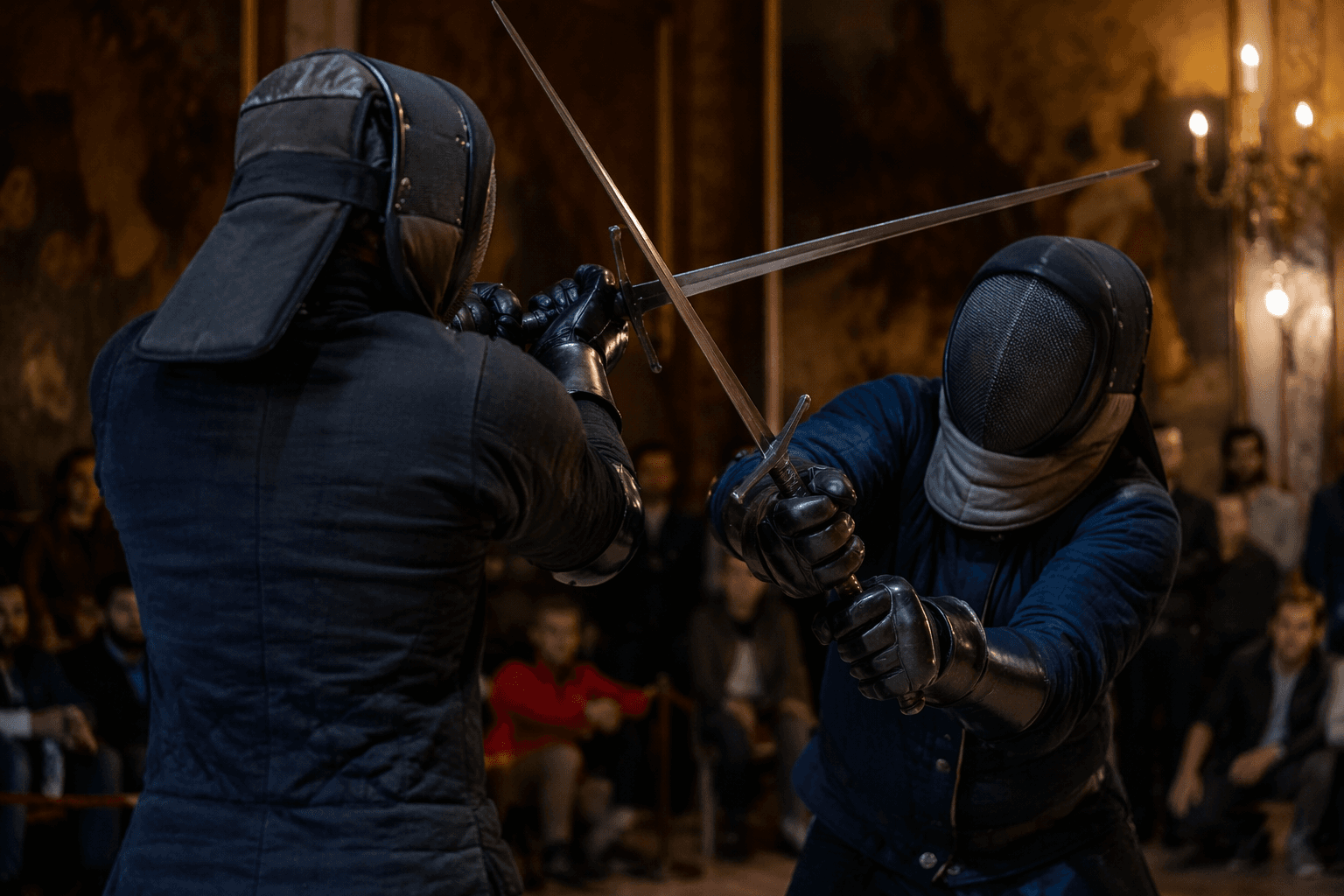
The manuscript teaches single combat on foot with sword, dagger, and ax, plus mounted combat in all its variations. Separate sections cover combat with sword, combat with dagger, combat with pollaxe, unarmed combat, and equestrian combat with lance and sword. That spread explains why so many schools cross-train across weapons instead of living inside one lane like longsword alone. Fiore’s core ideas on distance, timing, initiative, and transitions between ranges repeat across the material, so a student who learns one section is not just memorizing one play but building a framework.
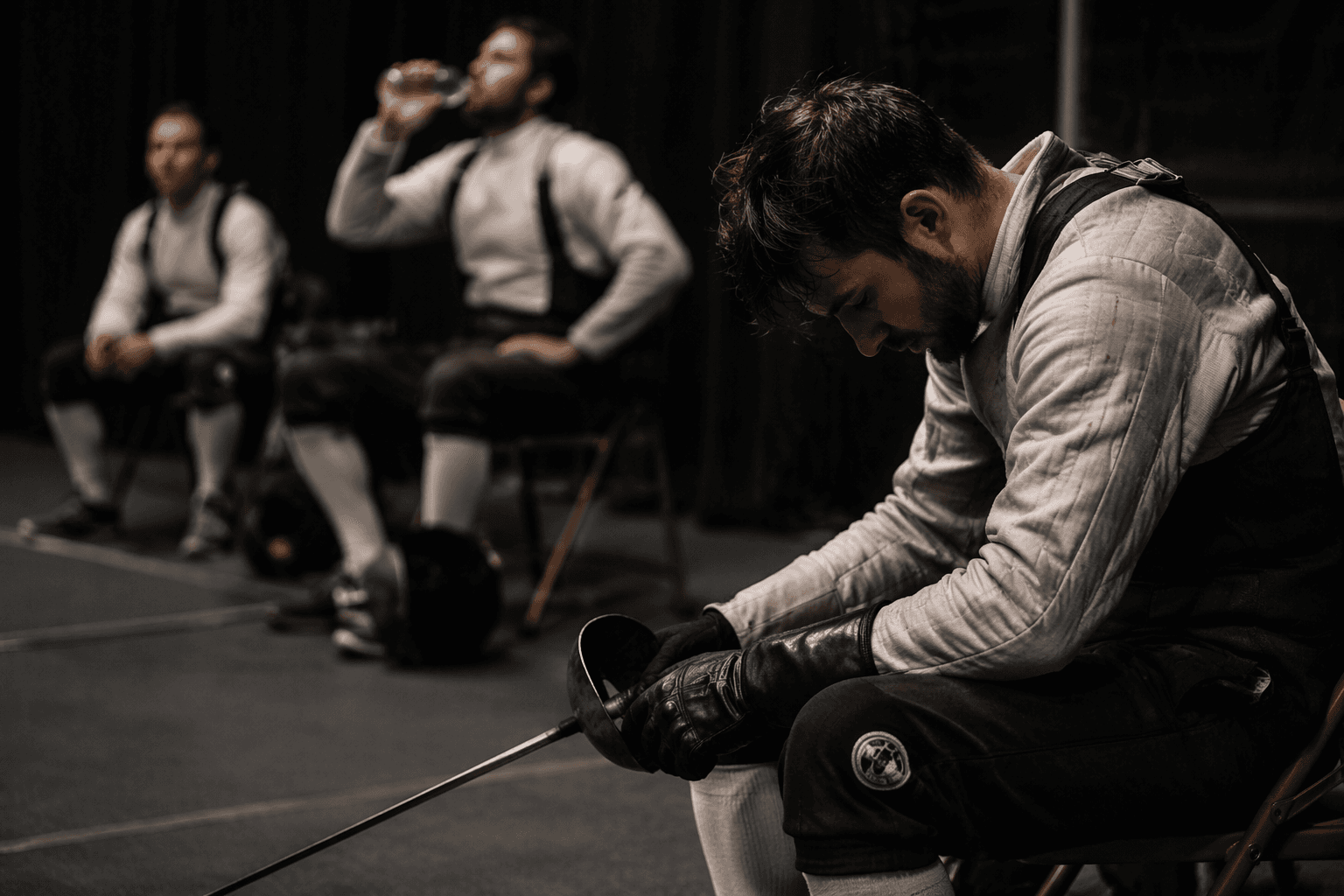
Fiore still shapes judging and coaching. In a tournament setting, a clean action is rarely just “hit first.” It is more often a question of whether the fencer gained the line, controlled the blade, preserved initiative, or turned one threat into another before the exchange collapsed. Fiore’s structure gives modern judges and instructors a common language for those moments, even when they disagree on the exact reading.
Why the Getty copy carries so much weight
The Getty manuscript is not only text, but a highly finished object. Cataloged as MS Ludwig XV 13, it dates to about 1410, and its decorated border and initials make it a display piece as much as a manual. The imagery matters too: charging horses, armored knights, and clearly labeled combat scenes give modern readers visual cues that help anchor a technique in motion.
That visual richness changes how practitioners work. The drawings invite close comparison, line by line, and those images become evidence in arguments over posture, measure, and sequence. If one instructor reads the image one way and another reads the accompanying text another way, the difference can show up in training drills, freeplay, and how a bout is interpreted on the floor.
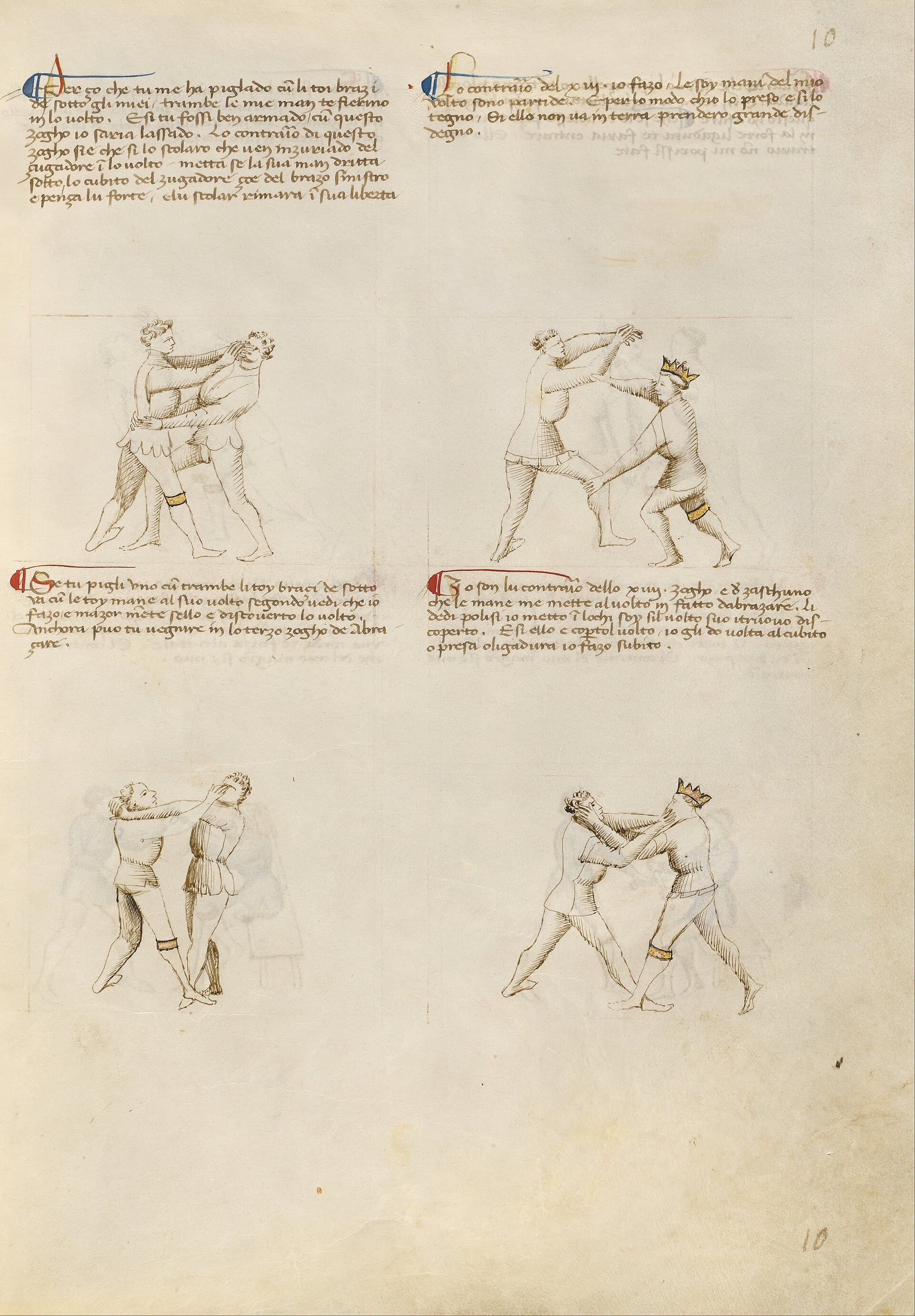
Niccolò III d’Este ordered at least three copies of the text, a sign that the work had prestige beyond one household or one scholar.
How modern fighters use Fiore differently because of those copies
The surviving copies give today’s instructors both a gift and a problem. They can triangulate practice across the Getty, Morgan, and Pisani-Dossi traditions, but they also have to decide what to do when one witness appears fuller, clearer, or more authoritative than another. Those choices determine how a drill starts, when a counter is allowed, and whether a sequence is taught as one flowing phrase or a set of separate actions.
One school may emphasize the Getty manuscript because of its completeness and illumination, another may compare parallel material in the Morgan copy to clarify a passage, and a third may lean on reconstruction where the text is sparse. On a tournament floor, those choices shape what looks clean, what looks rushed, and what looks like a true continuation of the source rather than a modern improvisation.
Fiore’s work also has a historical chain beyond Fiore himself. Some HEMA schools point to Filippo Vadi as evidence that the tradition persisted for at least one later master, stretching Fiore’s influence across two to three generations. Armizare remains one of the most studied systems in HEMA today.
This article was produced by Prism’s automated news system from verified source data, official records, and press releases, then run through automated quality and moderation checks before publishing. The system is built and supervised by the people who set the standards it runs under. Read our full AI policy.
Did this article answer your question?