Why HEMA separates longsword, rapier, and sword-and-buckler bouts
HEMA brackets split by weapon family because longsword, rapier-and-dagger, and sword-and-buckler each reward different distance, timing, and targets.
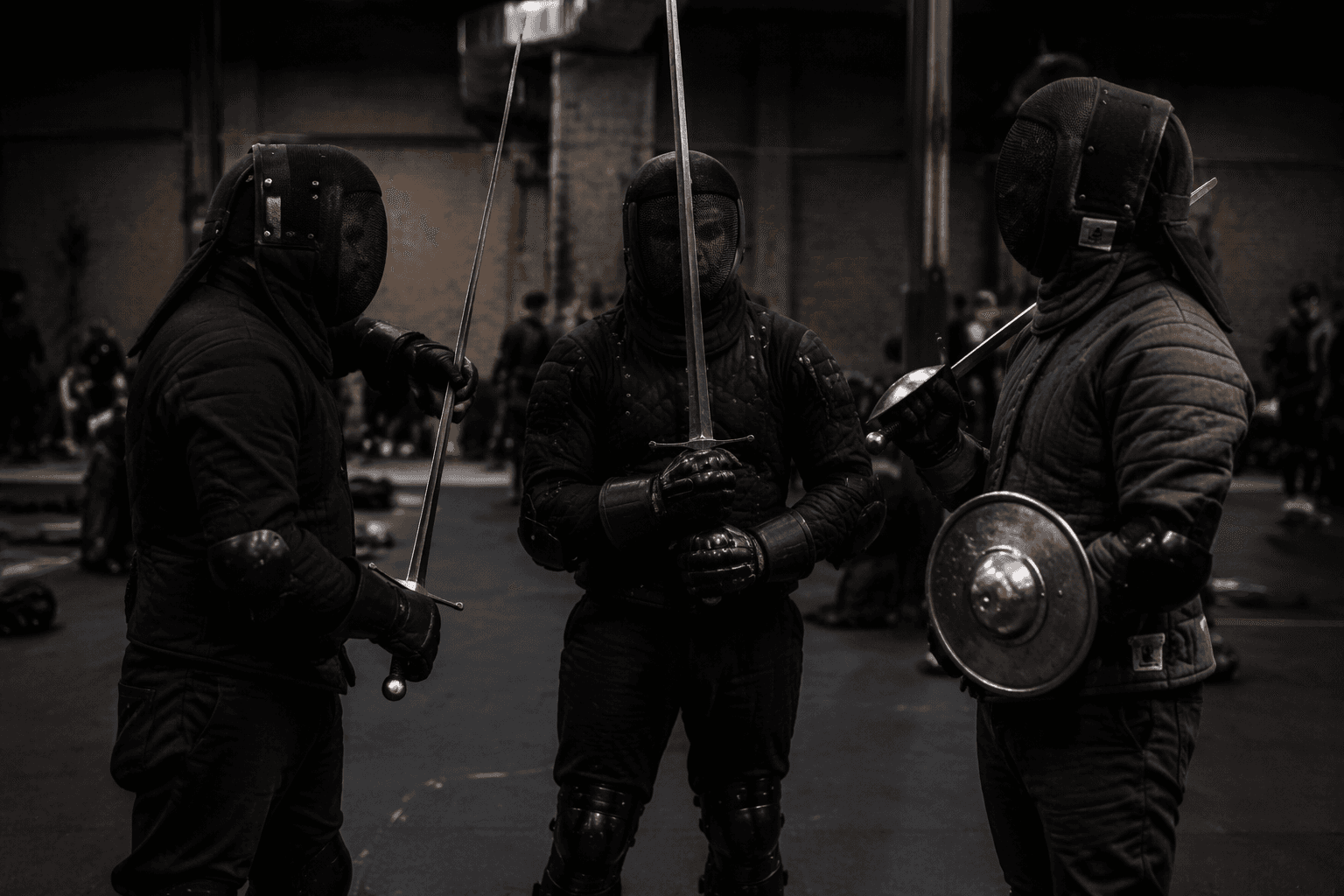
Watch a longsword final, then a rapier-and-dagger bout, then a sword-and-buckler match, and you are not looking at three versions of the same fight. HEMA separates them because each weapon family changes distance, tempo, targets, and the kind of mistake that gets punished.
Weapon families are the sport’s grammar
HEMA stands for Historical European Martial Arts: the study and practice of historical European fighting techniques. The HEMA Alliance also calls it “bringing back to life” historical European fighting arts, a phrase that gets at the core of the sport: this is reconstruction, not costume combat.
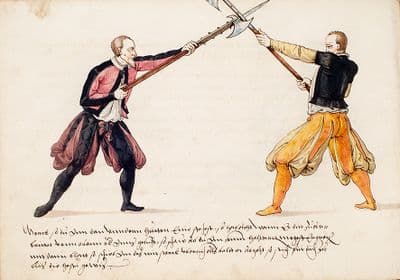
The field is built around historical systems, not just around shiny props with different lengths. Longsword, rapier, sidesword, sabre, sword and buckler, and messer are not random labels. They signal different grips, guard positions, historical settings, and technical vocabularies, which is why clubs and tournaments organize around weapon families instead of treating every blade as interchangeable.
The tradition is often traced from roughly the 1300s onward, which helps explain why the sport feels so varied. The manuals, schools, and competitive rules are all trying to preserve the logic of specific traditions, not flatten them into one universal duel.
Why longsword, rapier, and sword-and-buckler do not feel alike
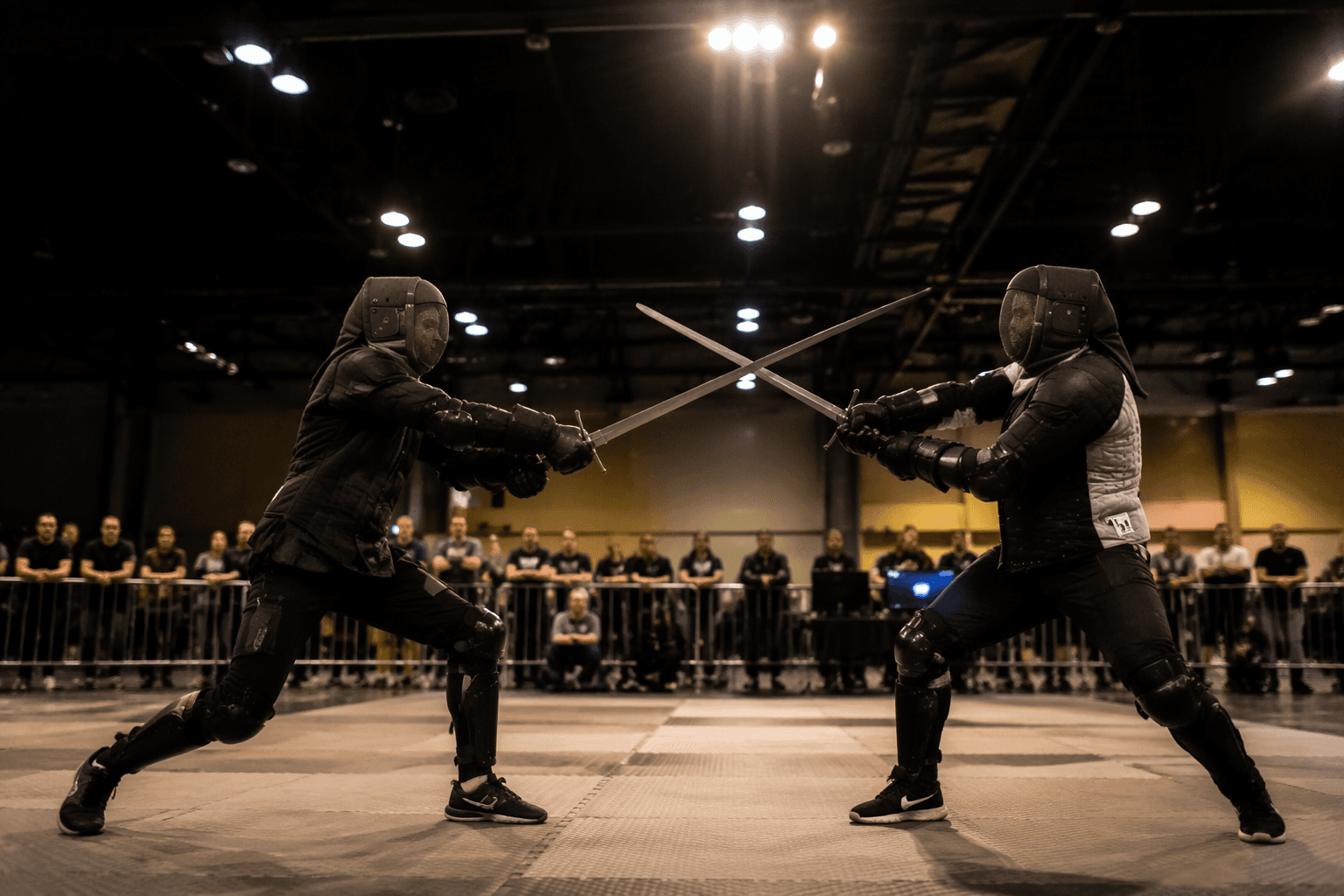
Longsword is built on two-handed control, and that changes everything. In a well-fought longsword bout, the fence often turns on line control, binding the opponent’s blade, blade engagement, and fast transitions between cuts, thrusts, and grappling. It is a weapon family that rewards structure and the ability to win the center without overcommitting.
Rapier, especially in rapier-and-dagger formats, asks for a different kind of patience. The point matters more, the distance is more exacting, and hand-target awareness becomes part of the job description. A rapier fight often looks cleaner to a casual eye, but it can be brutally technical: one broken measure or one exposed hand can decide the exchange.
Sword and buckler has its own rhythm entirely. The small shield compresses the fight, forcing compact movement, sharp timing, and a defensive structure that is more about closing lines than sweeping them away. It is one reason these bouts can feel faster and tighter than people expect when they hear the word “sword.”
They shape how fighters move, what they look for, and what referees have to recognize as a valid action. The same cut that makes sense in longsword can be the wrong answer in rapier, and the same shield-first habit that works in sword-and-buckler would handicap a rapier specialist.
The bracket is designed around the problem set
HEMA competitions separate weapon categories because the rules are tuned to what each weapon historically rewarded. That is why the likely tempo, preferred line of attack, and even the kind of historical source a club studies can change from one division to the next. A longsword bracket usually emphasizes blade contact and transitions. A rapier division leans harder on point control and measure. Sword-and-buckler brings the defensive structure into sharper focus.
A tournament card is not just a list of props. The weapon form defines the tactical puzzle. If you know you are watching sabre, you expect a different footwork problem than if the card says messer or sidesword. That separation gives the audience a better read on what a clean touch actually means.
Once you know the family, the match becomes readable. A longsword exchange that starts in the bind is not a failed rapier action. A rapier-and-dagger fighter hanging on distance is not being passive. A sword-and-buckler bout that stays compact is not lacking variety. It is following the logic of the form.
Reconstruction is the engine behind the divisions
HEMA is not just a modern sport with old names attached to it. Practitioners read manuals, test interpretations in sparring, and then refine those interpretations under competitive pressure. The weapon categories become the bridge between the historical treatises and the modern tournament bracket, which is why the divisions survive even when the gear and scoring systems change.
In a 2016 post on Playing with History, the author said they started with rapier and dagger, then moved into sabre and gave long sword a try at Københavns Historiske Fægteklub in Copenhagen. That mix of movement across weapon families is common in the community, but it does not erase the differences between the bouts themselves.
The HEMA Alliance describes itself as a 501(c)3 U.S. non-profit service organization for the HEMA community, which gives the sport a formal backbone beyond individual clubs and local scenes. Its language emphasizes education, reconstruction, and the community effort of reviving older fighting arts.
Safety, governance, and why the sport needs structure
The HEMA Alliance’s safety guidance says fighting with a sword is inherently dangerous, though serious injuries in HEMA are rare. The sport relies on formal divisions, clear rule sets, and referees who know what each weapon family is supposed to do. Separate brackets do not just make the action legible; they help keep the action intelligible and safer.
On Sept. 10, 2024, the HEMA Alliance said that by joint decision of its Board of Directors and Governing Council, general GC elections for the 2024-2026 term would not be held.
How to read the next event you watch
If the card says longsword, expect line battles, binds, and transitions that can end in a cut, a thrust, or a grappling entry. If it says rapier-and-dagger, watch the point, the off-hand line, and the pressure of distance. If it says sword-and-buckler, look for compact defense and timing that turns small openings into scores.
This article was produced by Prism’s automated news system from verified source data, official records, and press releases, then run through automated quality and moderation checks before publishing. The system is built and supervised by the people who set the standards it runs under. Read our full AI policy.
Did this article answer your question?