Wiktenauer opens the archive that powers HEMA reconstruction
Wiktenauer turns HEMA reconstruction into a source-based discipline, linking scans, transcriptions, and translations so every interpretation can be tested against the archive.
Wiktenauer is the piece of HEMA infrastructure that matters before the first cut is thrown. Started in 2009 and later brought under the HEMA Alliance umbrella, it exists to gather the primary sources that make reconstruction possible, then organize them so practitioners can compare, challenge, and refine interpretations instead of inheriting them as fixed doctrine.
The archive that changed the method
The project takes its name from Johannes Liechtenauer, the late-14th-century German fencing master whose tradition is among the best documented in the early modern era. Wiktenauer treats that tradition not as a single text, but as a web of many dozens of manuscripts and books that preserved the material over nearly three centuries. That distinction matters, because HEMA is not just about recovering “the sword system” in the abstract. It is about tracing how one master’s teachings survive through copying, adaptation, commentary, and print.
The HEMA Alliance calls Wiktenauer the largest library of Historical European Martial Arts manuscripts and books in the world, and says the repository is free to the public. That combination, scale and open access, has made the site more than a reference page. It is the shared workspace where a club in one city, a coach in another, and a researcher halfway around the world can all stand on the same source base.
How Wiktenauer organizes evidence
Wiktenauer’s core idea is simple but unusually powerful: it separates a master’s teachings from the books and manuscripts that contain them. That means the same material can be studied as text, image, provenance, and transmission history, rather than flattened into a scan dump. In practice, that turns each source into a research object, not just a picture of an old book.
The site’s treatise pages typically gather the things a serious reader needs in one place: page scans, bibliographic information, provenance or publication history, a table of contents, and transcriptions or translations where available. The manuscript category alone lists 173 pages, while the manuscripts section describes the European fencing tradition as having well over 150 distinct manuscripts and hundreds more printed works. Wiktenauer also says the overall corpus is well over a thousand individual books and manuscripts, which shows how much material sits behind even a single interpretive claim.

That structure is what gives HEMA its competitive edge as a knowledge culture. A practitioner is not forced to choose between blind fidelity and free-form invention. Instead, the archive lets the reader ask what survives, in what form, through which hands, and with how much certainty.
From manuscript image to drilling choice
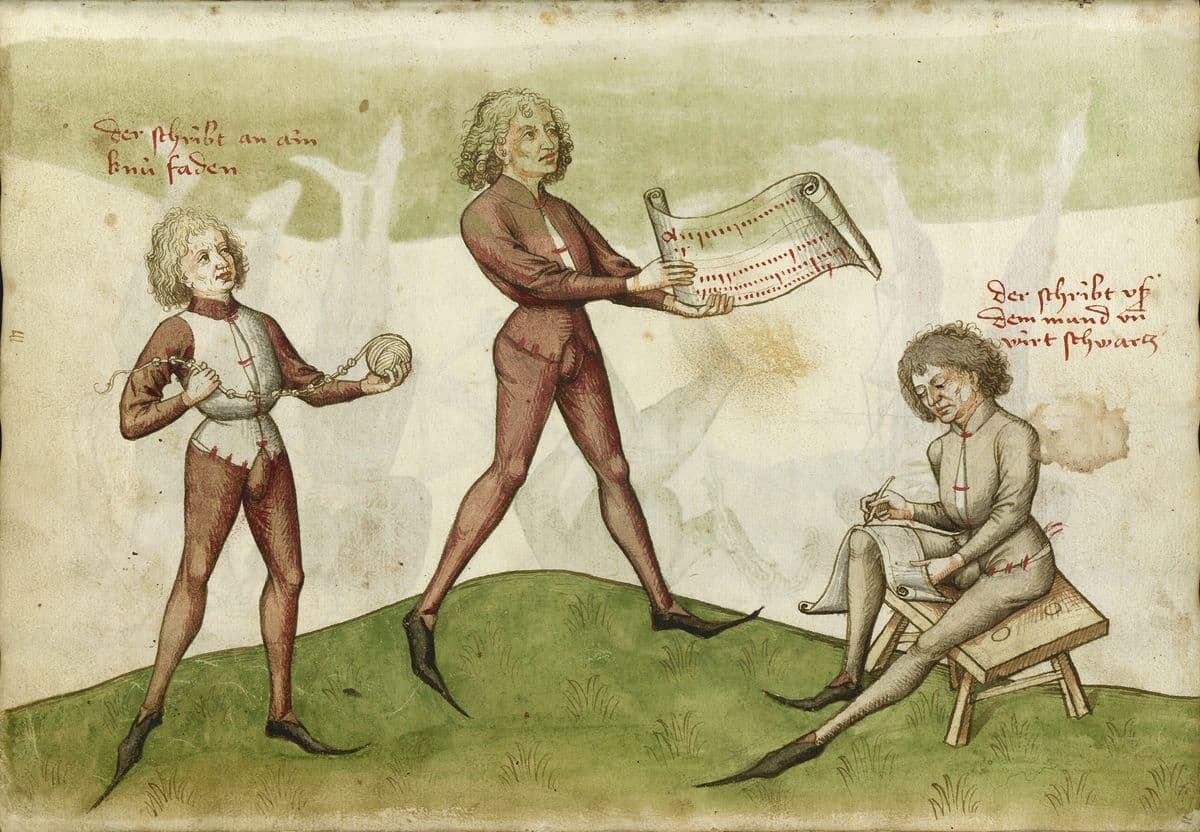
The practical value becomes clear when a reader moves from a manuscript page to the salle. A source such as the Goliath Fechtbuch or Ergrundung Ritterlicher Kunst der Fechterey can begin as a scan, but the real work starts when that image is paired with transcription and translation, then checked against the page’s bibliographic and provenance data. A line that looks straightforward in isolation may turn out to sit inside a broader pattern of copying, omission, or commentary.
That matters when deciding what to drill. If the page’s wording, layout, and manuscript history point to a repeatable instruction, it can become a partner drill, a test of distance, or a structured entry into a bind. If the transmission looks unstable, or the translation is uncertain, the right training choice may be to treat the passage as a hypothesis rather than a command. Wiktenauer’s data model gives practitioners a way to make that distinction visible before the footwork starts.
The same is true when working through masters such as Paulus Kal. The archive does not ask a fencer to treat a single image as gospel. It invites comparison: one witness against another, one transcription against another, one interpretive choice against the manuscript record.
Why the history of copying still matters
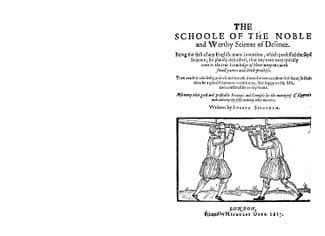
Wiktenauer’s books page notes that until the mid-15th century, books were laboriously copied by hand. That one fact explains why HEMA research is closer to archival scholarship than to simple technique copying. Before print stabilized transmission, fencing knowledge had to survive through handwritten replication, which meant every copy was also an act of selection, compression, or interpretation.
That is why the archive’s manuscript-first logic is so important. A fencing tradition that runs through hand-copied books carries marks of its journey, and those marks matter as much as the techniques themselves. A clean modern summary can hide the messy history; Wiktenauer keeps that history attached to the source.
This is also where the largest gaps and disputes live. A corpus with more than 150 distinct manuscript witnesses and hundreds of printed works will always contain missing links, variant readings, and disagreements over how one passage should be read. Wiktenauer does not erase those tensions. It gives the community the tools to argue about them in public, with the source open in front of everyone.
A community project, not a private vault
Wiktenauer describes itself as a community project built on many contributors’ transcription, translation, and concordance work. The HEMA Alliance describes it as an ongoing collaboration among researchers and practitioners from across the Western martial arts community. That matters culturally as much as it does technically, because it shifts authority away from isolated gatekeepers and toward documented, shared evidence.
The result is a different kind of martial arts culture. Instead of treating reconstruction as something handed down by a single master, Wiktenauer makes it something tested across a corpus. Instead of leaving history behind the curtain, it puts scans, transcriptions, translations, and bibliographic context into the same frame. For HEMA, that is not just a library. It is the competitive knowledge infrastructure that keeps the whole field moving.
This article was produced by Prism’s automated news system from verified source data, official records, and press releases, then run through automated quality and moderation checks before publishing. The system is built and supervised by the people who set the standards it runs under. Read our full AI policy.
Did this article answer your question?