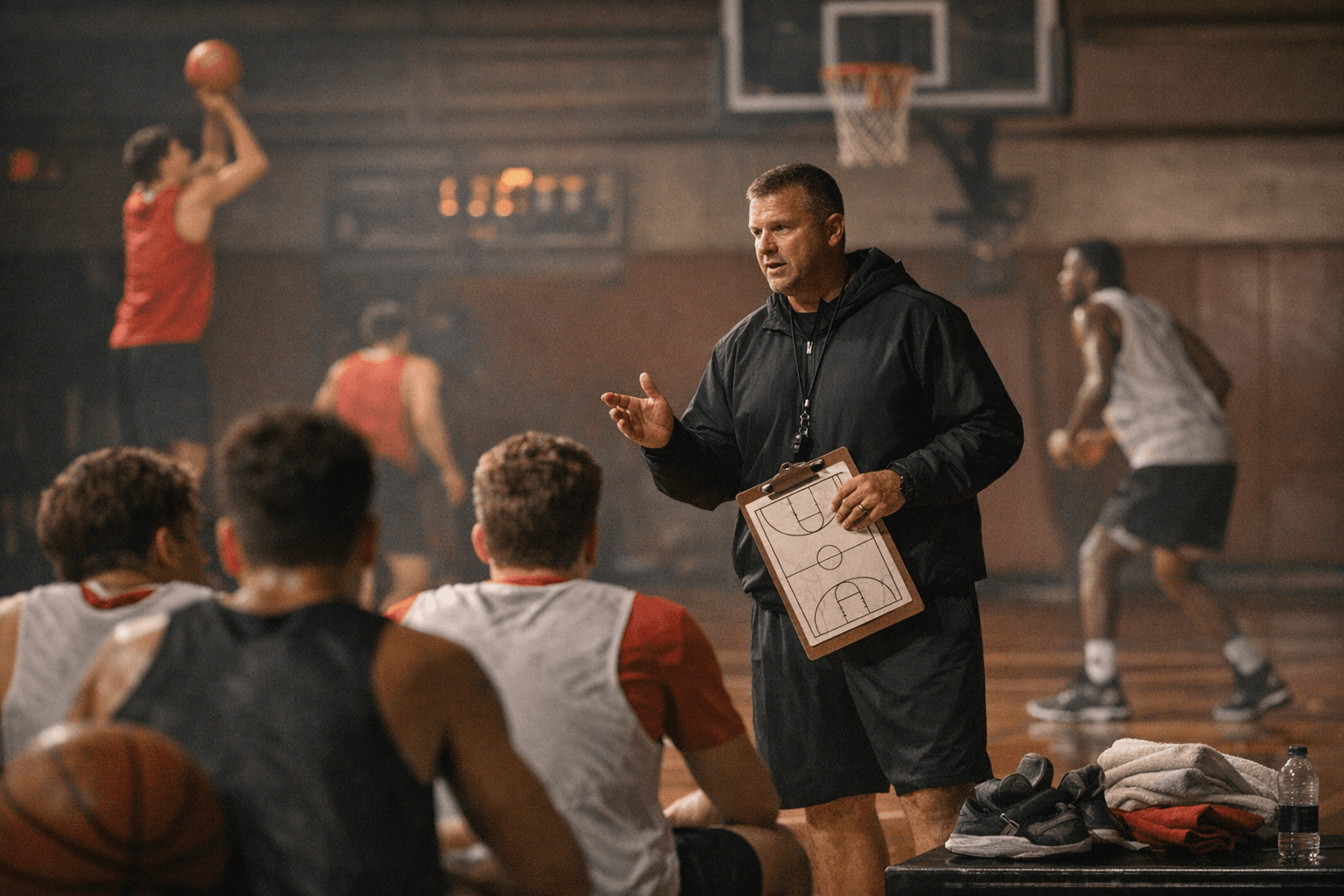
12-Week Off-Season Blueprint Builds Strength, Power for Indiana Hoopers
A 12-week, three-phase off-season program gives Indiana high school hoopers a structured path to bigger strength gains and sharper explosiveness before next season tips off.
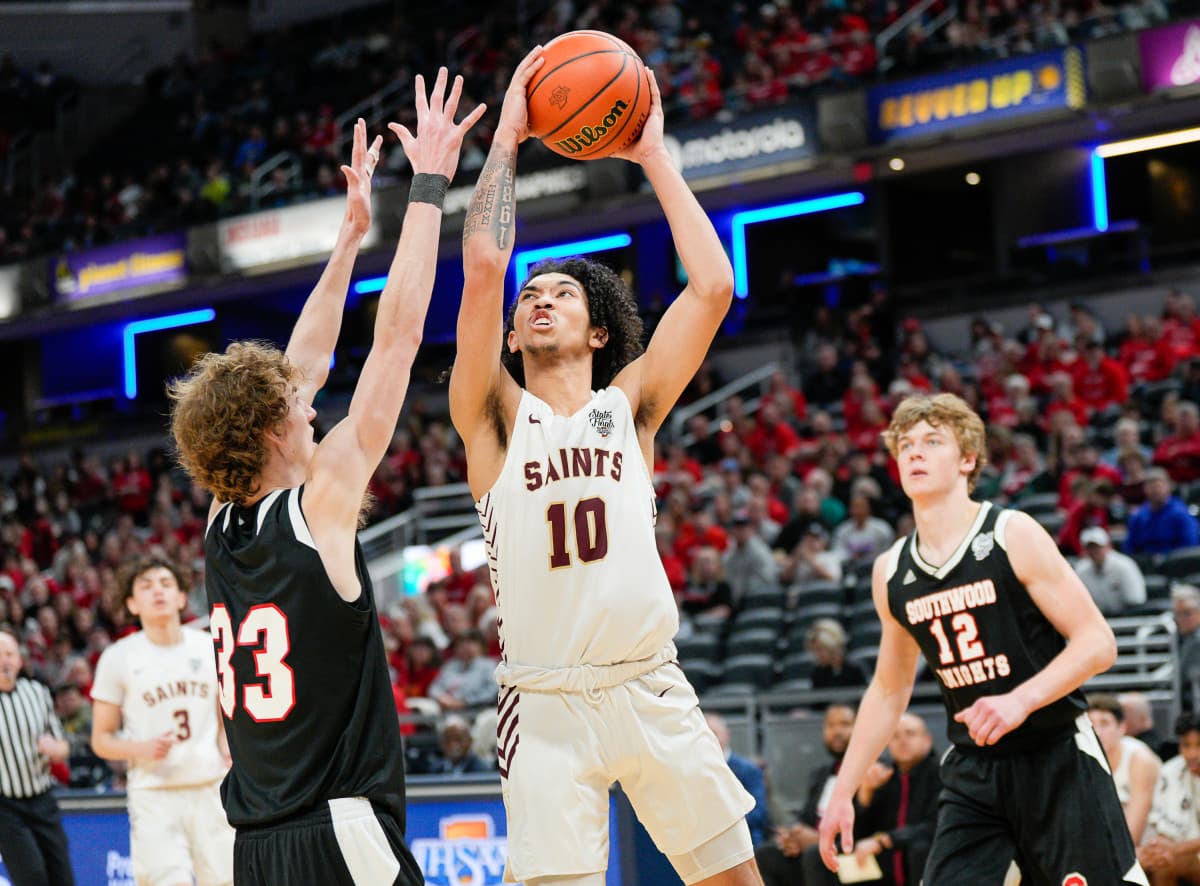
The gap between a good Indiana high school basketball player and a great one often comes down to what happens between April and August. While opponents are resting, the players who show up to fall workouts visibly stronger, quicker off the floor, and more durable through a grueling sectional run are almost always the ones who committed to a structured off-season program. This 12-week blueprint is built specifically for that purpose: to take Indiana hoopers through a progressive, science-backed training cycle that builds the kind of robust strength, reduced injury risk, and on-court explosiveness that shows up when tournament pressure peaks.
The program is organized into three distinct mesocycles, each with a specific physiological target. Rather than randomly lifting heavy things or grinding through conditioning drills with no periodization, this plan sequences hypertrophy, strength, and power development in an order that mirrors how the body actually adapts. You cannot safely express maximal power without first building the muscular foundation to support it, and you cannot build that foundation without the connective tissue resilience that comes from early-phase volume work. The three phases are not interchangeable, and the order matters.
Phase 1: Hypertrophy (Weeks 1-4)
The first four weeks are about building the raw material. Hypertrophy training uses moderate loads, typically in the 65-75 percent of one-rep max range, with higher repetition counts (8-12 per set) and controlled tempo to drive muscular growth and tissue adaptation. For basketball players specifically, the priority muscle groups are the posterior chain (glutes, hamstrings, lower back), the quadriceps, the core, and the shoulder stabilizers. These are the structures that absorb contact, protect joints during landing, and generate the hip extension needed for vertical leaping.
Mobility work runs alongside every session in this phase. Ankles, hips, and thoracic spine are the three sites most commonly limited in young basketball players, and restricted range of motion in any of them not only caps performance but directly increases injury risk. A 10-15 minute mobility protocol before each lifting session, focusing on ankle dorsiflexion, hip flexor lengthening, and thoracic rotation, builds the movement quality that makes strength gains actually transferable to the court.
Volume in weeks 1-4 should be high enough to stimulate adaptation but manageable enough that recovery is complete between sessions. Three to four lifting days per week, with at least one full rest day between sessions, is the recommended structure. Players who push too hard in this phase compromise the phases that follow.
Phase 2: Strength (Weeks 5-8)
With a muscular foundation established, weeks 5-8 shift the stimulus toward maximal strength development. Loads increase to the 78-88 percent of one-rep max range, repetitions drop to 3-6 per set, and rest periods extend to 2-3 minutes to allow full neuromuscular recovery between efforts. The goal is to increase the amount of force the body can produce, which is the direct upstream variable for power output.
The core lifts in this phase are the squat pattern (back squat or front squat), the hip hinge pattern (trap bar deadlift or Romanian deadlift), horizontal and vertical pressing, and pulling movements like pull-ups and barbell rows. Basketball players do not need to become powerlifters, but they do need to be competent and strong across all fundamental movement patterns. A player who can squat 1.5 times their bodyweight and deadlift close to twice their bodyweight has the structural capacity to be genuinely explosive.
Mobility work continues in this phase but shifts slightly toward maintenance rather than development. The ranges of motion built in weeks 1-4 need to be preserved under heavier loads. Dynamic warm-ups that move through those ranges before lifting, rather than static stretching alone, keep the nervous system primed and protect against the stiffness that can creep in when training intensities rise.
Phase 3: Power and Transfer (Weeks 9-12)
The final four weeks are where the strength built in phase 2 gets converted into the sport-specific explosiveness that actually matters on a basketball court. Loads drop back down, but movement velocity becomes the priority. Jumps, medicine ball work, Olympic lift variations (hang cleans, hang snatches if technique allows), and plyometric sequences replace the slow, grinding sets of the previous phase.
Vertical jump development is a direct focus. Depth jumps, box jumps, and reactive bounding train the stretch-shortening cycle, which is the mechanism that allows a player to load and release energy rapidly through the Achilles tendon and lower leg. A player whose stretch-shortening cycle is well-trained will jump higher off one dribble, change direction faster, and absorb landing forces more safely than an equivalently strong player who has not done this work.
Sprint mechanics and first-step quickness drills round out the power phase. Basketball is a game of 3-5 step bursts and rapid directional changes, not sustained aerobic output. Short acceleration work (10-20 yard efforts), lateral shuffle progressions, and change-of-direction patterns practiced at near-maximal intensity sharpen the exact movement qualities that win possessions.
Nutrition and Recovery as Non-Negotiables
No 12-week program produces its intended results without the recovery infrastructure to support it. High school athletes in Indiana face the added challenge of balancing this training with school, summer jobs, and AAU commitments, which makes intentional recovery even more critical.
Protein intake should be consistent across all 12 weeks, targeting roughly 0.7-1.0 grams per pound of bodyweight daily to support muscle repair and growth. Carbohydrate timing around training sessions, consuming them before and after lifting, fuels performance and accelerates glycogen replenishment. Sleep is the most underrated variable in any strength program; eight to nine hours per night is not optional for a developing athlete in a high-volume training block.
Deload weeks, where volume is deliberately reduced by 40-50 percent, should fall at the end of each four-week phase before the next mesocycle begins. These are not lost weeks. They are the weeks where adaptation actually consolidates, and players who skip them to keep pushing accumulate fatigue that blunts the gains of the following phase.
Building the Foundation for Sectional Success
Indiana high school basketball's single-class sectional structure means every program, regardless of school size, faces the same brutal bracket. The physical demands of playing four games in two weeks, often against larger opponents, require a body that has been systematically prepared. A player who enters November having completed this 12-week blueprint will have spent the summer building muscle, increasing maximal strength, and sharpening explosive output through a sequence that mirrors exactly how elite athletic development programs structure off-season work.
The most important variable is not which specific exercises fill each phase. It is the commitment to following the progression from hypertrophy through strength through power without skipping steps. The athletes who respect that sequence are the ones who show up in October noticeably transformed, and in Indiana basketball, that transformation has a way of showing up exactly when the bracket gets posted.
Know something we missed? Have a correction or additional information?
Submit a Tip