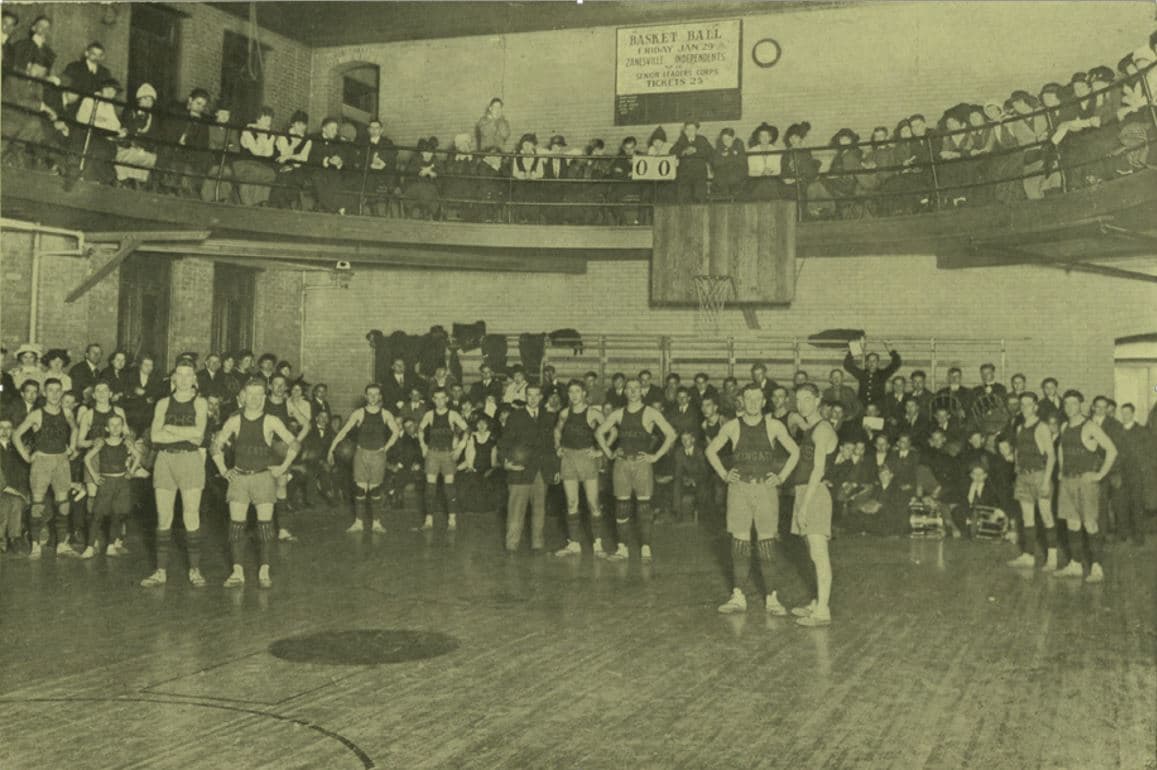
Arthur Trester helped turn Indiana basketball into a statewide power
Arthur Trester's rulebook and organizing vision helped turn Indiana's loose local leagues into a statewide basketball system, and his name still lives on in the Trester Award.
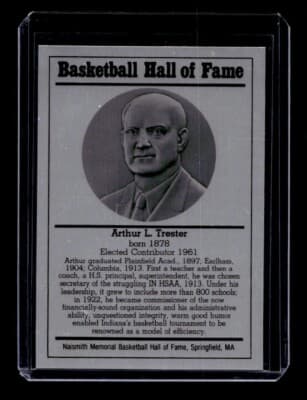
Arthur Trester did more than oversee Indiana high school basketball. He gave it a structure, a schedule, and a statewide authority strong enough to outlast the local rivalries that came before it. That is why his Hall of Fame recognition matters now: the rituals Indiana fans still treat as normal were built by an administrator who understood that popularity alone would never hold the sport together.
The organizer behind the system
Trester was born June 10, 1878, in Pecksburg, Indiana, and the Naismith Basketball Hall of Fame identifies him as the leading basketball administrator in the state’s early development. His rise tracks with the moment Indiana basketball needed more than enthusiasm. By the time he became the Indiana High School Athletic Association’s permanent secretary in 1913, the sport was already spreading fast, but it still needed one voice to unify how schools competed and how championships were staged.
The IHSAA’s own history explains the gap Trester stepped into. The association grew out of the 1903 Richmond Agreement, then evolved because Indiana schools wanted uniform rules, centralized administration, and a body with real executive power. Trester operated inside that need, not outside it. He helped convert a loose collection of local leagues into a state system that could set standards and enforce them.
How Indiana moved from local competition to statewide order
Trester’s significance is easiest to see in the way Indiana basketball changed under his watch. Before a strong governing hand took hold, school competition could be fragmented by local customs and uneven expectations. Trester’s job was not simply to run meetings or keep records; it was to make sure the same sport was being played across the state under the same basic rules.
That mattered because basketball had already become popular enough to demand a bigger stage. The Hall of Fame describes the IHSAA under Trester as a model organization, which is a revealing phrase for a state where high school basketball became part of civic identity. Trester served as permanent secretary from 1913 to 1929, then commissioner from 1929 until his death in 1944, giving him more than three decades of influence over the shape of the game.
His authority helped create a recognizable pathway from the regular season to the postseason, and that pathway is central to Indiana’s basketball culture. Once schools could trust the structure, the sport stopped feeling like a string of isolated local contests and started functioning like a statewide institution. That shift is the foundation of what Hoosiers came to know as basketball season itself.
Hoosier Hysteria did not happen by accident
Trester’s legacy is tied to the phrase Hoosier Hysteria because the IHSAA’s own history and the Hall of Fame both connect his work to the rise of the boys basketball tournament. The Hall of Fame credits the IHSAA under Trester as the force behind Hoosier Hysteria, and the association’s 2026 history of the mental-attitude award says plainly that Trester designed Indiana’s famous boys basketball tournament. That tournament did more than crown a champion; it gave the state a shared winter drama with a bracket, a championship path, and expectations everyone understood.
That is the real turning point in the story. A sport becomes a tradition when people know how to follow it, where it leads, and what it means to win it. Trester helped build that clarity into Indiana basketball, and the tournament rose to national prominence under his leadership. What had once been scattered competition became a public ritual that communities could measure themselves against year after year.
The impact still shows up in the language fans use and in the way the postseason is treated as the center of the sport. The statewide tournament is not just an event on the calendar, it is the organizing idea that made Indiana basketball distinct. Trester helped create the machine that turned local gymnasiums into stages with statewide meaning.
Why the Trester name still matters at state finals
Trester’s influence did not end with his titles or with the decades he spent running the association. His name remains embedded in the culture of Indiana hoops because the Trester Award is presented to the senior athlete who best embodies mental attitude, scholarship, leadership, and athletic ability. That makes the award more than a memorial plaque. It connects the state finals to the values Trester helped bake into the sport’s identity.
The award also explains why his recognition still lands with force. Indiana basketball has always celebrated more than scoring, and the Trester Award shows how thoroughly those expectations became part of the state’s finishing ceremony. By honoring mental attitude alongside achievement, the award preserves the idea that the state’s best players are measured by how they carry themselves as much as by what they do on the floor.
Trester’s Hall of Fame recognition matters because it confirms the obvious truth behind the pageantry. Indiana basketball did not become a statewide power by accident, and it did not happen just because people loved the game. It happened because Arthur Trester gave that love a governing structure, a championship ladder, and a public identity strong enough to become tradition.
This article was produced by Prism’s automated news system from verified source data, official records, and press releases, then run through automated quality and moderation checks before publishing. The system is built and supervised by the people who set the standards it runs under. Read our full AI policy.
Did this article answer your question?