Building a Sustainable Indiana High School Basketball Program, Year After Year
Five measurable indicators separate Indiana programs that win once from programs that win for decades; here's what a genuine stability checklist looks like in the IHSAA era.
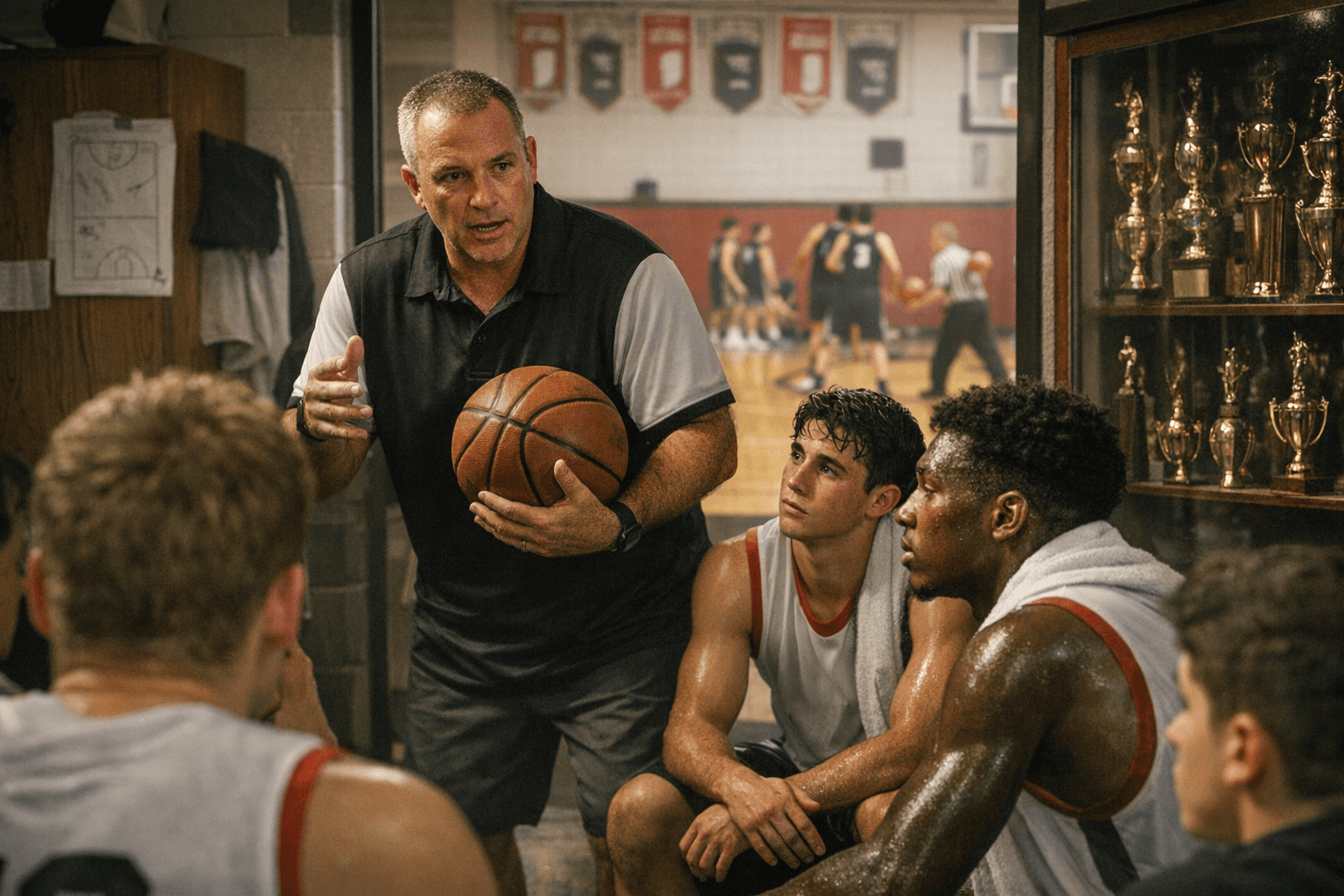
Jack Keefer took over Lawrence North's basketball program in 1976 and didn't walk away until 2022, 46 years later, finishing with 865 wins, the second-highest total in IHSAA history. His Wildcats won four state championships, set a state record with 50 consecutive victories across the 2005-07 seasons, and produced All-Stars and McDonald's All-Americans without ever chasing a quick rebuild. What Keefer built wasn't a dynasty by accident; it was a system that generated stability indicators any Indiana program can measure, regardless of enrollment class or geography.
The IHSAA's four-class structure, which distributes schools using a 20-25-25-30 format from Class 4A down to Class 1A, means the competitive landscape is always sorting itself. Every two-year cycle, enrollment figures shift, sectional assignments change, and programs that lack internal infrastructure get reshuffled into irrelevance. The ones that endure are not necessarily the best-funded; they are the best-organized. Five measurable indicators tell the story before a single game is played.
Staff Retention: The First Number That Matters
Before examining wins and losses, look at the coaching staff's tenure chart. Programs that cycle through assistants every one or two years rarely develop a coherent player identity, because the voices in the gym keep changing. A sustainable program builds a written job description that specifies teaching responsibilities, offseason commitments, parent communication standards, and feeder-program relationship duties. That document creates accountability but also clarity, making it far more likely that a quality assistant stays rather than drifts toward another opportunity.
Staggering contract timelines across staff members is a discipline that few programs formalize but that pays dividends when a departure inevitably happens. Rather than facing a full staff overhaul when a lead assistant leaves, a well-structured program has an internal succession plan in place. The hire from within is almost always faster, cheaper, and culturally safer than the external search, and it signals to players that institutional knowledge is valued.
Offseason Participation: Counting Who Shows Up in April
The regular season is too late to diagnose a culture problem. The real diagnostic window is April through July. A 12-month development calendar with defined phases reveals exactly who is invested in the program and who is not. The model worth replicating includes a spring skill camp open to grades 7 through 12, summer workouts with documented conditioning benchmarks, and an early-fall phase that integrates strength work with team skill development.
The participation rate in those offseason sessions is a leading indicator of regular-season cohesion. Programs that see 85 percent or more of their expected varsity and JV roster in the gym voluntarily in June rarely have chemistry problems come November. Those that see 40 percent are not just short on reps; they are telegraphing a culture gap. Measuring attendance, tracking percentage improvement in shooting assessments, and recording conditioning baselines from one summer to the next turns abstract "player development" talk into verifiable data an athletic director can actually evaluate.
Feeder Alignment: What the Eighth-Grader Already Knows
No indicator predicts long-term program health more reliably than the alignment between a high school program and its youth and middle-school feeder structure. When a rising freshman already knows the terminology, the defensive principles, and the off-season expectations, that player is a full year ahead of a peer who enters the program as a blank slate.
Formalizing these relationships requires active investment. Hosting coaching clinics for feeder coaches, running an annual youth day at the high school gymnasium, and deploying varsity players to run weekly skill clinics at middle schools all build the same thing: a shared language and an aspirational culture. A centralized database tracking middle-school athletes by skill strengths, positional fit, and demonstrated program commitment is not an overreach; it is basic operational discipline. Programs that can name every serious seventh-grade prospect in their feeder zone three years before that player walks in the door have a structural advantage that no single recruiting class can overcome.
Academic and Eligibility Rates: The Hidden Retention Problem
Eligibility attrition is the program-killer that never shows up in a coach's highlight reel but quietly devastates rosters. A player who loses eligibility in January is not just a lineup problem; he represents a failed development investment, a gap in the JV-to-varsity pipeline, and a recruitment cost that has to be absorbed all over again. Tracking academic eligibility rates by cohort, not just by season, reveals patterns that individual teachers and counselors rarely catch.
The most resilient Indiana programs tie athletic participation to academic monitoring through a player development agreement signed by both athletes and parents before the season begins. That document establishes expectations around grades, conduct, and offseason involvement. When paired with regular player check-ins and small-group coaching conversations, it shifts the conversation from reactive discipline to proactive accountability. Graduation rates and college scholarship totals earned by former players are not soft metrics; they are the most credible proof points a program can offer to skeptical school boards and community boosters.
JV-to-Varsity Conversion: The Pipeline Metric That Predicts Depth
Perhaps the most underused analytical tool in Indiana high school basketball is the JV-to-varsity minutes conversion rate tracked over a three- to four-year window. A healthy program reliably produces varsity contributors from its own JV squad. A program that consistently imports transfers or relies on one or two homegrown stars while everyone else watches is not building; it is borrowing against a future it has not earned.
Tracking which JV players are receiving meaningful varsity minutes by their junior year, and what percentage ultimately become rotation contributors as seniors, exposes whether player development is actually happening or whether a program is simply winning with raw talent. This number matters most in the years after a loaded class graduates. Programs that show a steady JV-to-varsity conversion rate rarely suffer the dramatic fall-off seasons that reset a program's credibility with recruits, feeders, and boosters alike.
Community and Booster Engagement: Structuring the Support System
A program that relies on informal booster enthusiasm is always one bad season away from financial instability. The programs that sustain themselves across coaching generations create a volunteer coordinator role, schedule family nights tied to academic recognition events, and conduct quarterly booster meetings that include transparent budget reporting. Youth clinic participation numbers, ticket revenue figures, and total volunteer hours are not just feel-good talking points; they are the metrics that demonstrate community return on investment to school leadership when budget conversations get difficult.
The accountability structure matters as much as the outreach. Tying athletic success to academic and service standards builds the kind of broad-based institutional support that survives a down year in the standings.
The Dashboard That Outlasts Any Single Season
A program's sustainability is ultimately readable in a short list of numbers: staff retention across rolling three-year windows, offseason participation percentages, feeder alignment depth, academic eligibility rates by cohort, and JV-to-varsity conversion rates. Quarterly reviews between coaches and athletic directors that track these metrics create a culture of evidence rather than intuition.
Jack Keefer didn't win 865 games because he was the most talented evaluator of individual players in Indiana. He won because Lawrence North became a system, one that knew who was coming before they arrived, kept its staff intact, and held players accountable to standards that existed whether the team was ranked or rebuilding. That system is replicable. The indicators are measurable. The programs that take them seriously are the ones still standing when the next sectional bracket drops.
Know something we missed? Have a correction or additional information?
Submit a Tip