Crispus Attucks Tigers' historic title run reshaped Indiana basketball
Crispus Attucks did more than win in 1955-56. The Tigers forced Indiana to reckon with race, access, and whose championship memory gets preserved.
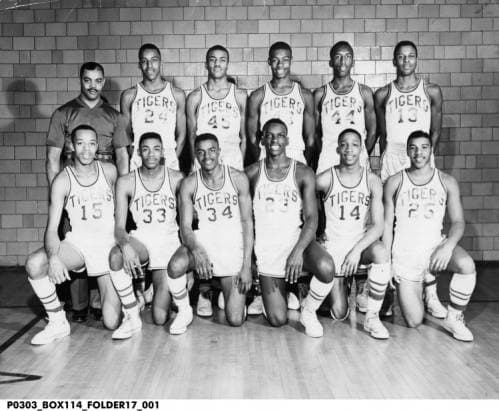
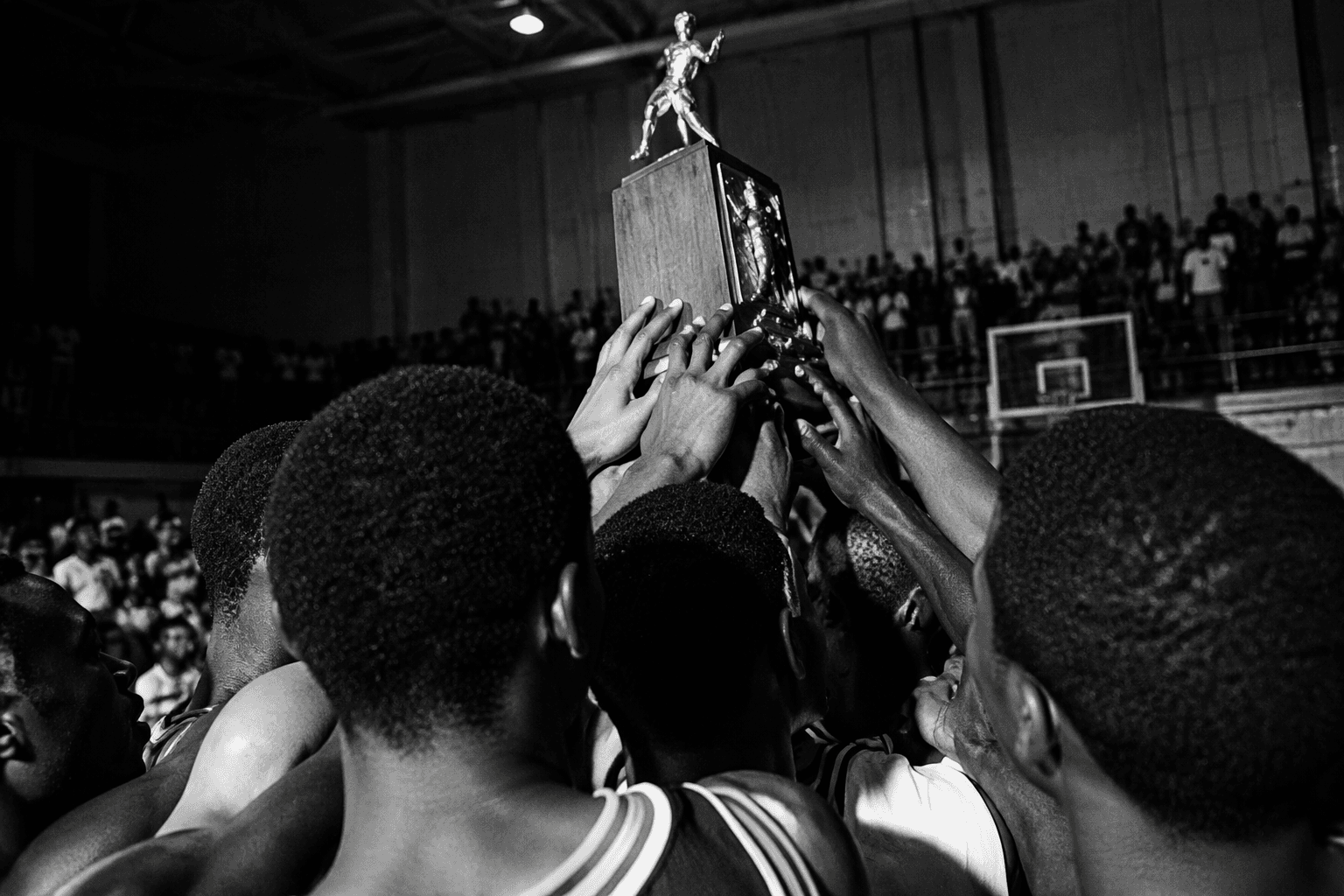
Crispus Attucks turned a state title chase into a statewide reckoning. The Tigers won back-to-back Indiana championships in 1955 and 1956, and in doing so they showed that basketball in Indiana was never only about scores, brackets, or trophies. It was also about race, public memory, and which schools were allowed to represent the state’s idea of greatness.
How the Tigers changed the meaning of a title
The 1955 championship came during the state tournament’s March Madness season, but the deeper significance lasted far beyond that spring. Crispus Attucks, an Indianapolis school serving the city’s Black population, moved through Indiana’s open tournament path just like every other program, then kept going all the way to the top. That matters because the state’s tournament was built on the promise that every school could dream the same dream, and Attucks proved that promise could include a segregated Black school at the center of the story.
Meghan Hillman’s March 25, 2014 Indiana Historical Bureau post framed the Tigers as a landmark example of basketball, race, and public memory in Indiana. That framing still holds because the team’s run was not just an athletic achievement. It was a public argument, won on the court, about who belonged in the state’s main sporting narrative.
The 1955-56 team at its peak
The 1955-56 Crispus Attucks team finished 31-0, and the championship game on March 17, 1956 ended with a 79-57 win over Lafayette Jefferson. The Indiana Basketball Hall of Fame says that team was the first undefeated squad in Indiana high school basketball history, a detail that gives the season its place in the state’s record book as well as its memory bank.
That undefeated run made the Tigers more than a feel-good story. In a state where tournament runs are measured against the hardest spring pressure, Attucks did not simply survive the bracket. It dominated it. The numbers, 31-0 and a 22-point win in the title game, show a team that was not waiting for history to recognize it. It forced history to catch up.
Ray Crowe and Oscar Robertson were the axis of the era
Coach Ray Crowe and guard Oscar Robertson are impossible to separate from this legacy. Crowe, born May 30, 1915 and died Dec. 20, 2003, was not just arranging lineups. He was coaching inside a segregated public-school system, and his success became part of a larger civic story about Black leadership in Indianapolis. The Indiana High School Athletic Association inducted Crowe into its Hall of Fame in 2022, a formal acknowledgment of a coaching career that carried meaning far beyond seven seasons on the sideline.
Robertson became the most famous high school player in Indiana from that era, and for good reason. His high school Hall of Fame biography says he led Crispus Attucks to two straight state championships in 1955 and 1956. The Indiana Basketball Hall of Fame inducted Robertson in 1982, and the Indiana High School Athletic Association followed with his Hall of Fame induction on Dec. 13, 1983. That recognition reflects how his high school career became a touchstone for the sport, later extending into his University of Cincinnati career, where he was a 3-time All-American.
Still, the Tigers were never only about one future NBA Hall of Famer. The school’s title run was the product of a full program, a neighborhood, and a coach who understood that the scoreboard could carry civic weight.
The school itself tells the rest of the story
Crispus Attucks High School opened on Sept. 12, 1927, in Indianapolis to serve the city’s Black population. A state historical marker review says it was built as the only public high school for Indianapolis’ Black population, and that it was not integrated until 1971, despite a 1949 law prohibiting school segregation. Those dates matter because they show how long Indiana kept the school in a separate lane, even as its basketball team was becoming one of the state’s defining symbols.
That tension is part of why the Tigers’ championships still resonate. They came from a school created by segregation, then carried into a tournament system that claimed fairness through open access. Crispus Attucks exposed both the limits and the power of that promise. The team could be measured in wins, but the school’s existence forced the state to confront how race shaped opportunity long before the final score was posted.
Why Indiana still returns to Attucks
The legacy has not been sealed away in a trophy case. The Indiana Basketball Hall of Fame inducted the 1956 Crispus Attucks team in 2006, and the school’s story continues to be actively interpreted in Indianapolis. A 2024 NBA feature noted that the Crispus Attucks Museum tells the story of Robertson’s high school team and Black Hoosier history, keeping the Tigers visible in the city where the history happened.
That living memory matters for today’s players, coaches, and fans in Indiana. Every winter, the state still asks schools to chase the same open-path dream that made Attucks famous, but the Tigers’ run gives that dream a sharper edge. It reminds the modern game that a championship can carry the weight of exclusion, access, and representation at the same time. In Indiana, Crispus Attucks remains the clearest proof that the most important teams are often the ones that change who gets remembered as a champion.
This article was produced by Prism’s automated news system from verified source data, official records, and press releases, then run through automated quality and moderation checks before publishing. The system is built and supervised by the people who set the standards it runs under. Read our full AI policy.
Did this article answer your question?