Terre Haute still awaits its first boys basketball state title
Terre Haute has built a heavyweight boys basketball résumé, but the first state championship never came. The city’s latest teams are trying to turn repeated near-misses into one clean breakthrough.
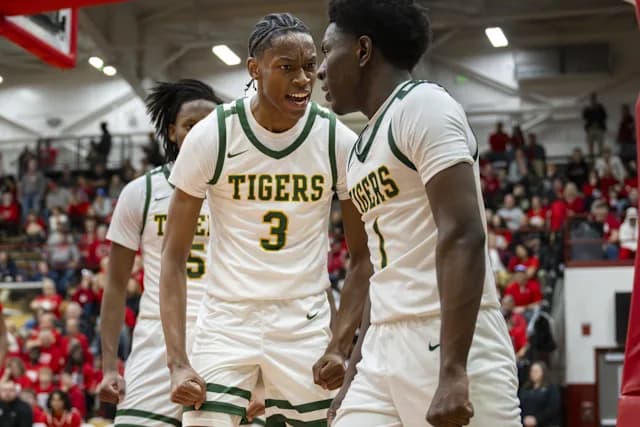
David Hughes puts Terre Haute back into one of Indiana basketball’s most stubborn questions: how does a city with this much history still have no boys state title? The record is full of sectional banners, semistate trophies and final-four runs, yet the last line has never been crossed. That gap is why this story still matters in West Central Indiana.
The championship chase started more than a century ago
The Indiana High School Athletic Association says the first state tournament was conducted in 1911 at Assembly Hall on the Indiana University campus in Bloomington, which gives Terre Haute’s drought an unusually long runway. This is not a short-term slump or a bad decade; it is a pursuit that has stretched across generations of players, coaches and gym walls. In that span, Terre Haute’s boys programs have repeatedly gotten close enough to keep the conversation alive.
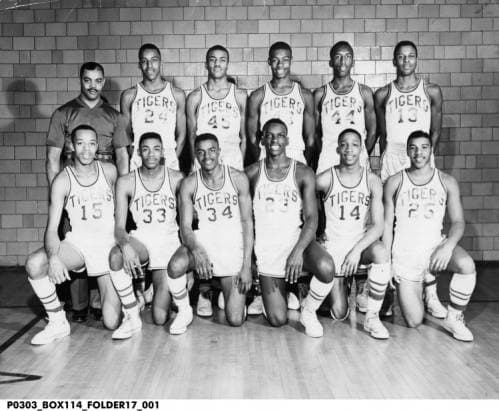
Terre Haute South Vigo’s run in the late 1970s remains the clearest benchmark. A later tribute to Gordon Neff, the school’s first boys coach, says his 1977, 1978 and 1979 teams all marched to the final four. The 1979 state tournament program listed Terre Haute South Vigo, Anderson Indians, Argos Dragons and Muncie Central Bearcats as the final four, and that alone shows how deeply the Braves pushed into the state’s final week without getting the last win.
The city’s history is built on repeated near-misses
The numbers behind Terre Haute’s claim are strong enough to explain why “due” is a real basketball word here. IHSAA boys basketball semi-state history lists Terre Haute South with championships in 1976-77, 1977-78 and 1978-79, while Terre Haute Gerstmeyer appears with semistate championships in 1978-79, 1980-81, 1982-83 and 1985-86. That is not a one-off spike. It is a city producing teams that could survive deep into March over and over again.
The sectional ledger is just as telling. Terre Haute South won boys sectionals in 1972-73, 1975-76, 1976-77, 1977-78, 1978-79, 1979-80 and 1980-81. Terre Haute North added its own championship line in 1971-72, 1973-74, 1985-86, 1986-87 and 1989-90. Terre Haute State Lab also shows up in the older sectional record with titles in 1943-44, 1948-49 and 1964-65, evidence that the city’s basketball footprint has stretched across multiple school identities and eras.
A simple way to measure the unfinished business is to line up the strongest markers together:
- Terre Haute South reached the boys final four in 1977, 1978 and 1979.
- Terre Haute South won seven sectionals from 1972-73 through 1980-81.
- Terre Haute Gerstmeyer collected four semistate championships between 1978-79 and 1985-86.
- Terre Haute North added five sectional titles across the 1970s and 1980s.
That kind of résumé usually belongs to a place that has already lifted the trophy. Terre Haute has done everything around the title except win it.
Why the title still has not come home
One structural reason is obvious in the record itself: Terre Haute’s success has been spread across different schools and different windows, not concentrated in one long dynasty. South carried the late-1970s run, North added its own sectional peaks, and Gerstmeyer built another strand of deep postseason success. That is a proud basketball map, but it also means the city never got one single program to hold the center of gravity long enough to finish the job.
The other reason is the way Indiana basketball turns pressure into a yearly gauntlet. A title chase that begins with the first state tournament in 1911 still runs through sectional and semistate tests, where one bad night can erase an otherwise strong season. The fact that Terre Haute keeps showing up in the latter rounds is the point, but it also explains the frustration: the city has repeatedly had enough to contend, yet not enough to close.
That larger Indiana context matters too. A 2026 South Bend Tribune piece noted that 19 of the 337 IHSAA basketball state champions came from schools that later closed, a reminder that title histories in this state are shaped by school identity, not just talent. Terre Haute’s story fits that broader reality because its contenders have come from different eras and different school names, while the championship itself has stayed out of reach.
What today’s teams are trying to prove
Recent results still feed the argument that Terre Haute can make another run. Terre Haute North’s 35-34 win at Bloomington South, its first there since 1996, is the kind of narrow, hard-earned road result that can reset how a team is viewed. It does not erase the past, but it does show that milestone wins still matter in the city’s basketball story.
That is why the present moment feels meaningful even without a trophy in hand. The best Terre Haute teams have always needed more than pride; they have needed a postseason résumé that survives sectional pressure, semistate travel and the final weekend of the tournament. South’s final-four stretch in the 1970s remains the standard, and North’s recent flashpoint win gives the city another reminder that the next breakthrough will have to be earned one tight game at a time.
The comparison to the rest of Indiana is instructive as well. The IHSAA championship history pages show Carmel sitting atop multiple recent spans of state title success, which underlines how rare it is for any program to stack championships in this landscape. Terre Haute does not need a lecture on tradition. It needs the one thing its history still lacks: a boys basketball state title that finally turns all those sectionals, semistates and final fours into the finished story.
This article was produced by Prism’s automated news system from verified source data, official records, and press releases, then run through automated quality and moderation checks before publishing. The system is built and supervised by the people who set the standards it runs under. Read our full AI policy.
Did this article answer your question?