How Indiana girls basketball grew into a statewide tradition
Indiana girls basketball took shape in 1976 at Hinkle Fieldhouse, then grew into a four-class tradition with dynasties, records, and statewide legitimacy.

Warsaw’s 57-52 win over Bloomfield did more than crown the first champion. It gave Indiana girls basketball its opening benchmark, a date, a venue, and a standard the sport still measures itself against every winter.
The first finals set the template
The first IHSAA girls state finals were played on February 28, 1976, at Hinkle Fieldhouse in Indianapolis, and the bracket already felt like a state event rather than a one-off experiment. Bloomfield edged Indianapolis Arsenal Technical 47-45 in one semifinal, Warsaw beat East Chicago Roosevelt 62-44 in the other, then Warsaw finished the day unbeaten at 22-0 by defeating Bloomfield 57-52 for the title.
That first championship also created the award structure that still gives the event its identity. Judi Warren of Warsaw became Indiana’s first Miss Basketball and earned the first girls state finals Mental Attitude Award, giving the inaugural season a star and a memory that have lasted far beyond the final horn.
Indiana had built the runway before the launch
The girls tournament did not appear in a vacuum. The IHSAA had begun adding girls sports in 1972-73, three years before the first basketball tournament, and that broader expansion made the 1976 finals the visible payoff of a larger institutional shift.
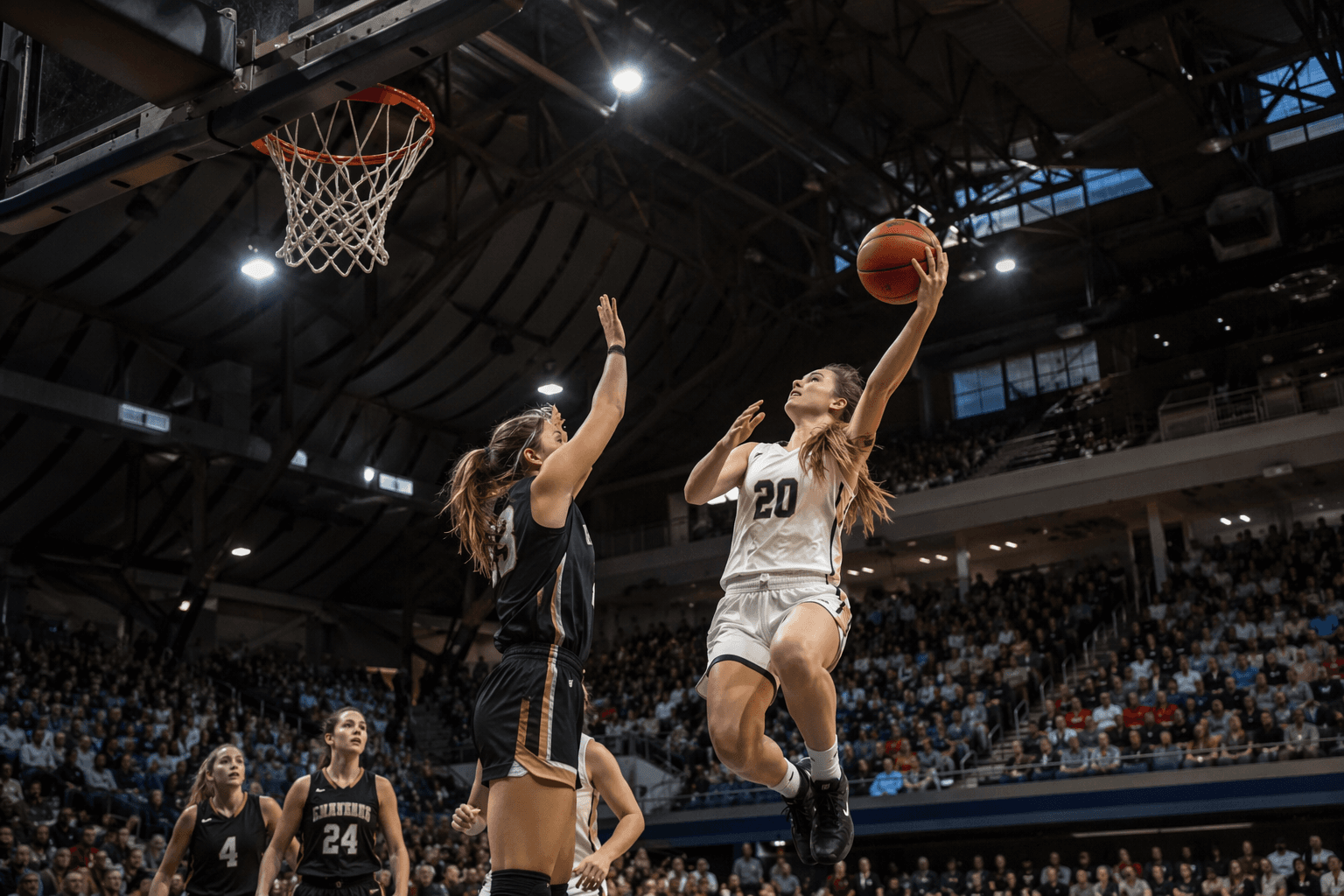
The historical backdrop mattered, too. Indiana Historical Society material connects that era to Title IX and to Senator Birch Bayh’s role in making it happen, which helps explain why the first finals carried weight beyond the box score. Hinkle Fieldhouse, which opened in 1928 and had already become one of Indiana’s most iconic basketball buildings, gave the first championship the feel of a civic moment as much as a sporting one.
Hinkle, then Market Square, gave the tournament a home
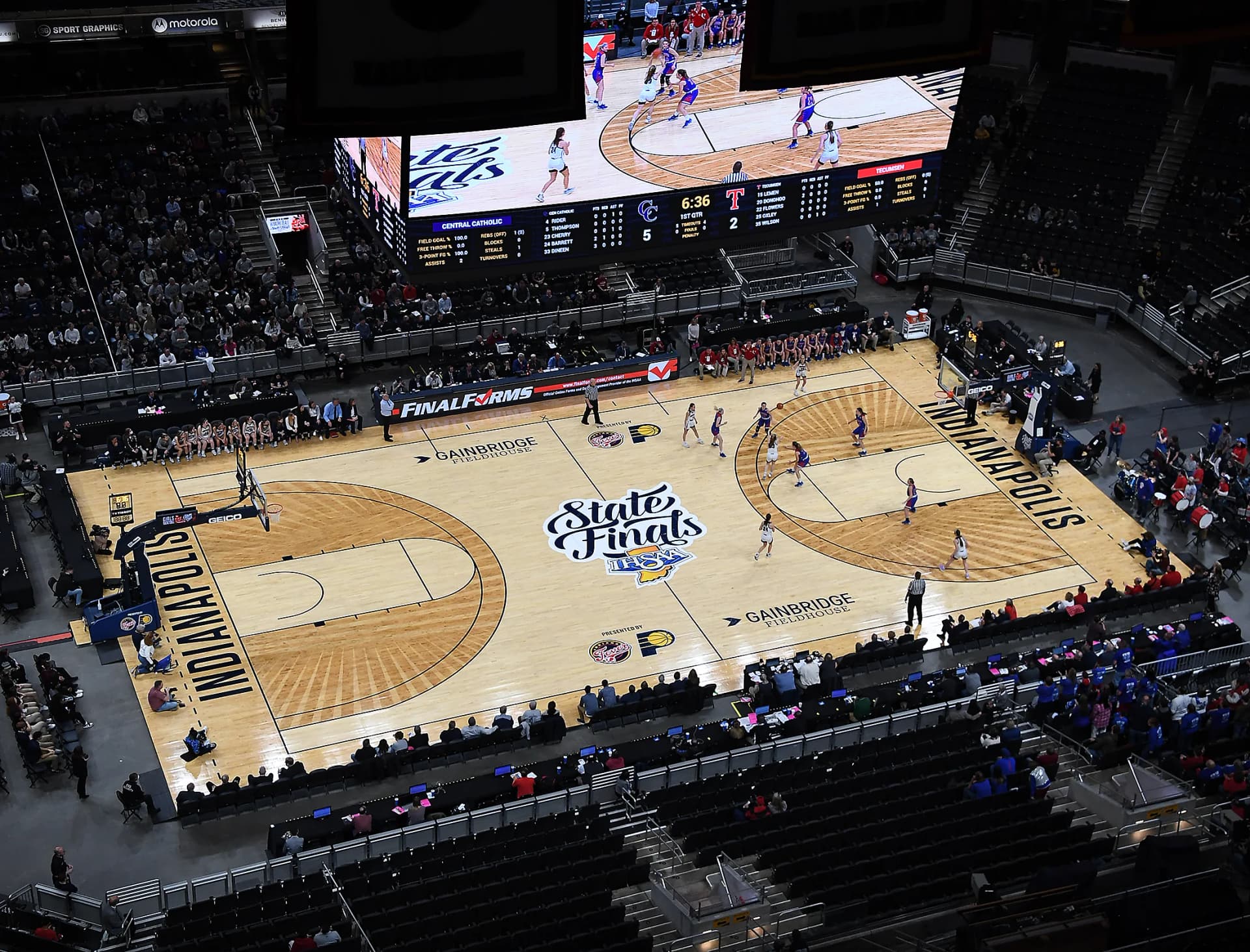
The venue history tracks the sport’s early growth almost as clearly as the champions do. Hinkle Fieldhouse hosted the first girls finals in 1976 and then again in 1977, 1978, and 1979, before the tournament moved to Market Square Arena in Indianapolis from 1980 through 1999.
That sequence matters because it shows the tournament becoming established before it became expansive. The move to Market Square did not dilute the event’s identity; it gave the finals a larger stage while keeping the championship as a single statewide gathering, one that could pull together schools from every corner of Indiana.
The records book turned a season into a timeline
The IHSAA girls championship records book begins its timeline at 1975-76 and carries the sport through the 1990s and into the multi-class era. It is more than a list of winners. It documents state finals scores, coach superlatives, attendance, and statistical leaders, giving the girls tournament the kind of archive that lets modern fans trace the sport from its first season to its current structure.

That archive also preserves the early names that established legitimacy. Warsaw and East Chicago Roosevelt appear among the first champions and repeat powers, while Southport, Bedford North Lawrence, Kokomo, Fort Wayne Northrop, and Fort Wayne Bishop Luers became part of the long-running competitive map. In a state where basketball history is part of the public language, the records book turned girls basketball from a new addition into an official lineage.
Dynasties formed fast, and they stayed visible
One of the clearest signs that Indiana girls basketball had matured quickly is how soon streaks started to matter. The records book lists long consecutive state finals appearance runs, including Noblesville from 1987 to 1990, Fort Wayne Bishop Luers from 1999 to 2002, Heritage Christian from 2006 to 2009, South Bend Washington from 2006 to 2009, and Fort Wayne Canterbury from 2012 to 2015.
Those streaks show a sport that was never content to stay in its first chapter. They also show how quickly the tournament created recognizable program identities, the same way boys basketball had done long before. Once those schools started stacking appearances, the girls finals became a place where continuity, coaching, and school culture could be tracked year after year.
The four-class era widened the race without shrinking the tradition
The biggest structural change came when the tournament moved to a four-class format beginning in 1997-98 and 1998-99. The records book captures that shift as a fundamental rewrite of the path to a state title, one that opened more schools to realistic championship runs while preserving a single state-level crown in each class.
That change matters because it explains how older dynasties and newer small-school powers can both live inside the same official history. The first multi-class champions included Warsaw and East Chicago Roosevelt, and the classification change allowed the tournament to grow without losing the shared Hoosier ritual that made the first finals feel important in the first place.
The first season still sets the standard
The first finals were not only a championship game. They were the beginning of a memory system that Indiana girls basketball still uses: first champion, first Miss Basketball, first Mental Attitude Award, first venue, and first unbeaten title team. Even the human details from that day helped seed the sport’s culture, including the presence of a young Rushville coach, Cinda Brown, who brought her team to Hinkle to watch the debut.
That is why the 1975-76 season remains the cleanest way to understand the sport’s rise. It explains how Indiana girls basketball moved from institutional opening to statewide tradition, and why the records book now matters as much as the trophies.
This article was produced by Prism’s automated news system from verified source data, official records, and press releases, then run through automated quality and moderation checks before publishing. The system is built and supervised by the people who set the standards it runs under. Read our full AI policy.
Did this article answer your question?