Indiana girls state finals trace path through iconic venues
Indiana girls finals moved from Hinkle to Market Square to Conseco and now Gainbridge, and every venue change marked a bigger stage for the sport.
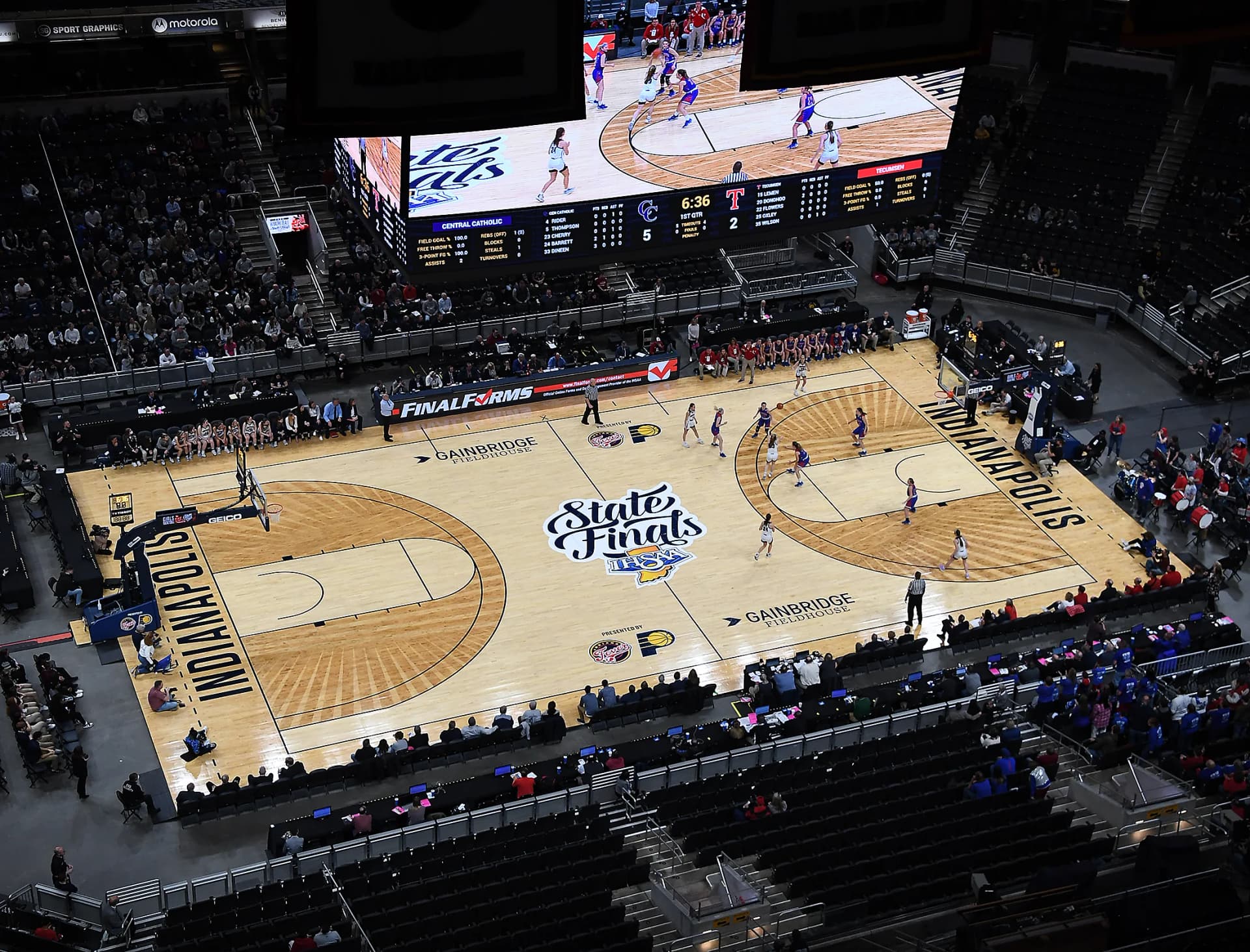
Indiana girls basketball’s biggest stage has never been static. The finals’ path from Hinkle Fieldhouse to Market Square Arena, then to Conseco Fieldhouse and today’s Gainbridge Fieldhouse, maps the sport’s rise in visibility, institutional support, and statewide stature. Each building did more than host a title game, it signaled how far the girls tournament had come.
Hinkle Fieldhouse set the first standard
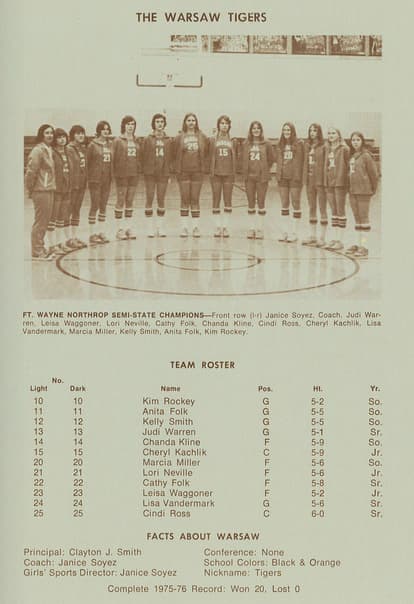
The first IHSAA girls basketball state championship game was played in 1976 at Hinkle Fieldhouse, and that opening night set the tone for everything that followed. Warsaw beat Bloomfield 57-52 in that inaugural final, giving the event its first champion inside one of Indiana basketball’s most revered gyms. The Indiana Basketball Hall of Fame describes Warsaw as the first state girls basketball tournament champion, and it places that game at Historic Hinkle Fieldhouse, a fitting stage for an event that was still defining itself.
The early finals did not arrive with certainty attached. In a 2016 retrospective, Cinda Brown, then a young coach at Rushville, remembered bringing her team to watch that first final and said nobody knew quite what to expect, including crowd size and quality of play. That detail captures the atmosphere of 1976 better than any attendance number could: the event was important, but its scale and permanence had not yet been proven.
Hinkle remained the home of the finals from 1976 through 1979, then returned for one more championship run in 2000. That bookend return matters because it shows Hinkle was not just a launch point, it remained a symbolic anchor. When the finals came back, the message was clear: the sport had grown, but it still wanted the credibility that came from Hinkle’s floor.
Market Square Arena expanded the championship’s reach
From 1980 through 1999, Market Square Arena became the long-term home of the girls state finals. The IHSAA’s 2001 preview laid out that timeline plainly, with Market Square standing between Hinkle’s early years and Conseco Fieldhouse’s arrival. The shift from Hinkle to Market Square was about more than changing zip codes. It reflected a tournament that had outgrown its first stage and needed a bigger downtown Indianapolis showcase.
Built in 1974, Market Square Arena became a major downtown Indianapolis venue for sporting and cultural events. That broader role fit the girls finals perfectly. By moving into a building that already hosted high-profile gatherings, the tournament gained the look and feel of a premier civic event, not just a school basketball weekend. Fans saw the girls finals placed in the same urban spotlight that had long framed other major city occasions.
The arena years also helped normalize the idea that the girls championship belonged in the center of Indiana basketball culture. Market Square’s nearly two-decade run gave the tournament stability, and stability is its own kind of growth. A championship that returns to the same building for 20 straight seasons stops looking experimental and starts looking essential.
Conseco Fieldhouse ushered in the modern era
When Conseco Fieldhouse took over in 2001, the IHSAA called it the third venue in girls tournament history. That detail mattered then, and it still matters now, because it marked a fresh chapter rather than a simple relocation. Conseco carried the finals into a newer arena built for the modern sports era, with a premium downtown setting that matched the tournament’s increased profile.
The name on the building later changed to Bankers Life Fieldhouse, then Gainbridge Fieldhouse, but the underlying meaning stayed the same. The state finals were no longer just occupying a building, they were part of an arena identity that reinforced the prestige of winning in Indiana. That evolution tracks with how girls basketball itself has been viewed across the state: not as a side story to boys hoops, but as one of Indiana’s major sporting properties.
The modern venue also gave the IHSAA a stage for celebration as well as competition. In February 2025, the association announced that the 50th annual girls finals would be celebrated at Gainbridge Fieldhouse on Saturday, March 1. At halftime of the 2A game, state championship coaches were recognized. At halftime of the 3A game, Indiana Miss Basketballs from the past five decades were honored. Participants from the inaugural 1976 championship game were introduced at halftime of the 4A game. Those details show how the finals have become a reunion point as much as a title weekend.
Gainbridge Fieldhouse continues the same Indianapolis tradition
Gainbridge Fieldhouse is the latest name on the same championship stage, and the finals’ return there keeps the Indianapolis tradition intact. The arena’s 2025-26 event listing places the IHSAA Girls Basketball State Finals there on Saturday, February 28, with a Friday-Saturday format that includes one game Friday evening and three on Saturday. That schedule underscores how the event now operates as a polished, multi-day showcase rather than a single-game stop.
The building history tells the story of the sport’s climb. Hinkle gave the finals legitimacy from the start. Market Square gave them scale. Conseco gave them a modern corporate and civic platform. Gainbridge carries that lineage forward in a downtown arena built for major events and major crowds. Each move says the same thing in a different architectural language: girls basketball in Indiana earned a bigger place, and the state kept building one.
The final takeaway is visible in the buildings themselves. The girls state finals are not just played in Indianapolis, they are staged in arenas that mark the sport as a statewide institution, and that is why the venue history is inseparable from the history of the championship.
This article was produced by Prism’s automated news system from verified source data, official records, and press releases, then run through automated quality and moderation checks before publishing. The system is built and supervised by the people who set the standards it runs under. Read our full AI policy.
Did this article answer your question?