How the 1975-76 IHSAA launch shaped Indiana girls basketball history
The 1975-76 IHSAA launch turned girls basketball into an official Indiana sport with a championship ladder, a permanent archive, and records that still set the standard.
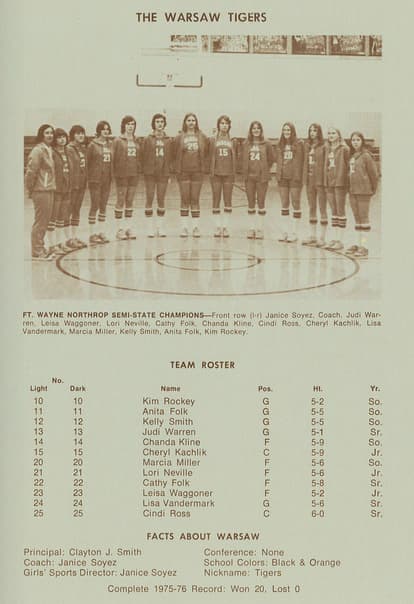
Indiana girls basketball did not become powerful because the IHSAA merely added it to a schedule. It became institutionally real in 1975-76, when the sport moved into an official tournament structure that could crown champions, track finals, and preserve records in the same way boys basketball had long been measured. That shift gave the game a statewide framework, and the archive built around it still shapes how Indiana defines legitimacy in the girls game.
The season that made the sport official
The clearest marker of the change is simple: the IHSAA Girls Basketball State Championship Records Book begins its official tournament history with the 1975-76 season. That is the point where girls basketball stops reading like a collection of local traditions and starts reading like a sanctioned championship sport with a statewide ladder. The push behind that change came from the people already invested in the game, including early La Porte coach Ron Clindaniel, whose name appears in the era’s public references and signals how much of the pressure came from coaches who had been building the sport long before the governing body fully recognized it.
The broader institutional frame matters too. The IHSAA’s by-laws and articles of incorporation say the organization was incorporated on April 26, 1976, right as the girls tournament era was taking shape. That timing matters in Indiana because the sanctioning of girls basketball did not happen in isolation: it landed in a moment when the state’s athletic infrastructure was formalizing around girls sports, giving the tournament a stronger administrative backbone almost immediately.
What the records book actually preserves
The IHSAA Girls Basketball State Championship Records Book is valuable because it goes far beyond a list of title teams. Its table of contents maps the sport’s growth as a full institution, with sections for state championship game results, runners-up by school, championship game appearances, state finals appearances, championships by coach, year-by-year state finals scores, scoring and rebounding leaders, the Patricia L. Roy Mental Attitude Award, state finals attendance, and a tournament timeline. That range tells you the story is not just who won, but how the game was measured, remembered, and valued.
That structure matters because records create memory. Once girls basketball entered an official IHSAA archive, schools and players could be compared across decades with the same tools used to track other major Indiana sports: titles, finals trips, coach superlatives, and individual stat leaders. The presence of the Patricia L. Roy Mental Attitude Award also shows that the sport’s official history has always included a standard for character, not just a tally of wins and points.
What changed immediately for players and schools
The first immediate change was legitimacy. A sanctioned tournament gave players a route to a state championship that carried the authority of the IHSAA, and it gave schools a measurable path through the tournament structure rather than relying on informal recognition. That mattered because once the championship became official, a program’s success could be archived in finals appearances, coach records, and year-by-year scores instead of fading into local memory.
The tournament ladder also created something else Indiana basketball culture values deeply: visible tradition. Anderson’s girls regional championships in 1976-77, 1977-78, 1980-81, and 1981-82 show how quickly a program could begin stacking history once the official route existed. Those titles are not just date stamps. They show that within only a few seasons, schools were already building tournament identities that could be traced, celebrated, and argued over in the same way fans discuss long-running boys powers.
Why 1975-76 still defines the sport today
The launch year still shapes today’s records because every later standard depends on that first official season. The IHSAA’s girls scoring records page places Jackie Young of Princeton at the top of the all-time career scoring list with 3,268 points, and that number only has meaning because the state built a formal recordkeeping system that makes career comparisons possible across generations. Without the sanctioned tournament era and the archive behind it, there is no stable way to measure a modern star against the players who came before her.
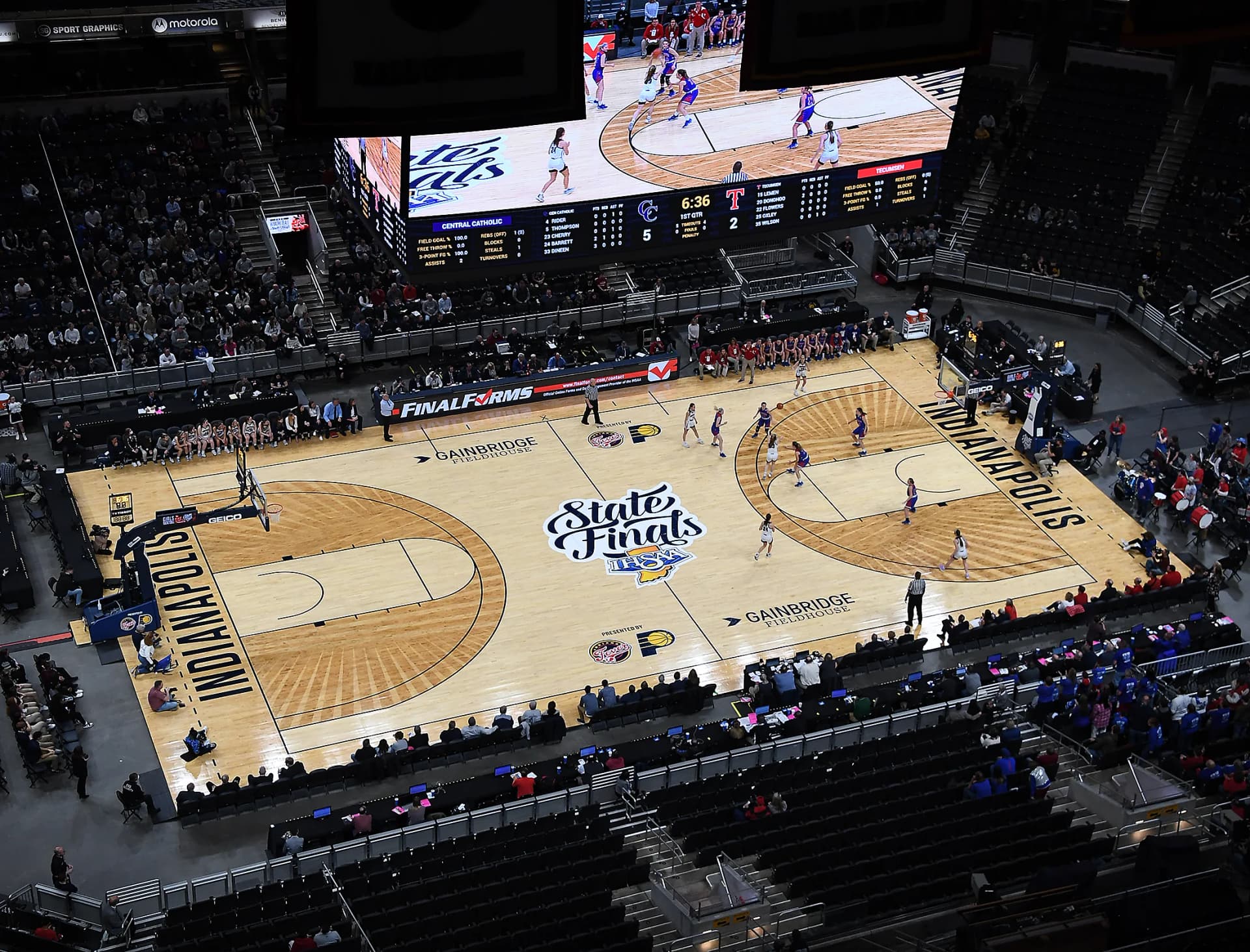
The same is true for the statewide culture around the state finals. A 2018-19 IHSAA girls basketball preview described the event as the 44th annual IHSAA girls basketball state finals, showing how the tournament had become an enduring annual institution rather than a one-time experiment. The fact that the state could point to a 44th annual finals by that season is evidence of how thoroughly the 1975-76 launch took root in Indiana sports life.
The larger girls-sports context in Indiana
Girls basketball’s official start also fits into a broader pattern of organizing girls sports into formal championship records. The IHSAA girls volleyball records book shown in the archive begins with the 1972-73 championship season, which shows that girls sports in Indiana were already being captured in state-championship form before girls basketball received its own official season. In other words, basketball was not the first girls sport to enter the archive, but once it did, it joined a system that understood the power of records to legitimize competition.
That is why the 1975-76 launch still matters to statewide basketball culture. It did more than award a first title. It created the structure that lets Indiana tell the story of its girls game through championships, scoring leaders, regional runs, coach legacies, attendance, and awards that reflect the sport’s values. The result is a record book that functions like a constitution for the modern era of Indiana girls basketball: the game became official, the history became measurable, and the standard became permanent.
This article was produced by Prism’s automated news system from verified source data, official records, and press releases, then run through automated quality and moderation checks before publishing. The system is built and supervised by the people who set the standards it runs under. Read our full AI policy.
Did this article answer your question?