Indiana high school basketball records book preserves championship history
Indiana’s championship ledger is a living archive, with titles, buzzer-beaters and awards that still define who owns the state’s basketball standard.
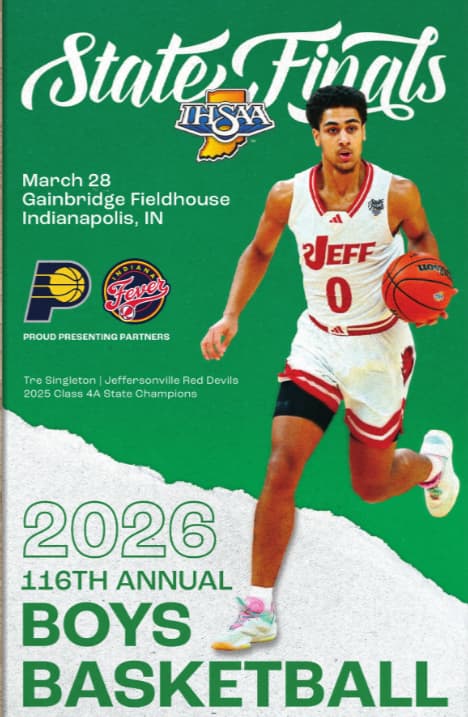
The IHSAA Boys Basketball State Championship Records Book does more than preserve winners. Its latest version, updated May 14, 2026 at 1:49 PM, tracks game results, coach records, buzzer-beaters, attendance, awards and the timeline that turned Indiana high school basketball into a statewide institution.
A record book built to measure greatness
The 2026 table of contents shows how wide the archive reaches: State Championship Game Results, Team Records, Game-Winners & Buzzer-Beaters, Coach Records, State Finals Scores, Game Records, Arthur L. Trester and Ray Craft Mental Attitude Awards, Superlatives, Attendance and State Tournament Timeline. An earlier edition, last updated August 5, 2022 at 3:26 PM, used a similar framework, which is part of what makes the book so useful. It is not a scrapbook of old brackets. It is a working ledger that lets fans compare championship runs, coaching legacies and the pressure moments that separate a good season from a remembered one.
That structure matters because the book now does what old tournament lore used to do by rumor and memory. It places a title game, a coach’s résumé, a buzzer-beater and a crowd total in the same official frame, so the conversation about greatness can move from nostalgia to evidence.
The championship timeline starts long before modern arenas
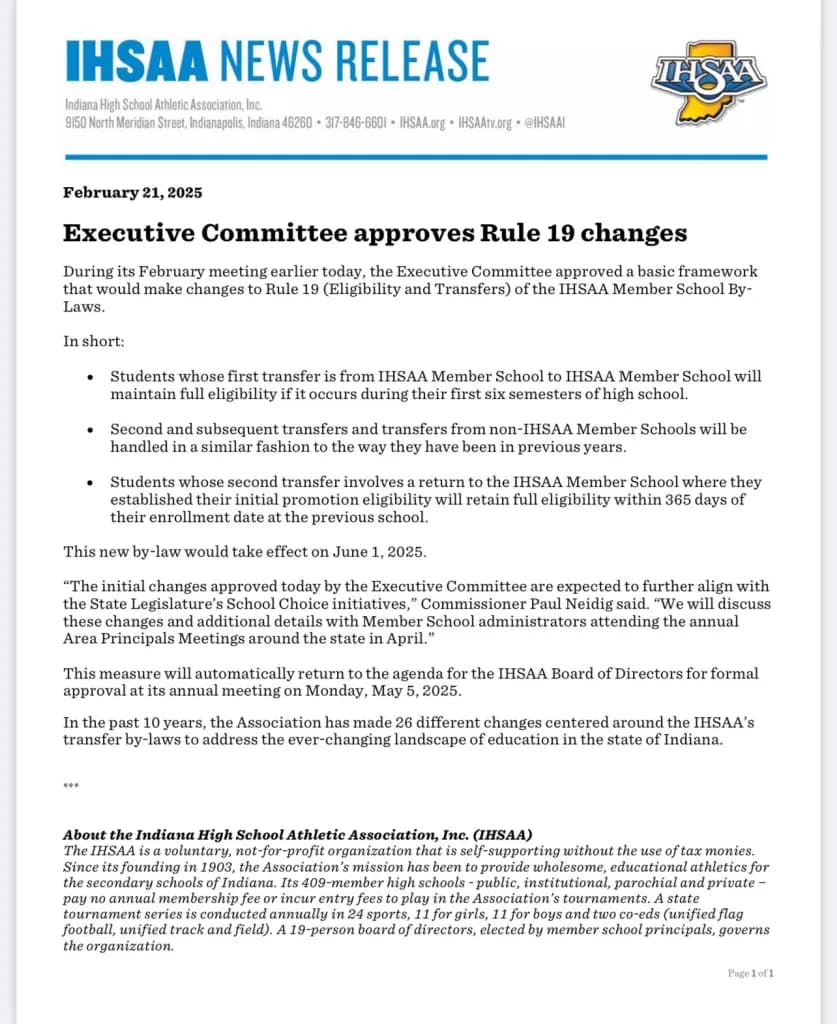
The history runs back to the first attempt to organize Indiana high schools for athletics, which was made at Richmond in April 1903 through the Richmond Agreement. From there, the records book traces the tournament’s growth into a state ritual, starting with the first championship listing shown in the book: Crawfordsville over Lebanon, 24-17, in 1910-11 at Assembly Hall in Indiana University, Bloomington.
That opening line is important because it shows how the state’s basketball identity developed alongside its institutions. The early years were tied to classrooms, teachers and formal organization. The modern records book keeps that origin visible even as the finals moved through different eras, schools and venues. It is the bridge between Richmond’s organizing meeting and the championship weekend spectacle that later settled into Indianapolis.
Scores that became part of the state’s memory
The record book earns its value in moments like Greensburg’s 89-76 win over Bowman Academy in the Class 3A championship. That game set a Class 3A state championship game scoring record, and it also underscored how narrow the path to a special season can be. Greensburg captured a second straight state championship, while Bowman Academy, already a 2013 2A champion and a 2010 Class A champion, was denied a bid to become the first boys basketball team to win a state title in three different classifications.
Silver Creek’s 50-49 Class 3A title-game win is another example of why the records book includes Game-Winners and Buzzer-Beaters. One-point finals are the kind of games that become shorthand for the sport’s drama, and the official record keeps that drama from fading into vague memory. In a state where fans still judge programs by how they handle March pressure, those close finishes matter as much as a trophy count.
The book’s coach sections and year-by-year finals scores deepen that conversation. A program’s legacy is never just one banner or one season. It is the accumulated evidence of repeated appearances, coach records and the ability to turn narrow margins into championship habits.
Attendance is part of the story too
Indiana high school basketball has always been about more than the scoreboard, and the records book treats attendance as a serious measure of the sport’s reach. The state finals were identified in preview materials as the 107th annual finals in 2017, the 108th in 2018 and the 109th in 2019, all at Bankers Life Fieldhouse in Indianapolis. Those numbering milestones show how long the title weekend has functioned as a major public event, not just a single-game finish.
That scale helps explain why the championship archive matters beyond the gyms where games are played. The finals become a gathering point for schools, alumni and entire communities, and the attendance section gives that public weight a place in the official record. In a state where basketball is part of civic identity, the crowd is part of the story.
Mental Attitude Awards tie the record book to character
The records book also preserves a tradition that reaches beyond wins and losses: the Arthur L. Trester and Ray Craft Mental Attitude Awards. From 1917 to 1943, the boys basketball Mental Attitude Award was known as the Arthur L. Trester Award, a detail that keeps the modern book tied to its earliest championship culture. Indiana Farm Bureau Insurance provides a $1,000 scholarship in the name of each recipient, adding a practical benefit to a long-standing honor.
The award section also reflects how the association has chosen to remember its own leaders. In October 2020, the IHSAA approved renaming several awards to honor Bobby Cox, Bob Gardner and Phil Gardner. That decision links today’s records to the people who helped shape the organization’s identity, reinforcing that the book is not just about teams and scores. It is also about the values the state wants attached to its champions.
Why the records book still shapes the way fans judge teams
For readers who follow Indiana basketball closely, the value of the records book is that it turns tradition into a usable standard. State Championship Game Results, State Finals Scores, Team Records and Coach Records give context to every new title chase. A program climbing toward another milestone is no longer just having a good season. It is moving through a documented history that begins with Crawfordsville’s 1910-11 title, runs through the modern finals in Indianapolis, and preserves the exact games where records were set or broken.
That is why the book still matters when a team nears a rare mark, a coach approaches a résumé milestone or a title game comes down to one possession. Indiana has always judged basketball greatness by memory, but the records book makes that memory official.
This article was produced by Prism’s automated news system from verified source data, official records, and press releases, then run through automated quality and moderation checks before publishing. The system is built and supervised by the people who set the standards it runs under. Read our full AI policy.
Did this article answer your question?