Indiana High School Basketball Shot Clock Debate Divides Coaches Statewide
Indiana coaches backed a 35-second shot clock 68% to 32% in a recent IBCA survey, a dramatic shift from prior votes where support never cracked 50%.
For the first time in memory, a majority of Indiana high school basketball coaches are on record supporting a shot clock. The Indiana Basketball Coaches Association surveyed its membership and received 612 responses from roughly 800 boys and girls coaches, a 77% response rate. Of those who responded, 68% said they favor adding a 35-second shot clock, a striking reversal from every previous time the question has been formally posed, when fewer than half of coaches voted in favor.
"To get 77% response is really a good number," IBCA executive director Marty Johnson said. "There is a lot of interest in this topic. We did not have much discussion about it prior to sending it out to the coaches, but the discussion has gone on more since then."
The survey results drove a formal proposal. The IBCA presented the 35-second shot clock plan to the Indiana Interscholastic Athletic Administrators Association, then brought it before the IHSAA executive committee on February 20. The IHSAA board of directors voted on the proposal at its May 4 meeting, where the proposal could be affirmed, denied, tabled, or amended. As written, the proposal called for shot clocks to take effect for the 2026-27 season. IHSAA assistant commissioner Brian Lewis offered measured support for the process: "We are listening to the coaches association and then will evaluate with our board."
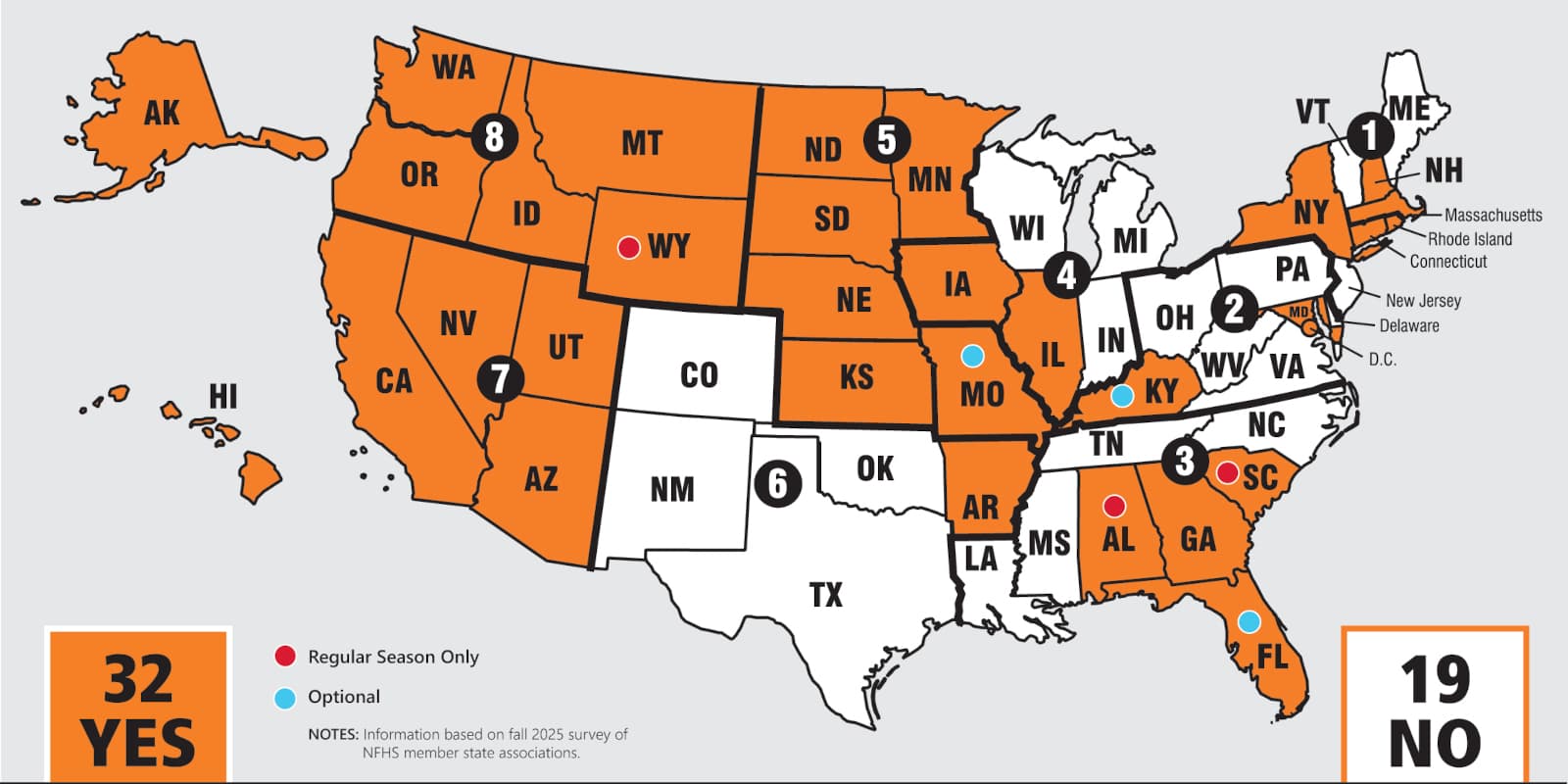
Indiana was already an outlier nationally. For the 2025-26 season, 32 states use a shot clock in some form, compared to just 10 before the National Federation of State High School Associations approved the option for states in 2021. Illinois required shot clocks for boys and girls varsity games beginning with the 2026-27 season. Kentucky approved shot clocks starting with 2027-28. Indiana, which receives zero dollars in state funding for its athletic association, has been slower to move, in part because of the financial and logistical weight of implementation.
Every school that adopts the shot clock would need to purchase a unit for both sides of the court, and each game would require a trained operator. Neidig, writing in the South Bend Tribune, noted that the IHSAA returned more than $4 million to its member schools last year to help cover the costs of running events and equipment, providing some context for how schools might absorb new expenses, though no specific cost estimates for shot-clock hardware were available.
Not everyone is convinced the investment is worth it. Neidig has been among the most vocal skeptics. "I'd hate to take away that coaching tool from our great coaches," he said. "I've also got coaches who, some years, tell me we need a shot clock because they're very athletic, and then the next year, the team makeup has changed, and they're not as much in favor of the shot clock." His broader argument lands on tradition and competitive philosophy: "We have the best coaches and players in the country. We have a tournament that every school in Indiana gets to play in. The object of the game is to put your team in the best possible position to win. Possession control is certainly a strategy utilized by many coaches in Indiana. I do not see a reason to take a strategy used to win from our coaches."

The Kouts basketball account on X (@MustangBasketb1) echoed that sentiment in response to Indianapolis Star reporter Kyle Neddenriep's coverage, writing: "We are not AAU, so let teams find a way to compete when they are underdogs."
Proponents argue the game suffers without a clock, particularly at the end of close contests. Jim Reamer, who owns the basketball news site courtsideindiana.com, has backed shot clocks for years. "It eliminates a lot of late game fouling, improving the end of games," he said. "No one enjoys teams fouling with [two to three] minutes to go." Richie Hall, a columnist who has covered high school sports for more than 25 years and spent 18 of those years in Hamilton County, wrote in a February 5 column that shot clocks "will take some getting used to, but they might make basketball in Indiana better in the long run. They also could make the game more fun — and shouldn't that still be the main point of high school sports?"
On the personnel question, Hall was blunt: "You're paying someone to push a few buttons on a control pad. I'm certain that schools can find someone capable of that complicated task."
The debate landed against an already charged backdrop. Elkhart County coaches expressed mixed feelings about implementation, according to the Elkhart Truth, with the discussion unfolding amid semistate excitement. The IHSAA's four-team, three-game semistate format already places considerable demands on players, requiring two wins in a single day to advance to the state finals, a concern that has drawn comparisons to the Indiana Soccer Coaches Association's decision to split its regional format across two days to reduce injury risk.
Whether the shot clock ultimately passed the May 4 board vote, Indiana's coaches have already recorded something historically significant: a clear majority, for the first time, saying the clock has run out on the old way of doing things.
Know something we missed? Have a correction or additional information?
Submit a Tip