Indiana’s 2029 frontcourt prospects show toughness, skill, and upside
Four young forwards are raising Indiana’s 2029 ceiling by doing the dirty work. Their rebounding, rim protection, and versatility are turning frontcourt toughness into a real debate.
Four names, four different jobs
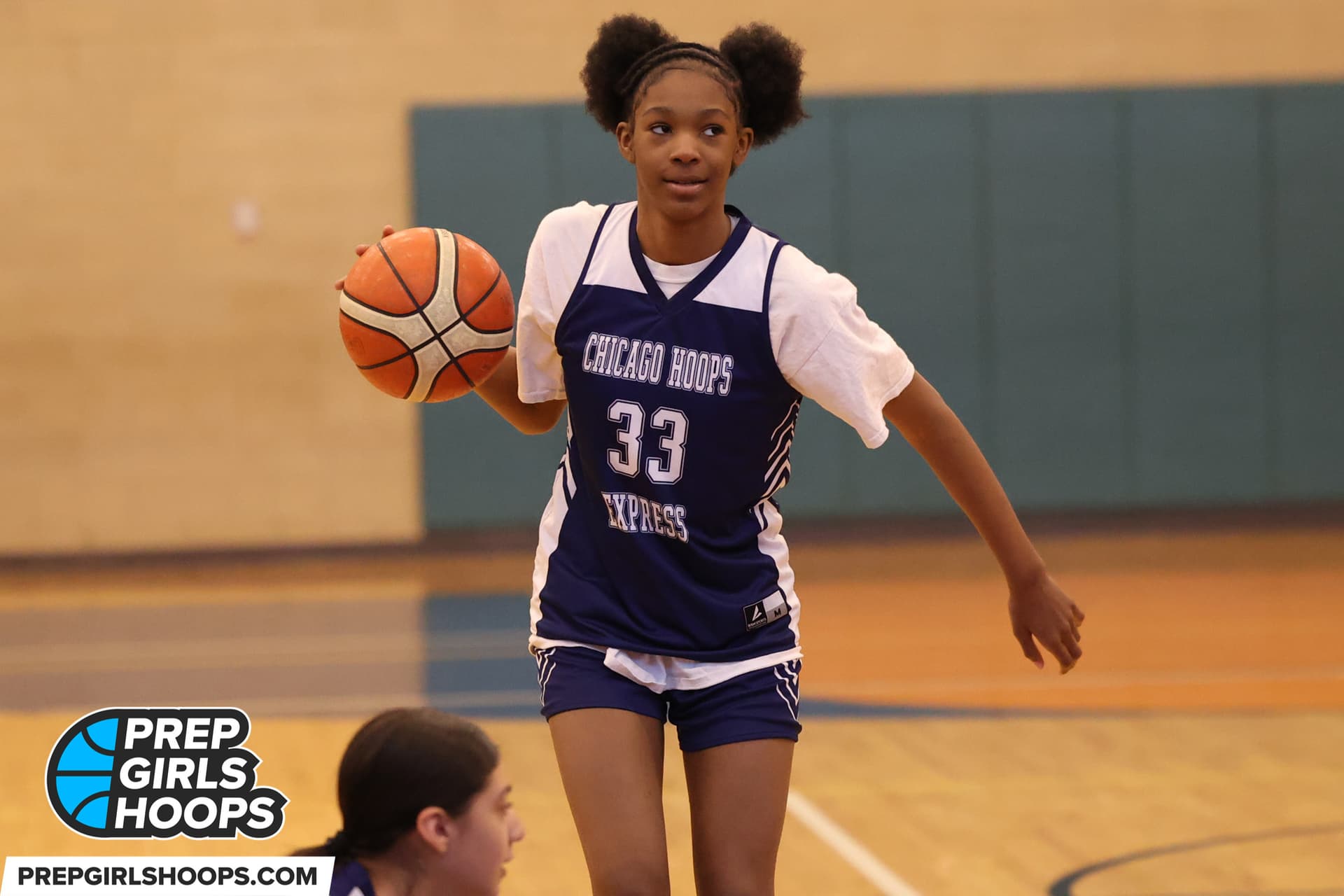
Four names, four different jobs. Prep Girls Hoops used Ava Mills, R’sirae Nunn, Leighton O’Connor, Angel Omale, and Avery Paridaen to make a bigger point than any single player profile could carry: Indiana’s 2029 frontcourt is becoming a class defined by utility, not just upside. The appeal is in the variety. Some of these forwards finish around the rim, some rebound with force, some switch and defend multiple spots, and some already stretch the floor enough to make coaches trust them in bigger roles.
Why this class now matters statewide
The scale of the class explains why this conversation is getting louder. Prep Girls Hoops said Indiana’s 2029 board grew from 75 ranked prospects in January to 100 by early May, and that winter update added more than 25 new names to the watch list. That is not just list-building, it is a sign that the class is still revealing real depth, especially in the frontcourt where size and mobility are starting to show up across the state. Even the top of the broader class, with Laine Lyles, Savayah Mitchell, Malyiah Evans, Jillian Sanderson, and Paige Schnaus, reinforces that this is a full-class evaluation, not a niche post-player story.
Just as important, these forwards are spread across different basketball environments. Delphi, Richmond, Ben Davis, Avon, and Gibson Southern all sit inside the IHSAA structure, and the state finals at Gainbridge Fieldhouse on Feb. 28, 2026 underscored how much every possession in Indiana is tied to a larger championship pathway. That geography matters because it shows this is not a talent pocket concentrated in one metro or one powerhouse; it is a statewide trend that can alter how programs build over the next few seasons.
Ava Mills and R’sirae Nunn give smaller details that win games
Ava Mills and R’sirae Nunn show why frontcourt prospects are increasingly evaluated by what they can do without the ball. Mills is listed at 5-foot-10 as a power forward-small forward for Delphi, and MaxPreps has her on the 2025-26 varsity roster as a freshman wearing No. 20. That combination matters because it points to a player who can slide between frontcourt and wing responsibilities, which gives a coach more lineup flexibility when games get physical or tempo changes.
Nunn, listed at 5-foot-11 at Richmond, brings a more interior-driven brand of value. Prep Girls Hoops’ evaluation says she attacks the rim through contact, plays under control, and makes the right reads when defenses collapse, which is exactly the sort of composure that helps a young team survive when half-court possessions bog down. Her usefulness goes beyond scoring because she can absorb contact, draw help, and keep the offense organized. That kind of forward play does not just add points; it stabilizes the entire floor.
Leighton O’Connor and Angel Omale widen the definition of impact
Leighton O’Connor, listed by Prep Girls Hoops at 6-foot-1 for Ben Davis, gives the state’s biggest programs a picture of what size plus timing can look like. Prep Girls Hoops described her as a strong center who excelled at positioning and timing, got to loose balls by reading passes early, and stayed in scoring position because of where she set up on the floor. That is a subtle but critical skill set: it means a forward can influence a game even on nights when she is not the featured scorer, simply by creating extra touches and cutting off easy looks for the other team.
Angel Omale adds a different kind of value at Avon. She is listed at 6-foot as a power forward, and Avon’s preview said freshmen Saniyah Davenport and Omale would see significant time while bringing energy and athleticism to the lineup. Prep Girls Hoops has already noted that Omale is averaging 3.3 points and 5.3 rebounds as a rookie, and that she is a strong rebounder and defender with a very good motor. The next step is obvious: if she keeps sharpening her face-up jumper and handle, her ceiling rises from helpful rotation piece to true lineup anchor.
Avery Paridaen is the clearest example of why toughness travels
Avery Paridaen may be the clearest example of how a young forward can change a program’s ceiling early. Prep Girls Hoops lists the Gibson Southern freshman at 5-foot-10, and the scouting note says it is usually difficult for a freshman to earn rotation minutes there unless she brings something unique. Paridaen has done exactly that by finding space, sneaking into rebounding lanes, and staying productive under the radar. Prep Girls Hoops put her at 9.7 points and 5.7 rebounds a game with 58 percent shooting, while MaxPreps lists her varsity line at 9.6 points, 5.6 rebounds, 0.7 assists, 0.6 steals, and 0.4 blocks across 24 games.
The game logs make the upside even easier to see. MaxPreps reported 14 points against Evansville Reitz on Feb. 6, 2026, and later game reports showed outings of 24 points and eight rebounds, plus 17 points, six rebounds, and three steals. Those are not empty stat lines. They are the numbers of a player who can influence both ends, clean up possession after possession, and give a team a dependable frontcourt answer before the rest of the class has fully arrived.
The bigger debate: is frontcourt toughness being undervalued?
That is where the larger question comes in. Indiana’s recruiting culture, like much of the sport, can lean guard-first, but this 2029 group is reminding evaluators that rebounding, switching, rim protection, and effort plays are not side skills. They are program skills. A forward who can grab the first miss, defend across a matchup, and finish through contact can rescue an off-night from the perimeter and tilt a season’s margin in ways that do not always show up in highlight reels.
That is why the frontcourt conversation in Indiana feels bigger than a single rankings update. Mills, Nunn, O’Connor, Omale, and Paridaen are not just promising because they are tall for their age. They matter because they already offer coaches trust, and trust is what raises a program’s ceiling. In a state that prizes winning in March, the next wave of difference-makers may not always be the loudest guards. It may be the versatile forwards who do the hard work first and change everything else second.
This article was produced by Prism’s automated news system from verified source data, official records, and press releases, then run through automated quality and moderation checks before publishing. The system is built and supervised by the people who set the standards it runs under. Read our full AI policy.
Did this article answer your question?