Remembering Indiana’s forgotten high school basketball players
Indiana’s basketball memory is ruled by a few icons, but the archives show a deeper cast of players whose careers still hold up. This piece follows the names history keeps, and the ones it let slip away.
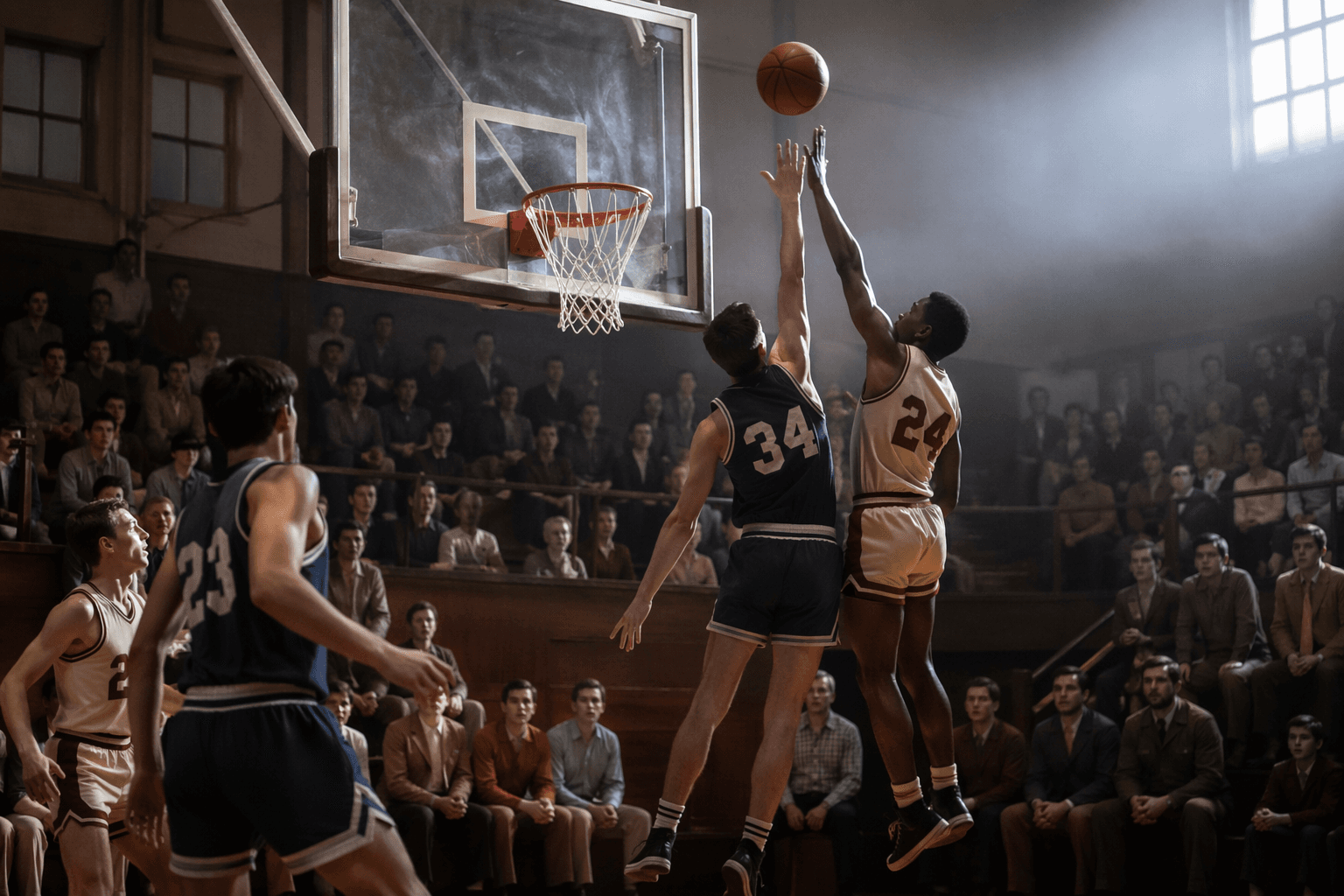
Indiana basketball’s memory is crowded at the top and thin everywhere else. The latest historical feature out of the Courier & Press pushes past the familiar names and asks what gets lost when the story narrows to the same dynasties, the same title runs, and the same stars.
The players history remembers
The state’s boys basketball history began with the first IHSAA tournament on March 10-11, 1911, at Assembly Hall on the Indiana University campus in Bloomington. That opening date matters because it set in motion a record book that now stretches across more than a century, giving fans a clear view of what was won, who was there, and which careers still deserve a closer look.
Some names never really left the conversation. Oscar Robertson’s Crispus Attucks team advanced to the Final Eight in 1954, then won back-to-back state championships in 1955 and 1956. Ray Crowe, who coached that program, led Crispus Attucks to four Final Four appearances, a record three consecutive state championship games, and those same back-to-back titles in 1955 and 1956.
Those are the kinds of careers that become shorthand for Indiana basketball itself. The trouble is that when the state’s story is reduced to a handful of icons, the rest of the era starts to blur, even though the records are still there and the competition was still fierce.
Why forgotten players stay forgotten
The Courier & Press feature works because it shifts the lens away from only the biggest names and toward the broader Hoosier legacy. Across 114 years of IHSAA boys basketball, countless players helped shape how the sport was played and followed in Indiana, yet many never broke through into the state’s permanent memory bank.
That omission is not the same thing as insignificance. A player can dominate his own era, carry a school deep into tournament play, and still end up outside the handful of names that get repeated every winter when Indiana basketball history comes up. The result is a public memory shaped by a few famous programs, while the deeper archive holds a much wider cast.
The state’s basketball identity was built in gymnasiums, small towns, and city schools as much as in championship games. That wider reality is what makes the “forgotten players” idea so resonant: the legends are real, but they are only the brightest part of a much larger system of talent, coaching, and community support.
The paper trail that keeps old seasons alive
Indiana has one of the strongest historical backstops in the country for this kind of story. The IHSAA’s digitized historical programs archive includes nearly 900 programs across 23 sports, and the boys basketball collection covers most of the tournament’s 108 years, with the oldest program dating to 1913.
That matters because the archive preserves more than headlines. Tournament programs, records books, and finals histories make it possible to revisit old brackets, track championship appearances, and see where a player or team sat in a given season rather than relying on memory alone.
The IHSAA Boys Basketball Championship Records Book and the tournament historical timeline give the sport a concrete spine. When the modern conversation centers only on the most famous schools and the most recognizable stars, those records restore the scale of the thing. They show how many teams were part of the march, and how many players have been pushed to the margins simply because history prefers easy shorthand.
The institution built to preserve more than legends
The Indiana Basketball Hall of Fame has spent decades trying to widen that memory. It says it celebrates Indiana basketball heritage from its origins in the 1890s to the current season, and it was established in 1962 to honor players, coaches, officials, and others who gained fame on Indiana hardwoods.
Its current home in New Castle, in Henry County, has housed the Hall for 35 years. The facility is roughly 21,000 square feet, and a 6,600-square-foot expansion opened in December 2024, a sign that the state’s appetite for basketball history is still growing rather than shrinking.
That physical space gives old careers a place to stay visible. In a state where the past often gets compressed into a few famous names, the Hall’s mission is broader: keep the whole lineage in view, from the earliest origins of the game in Indiana through the latest season on the calendar.
Why the America 250 frame matters
The bigger editorial frame behind this story is just as important as the history itself. USA Today Network Indiana’s America 250 basketball storytelling ran from July 6-17, 2026, and it included stories on defunct-school state champions, a deliberate move that widened the historical lens beyond the usual schools and stars.
That broader project gives the Courier & Press feature a clear place in the summer conversation. It is not simply revisiting old trophies for nostalgia’s sake; it is showing how Indiana basketball history stretches across forgotten schools, overlooked players, and eras that no longer have living memory attached to them.
For readers who follow Indiana high school basketball closely, the value is in the detail. The first state tournament in 1911, the surviving 1913 program, Robertson’s rise at Crispus Attucks, Crowe’s championship run, the Hall of Fame’s long-term preservation work, and the America 250 series all point to the same conclusion: the state’s legend is bigger than the names most people still remember.
The forgotten players matter because they prove that Indiana basketball was never built by a single hero or one golden team. It was built by generations of players whose accomplishments still hold up, even when the conversation does not.
This article was produced by Prism’s automated news system from verified source data, official records, and press releases, then run through automated quality and moderation checks before publishing. The system is built and supervised by the people who set the standards it runs under. Read our full AI policy.
Did this article answer your question?