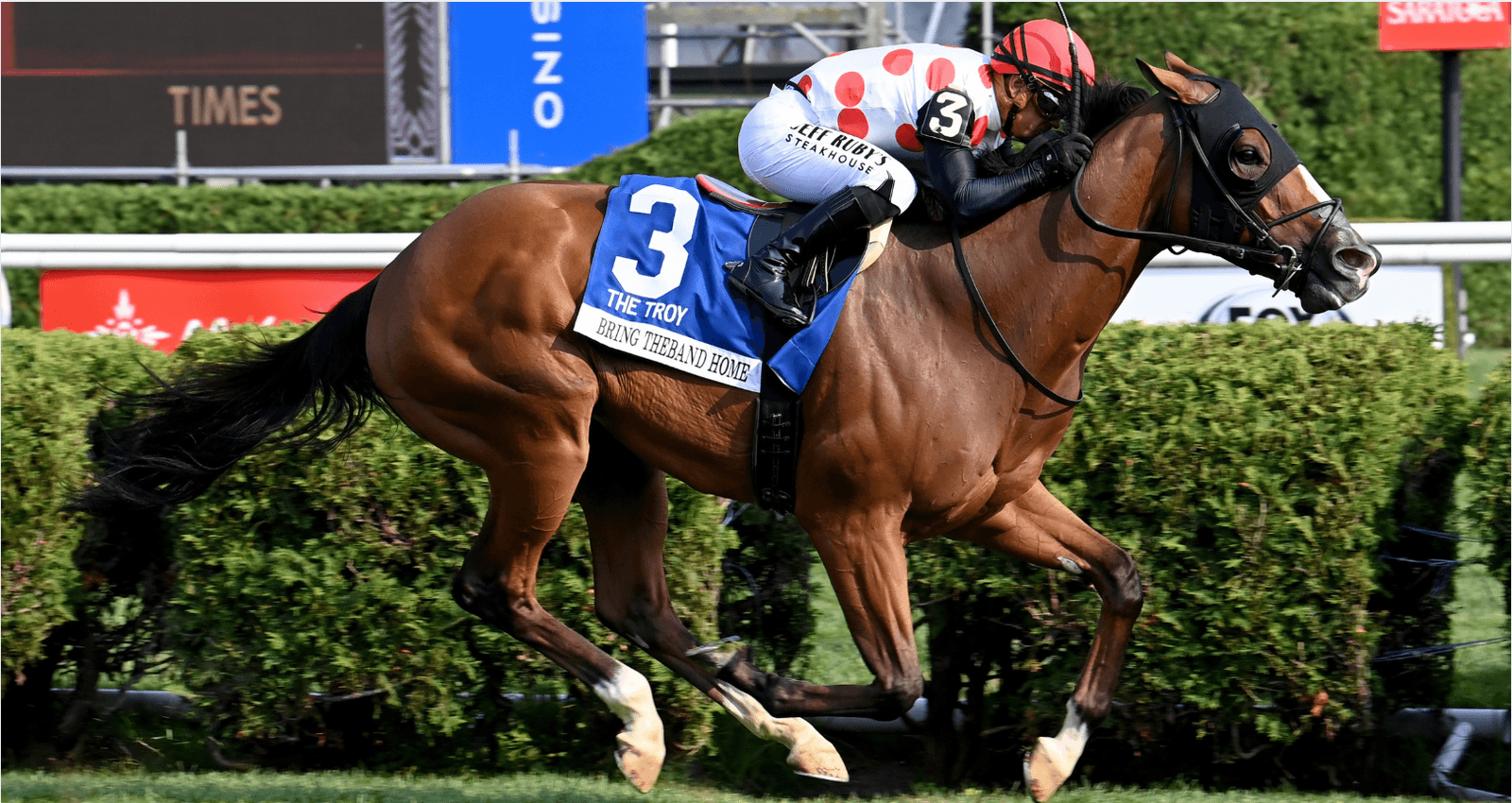
Always a Runner ties Kentucky Oaks win to family racing legacy
Always a Runner's Oaks win was the payoff for decades of breeding, ownership, and family planning, not a flash of luck.

A win built on generations, not one afternoon
Always a Runner did more than win the Kentucky Oaks. She turned a pedigree page into a public result, giving visible proof that elite racing is often won years before a horse ever reaches the starting gate. The filly was unbeaten in three starts when she scored in the 152nd Kentucky Oaks, and that clean record matters because it shows how quickly careful planning can become a contender when the right bloodlines, horsemen, and family interests line up.
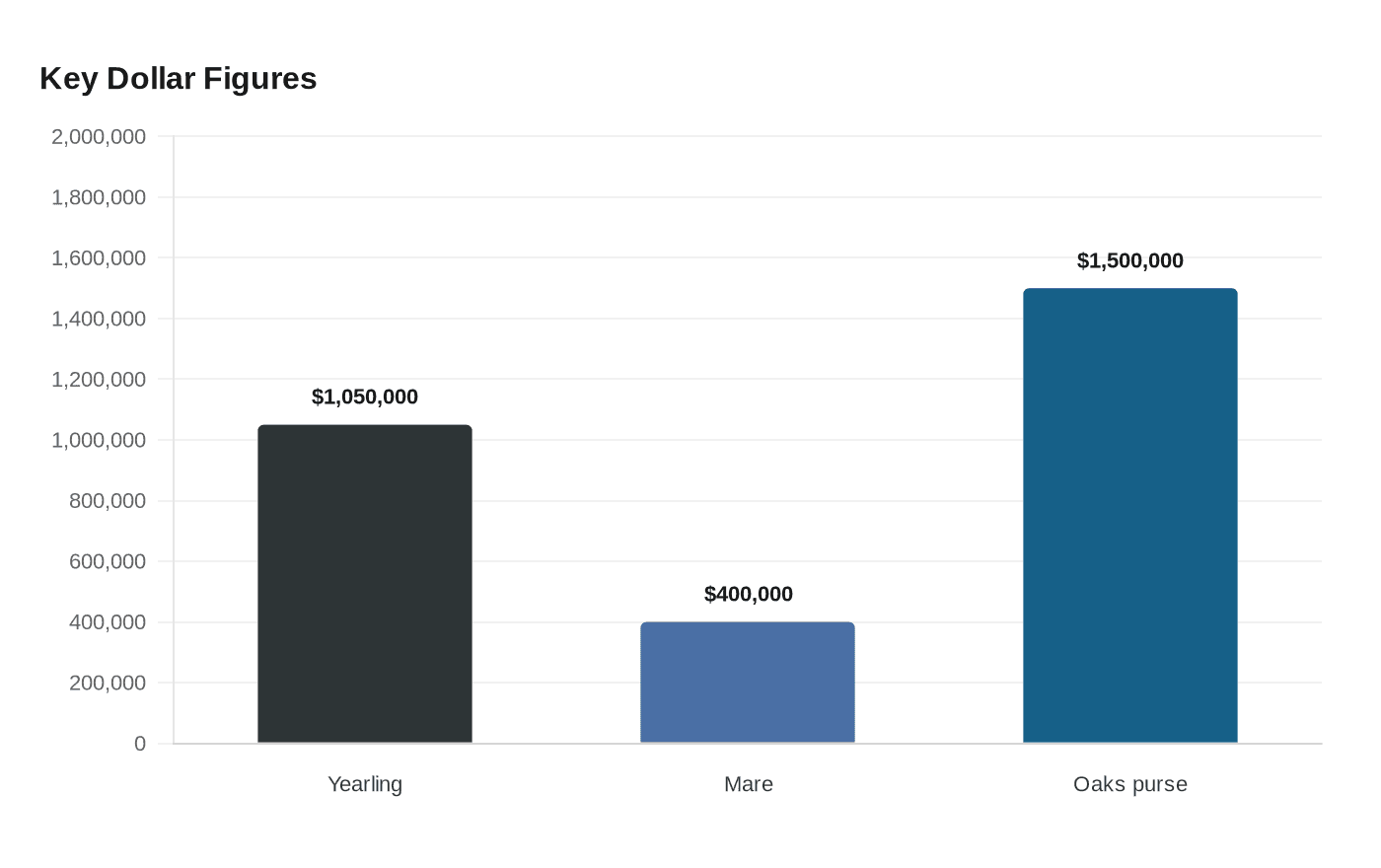
The 1 1/4-length victory in the $1.5 million race came before a crowd of 103,290 at Churchill Downs and immediately pushed her from promising filly to major player in the division. She surged past Meaning and Explora at the sixteenth pole, while BloodHorse described the trip as a five-wide rally that finished with Jose Ortiz aboard. That kind of win does not simply add a trophy to the case. It changes the way the rest of the season is mapped, especially with the June 5 Acorn Stakes at Saratoga next on the calendar.
The race was the result of a carefully staged progression
Always a Runner’s path to the Oaks was short in starts but long in intent. Her first trip to the races came in a maiden special weight at Tampa Bay Downs on February 6, 2026, and she won it. She followed with the Gazelle Stakes (G3) at Aqueduct on April 4, 2026, then stepped into Churchill Downs and handled the biggest test of her life. The sequence matters because it shows a filly being built the right way, moving from maiden company to stakes company to the Kentucky Oaks without a stumble.
That steady climb also explains why Chad Brown’s involvement feels so important. Brown is not just training a talented 3-year-old filly, he is guiding a horse whose ownership and breeding story were already years in motion before the public ever saw her race. With the Acorn Stakes ahead, the question is no longer whether Always a Runner belongs with the best of her generation. The question is how far the unbeaten filly can carry a form cycle that already has the shape of a champion’s campaign.
The pedigree is the point, not just the backdrop
Always a Runner is by Gun Runner out of Always Carina, a Malibu Moon mare, and that breeding line is central to why the Oaks win lands with such force. Always Carina placed in the 2021 Grade II Mother Goose Stakes, and the family tree deepens from there. Her second dam is Miss Always Ready, a mare Three Chimneys bought as a two-year-old for $400,000, and her third dam is Miss Seffens, who ran 26 times, won 11 races, and finished fourth in the 2000 Kentucky Oaks.

That structure turns the filly into more than a standalone success. It is a case study in how breeding farms think across years, not seasons. When a racehorse like Always a Runner wins a classic, the result reflects stallion selection, broodmare investment, and the patience to let a family mature into a runner with both speed and staying power.
The market also recognized that promise early. Always a Runner was a $1.05 million yearling purchase, which placed real financial conviction behind the pedigree before she ever debuted. In racing, the price tag is never a guarantee, but in this case it underscored the belief that the page held real athletic value.
Three Chimneys and the Borges Torrealba family made the long bet
The ownership and breeding side of the story begins with Three Chimneys Farm, founded in 1972 by Robert and Blythe Clay. The Borges Torrealba family acquired controlling interest in November 2013, and Goncalo Borges Torrealba’s connection to Robert Clay reportedly stretched back about 25 years before that acquisition. That timeline matters because it shows this was not a sudden buyout or a branding exercise. It was a relationship that evolved into stewardship.
Three Chimneys has long stood at the center of major bloodstock decisions, and its history includes top stallions such as Seattle Slew, Dynaformer, and Rahy. Those names are not decorative. They are part of the farm’s reputation for identifying horses that can shape the breed, and Always a Runner is the latest visible return on that kind of institutional memory. When a farm with that history supports a filly who can win the Kentucky Oaks in only her third start, it reinforces the idea that breeding operations are built on compounding choices.
The Scharbauer side adds a family legacy of its own
Douglas Scharbauer’s presence gives the story a second deep family branch. His family’s racing identity runs through Valor Farm in Texas, an operation founded by his late parents, Clarence and Dorothy Scharbauer. Douglas Scharbauer bought Valor Farm after his father’s death in 2014 and kept it going as a breeding and racing operation, preserving a family business that already had significant racing history attached to it.
That history includes Alysheba, the 1987 Kentucky Derby winner and 1988 Horse of the Year, campaigned by Dorothy and daughter Pamela Scharbauer. For readers who follow the sport’s ownership layer, that is the kind of continuity that gives a Kentucky Oaks win extra weight. It means the horse is not just tied to one ownership decision or one sharp purchase. She is linked to a family that has lived inside the sport for generations.
Equibase lists Scharbauer as a multiple graded stakes winning owner with 478 starts, 123 wins, 69 seconds, 70 thirds, and $4,950,039 in earnings. Those numbers fit the broader portrait. This is an owner who has spent years in the game, not a newcomer chasing a headline. After the Oaks, Scharbauer said his parents are surely watching and smiling down, a sentiment that captures what the sport often hides behind the purse money and pedigree pages: family continuity is still one of racing’s most durable currencies.
Jose Ortiz added another milestone to the moment
Jose Ortiz’s ride in the Oaks gave the performance another layer. BloodHorse reported that with the Kentucky Oaks victory, Ortiz became the ninth jockey to complete the Kentucky Oaks-Kentucky Derby double after winning the Derby aboard Golden Tempo and the Oaks aboard Always a Runner. That detail widens the story beyond the filly herself and shows how one weekend at Churchill Downs can become a career marker for everyone involved.
Ortiz’s timing was exact, but the larger significance belongs to the horse. She was undefeated in three starts, had already handled Aqueduct, Tampa Bay Downs, and Churchill Downs, and did it all while carrying the weight of a million-dollar pedigree and a family network that spans Kentucky, Texas, and Florida. The result is a classic racing story with modern consequences: a filly now sits on a bigger stage, a breeding operation gets validation, and two horse families see decades of planning pay off in front of more than 103,000 people.
The next chapter arrives quickly at Saratoga, where the Acorn Stakes will test whether the Oaks was the peak or the beginning. Either way, Always a Runner already represents something racing understands better than most sports: the best winners are often built in silence long before they are celebrated in public.
This article was produced by Prism’s automated news system from verified source data, official records, and press releases, then run through automated quality and moderation checks before publishing. The system is built and supervised by the people who set the standards it runs under. Read our full AI policy.
Did this article answer your question?