BRISnet Snapshot: Turf Paradise Outside Bias, $23,974 Pick 6 Jackpot
BRISnet data from Turf Paradise shows a persistent outside bias at 6.0f on the dirt and a lucrative $23,973.77 Pick 6 jackpot that shaped wagering and handicapping strategies.

A BRISnet snapshot of Turf Paradise racing through Jan. 24 revealed a clear pattern that altered how bettors approached the card on Jan. 26: sprints around one turn on the 6.0f dirt have favored outside posts, while turf sprints and routes showed their own positional tendencies. Those course-level biases, coupled with a near $24,000 Pick 6 jackpot, made post position and pace mapping central to both professional and recreational players.
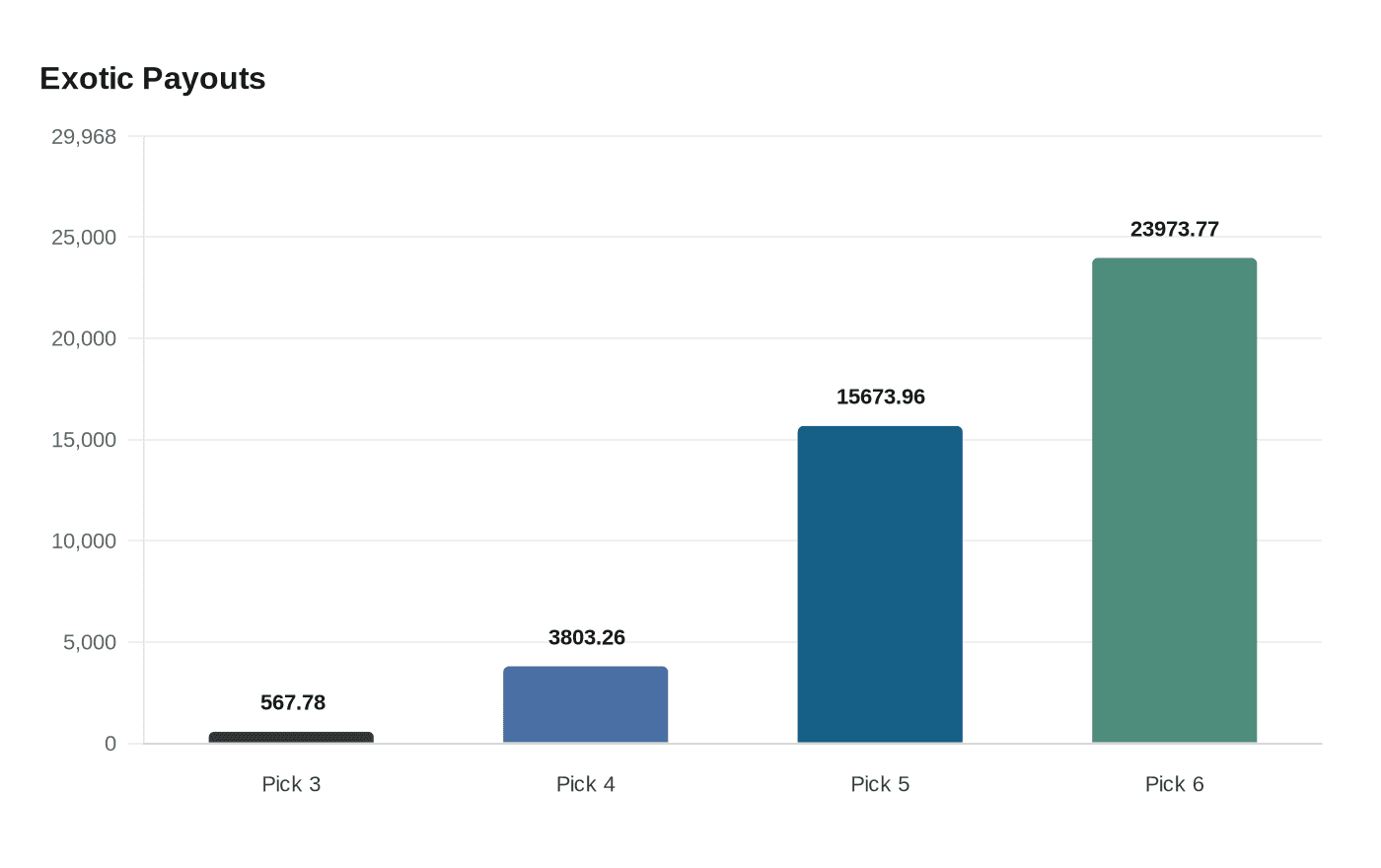
The numbers underline the meet dynamics. Average winning odds were 4.72-1, indicating many winners paid mid-range prices rather than heavy chalks. Favorites won 42 percent of races and finished in the money 80 percent of the time, a profile that rewards selective backing of favorites but also leaves room for value plays when pace and post position lean against the chalk. Key exotic payouts reflected the betting appetite: Pick 3 paid $567.78, Pick 4 returned $3,803.26, Pick 5 hit $15,673.96, and the Pick 6 jackpot stood at $23,973.77.
For handicappers, the meet bias window covering Nov. 10 through Jan. 24 provided the larger sample supporting the outside preference at 6.0f, while the short-term weekly bias window from Jan. 18 through Jan. 24 confirmed recent patterns. Those trend lines make pace handicapping indispensable at Turf Paradise; jockeys who can secure an outside stalking spot or sustain momentum into the stretch gained a measurable advantage when the rail was compromised.
The business implications are straightforward. A near $24,000 Pick 6 jackpot concentrates handle, drawing sharp players and increasing cross-pool liquidity. Larger exotic pools can lead to more aggressive betting strategies, which in turn feed handle and on-course engagement. For a winter meet that often serves regional players and out-of-area bettors looking for consistent fare, steady bias metrics boost the market for data-driven wagering products and subscription services.
Culturally, a consistent bias changes narratives around the meet. Trainers and jockeys adjust entries and tactics to exploit or counteract track tendencies, while local bettors refine their angle-based tickets. Those who study post-position trends and early pace figures find tangible edges, and casual players who ignore bias risk backing horses on the wrong part of the racetrack.
Looking ahead, the immediate takeaway for readers is to prioritize pace, outside influence, and the math around favorites with an 80 percent in-the-money rate. The $23,973.77 Pick 6 jackpot elevated interest on Jan. 26 and will continue to shape ticket construction in the next cards as handicappers test whether the outside bias persists or begins to shift with changing weather and maintenance patterns.
This article was produced by Prism’s automated news system from verified source data, official records, and press releases, then run through automated quality and moderation checks before publishing. The system is built and supervised by the people who set the standards it runs under. Read our full AI policy.
Did this article answer your question?