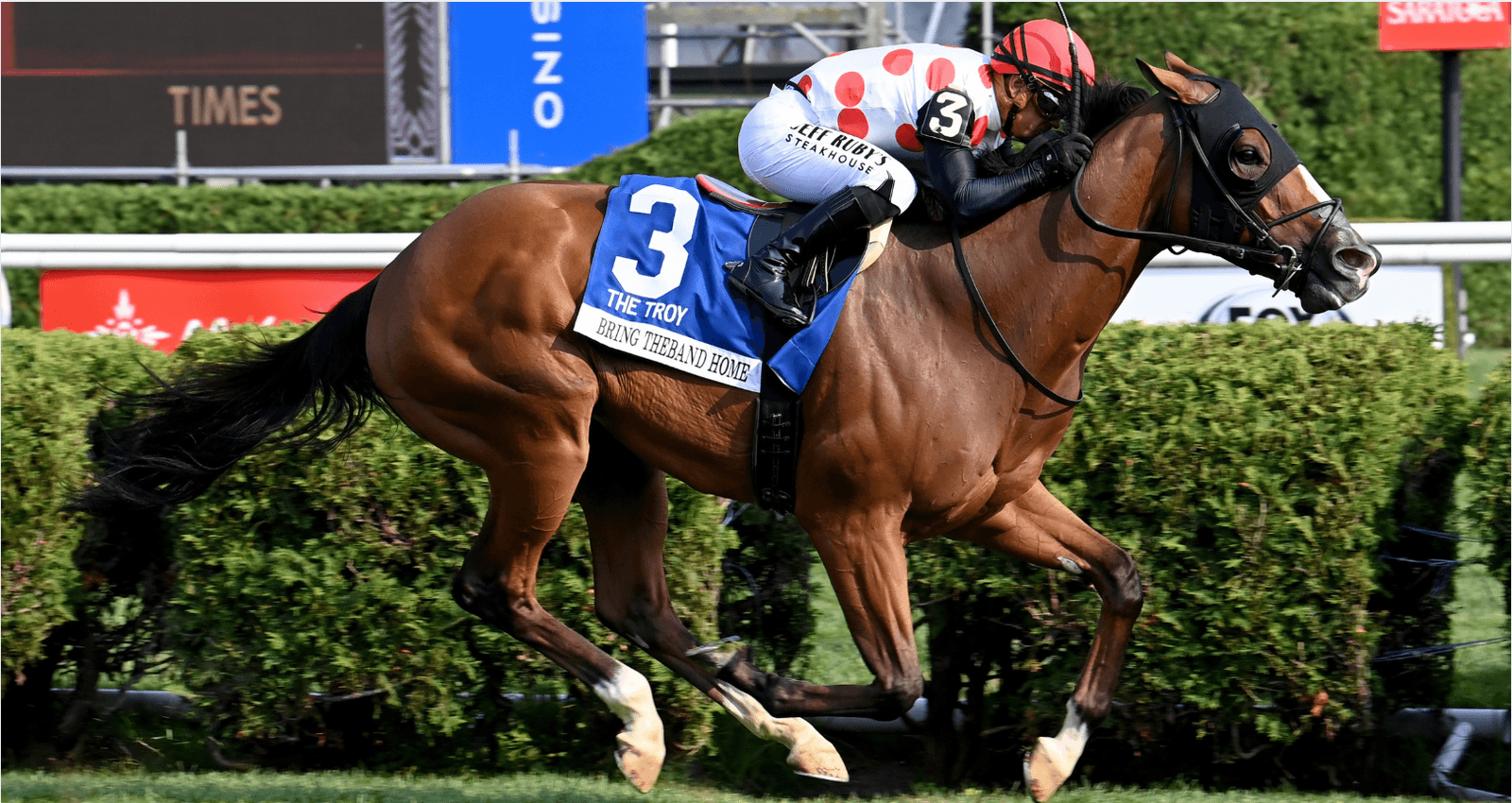
Churchill Downs and HISA Resolve Fee Dispute, Ending Four Enforcement Actions
Churchill Downs and HISA struck a deal on March 24, halting a $5.3M enforcement order that threatened to cut simulcasting signals two days before the Kentucky Derby prep season.
Churchill Downs Inc. and the Horseracing Integrity and Safety Authority struck a settlement on March 24 that shut down four enforcement actions and pulled the sport back from a regulatory standoff with genuinely ugly consequences. The deal prompted HISA to halt enforcement of a recent order that required Churchill Downs Inc. to pay $5.3 million in fees and interest or risk losing the ability to send its racing signal to out-of-state betting outlets. That threat, had it been carried out, would have detonated the simulcast business at Churchill Downs, Turfway Park, Ellis Park, and Presque Isle Downs heading into one of the sport's most commercially critical stretches.
A HISA document signed by board chair Charles Scheeler stated: "The parties have reached an agreement to resolve these four enforcement actions ... and jointly move for the board to stay the March 16 decision of the Board panel and related appeal proceedings until the conditions of the agreement have been satisfied. Upon the satisfaction of the conditions of the agreement, the parties will jointly move for the board to dismiss these four enforcement actions."
Churchill Downs Inc. also confirmed the resolution in a filing with the U.S. District Court for the Western District of Kentucky, stating that "the parties have resolved the dispute over the 2025 assessment." Terms were not disclosed by either side. HISA communications director Mackenzie Kirker-Head offered only that "we have no further comment regarding the agreements other than what it says in board order," while CDI communications director Jeanna Burkhead Cunningham was equally terse: "CDI is not commenting on the settlement."
The financial figures attached to this dispute have varied across filings and reporting, and the settlement does nothing to clarify them publicly. Churchill Downs had owed more than $6.3 million in fees, but HISA was only seeking $2.4 million, which CDI argued it should have been paying in a pending lawsuit. The total for the four racetracks under the board's enforcement action was $5,024,848, plus interest of $250,631.77. Whether CDI will pay in full, in part, or differently structured is not addressed in any of the four board orders.
The roots of the confrontation go back to late 2024. CDI and the New York Racing Association argued that they should be billed based on the number of racing starts at their tracks, while HISA had used a methodology that imposed fees largely based on track purses. NYRA later exited the litigation after reaching its own settlement with HISA in early 2025, leaving Churchill to fight alone. The new fee calculation structure was approved in late 2024 and officially launched in 2026, but rather than paying the full amount assessed since 2023, Churchill chose to use the new, lower-cost formula to determine how much it would pay.
According to HISA, Churchill Downs Inc. was the only racetrack company or racetrack covered by HISA that paid the authority nothing in 2025. HISA served four non-payment notices on February 18, triggering a March 11 hearing before a three-member board panel. That panel issued its ruling on March 16, ordering payment by March 26 with the simulcast-signal cutoff waiting as enforcement.
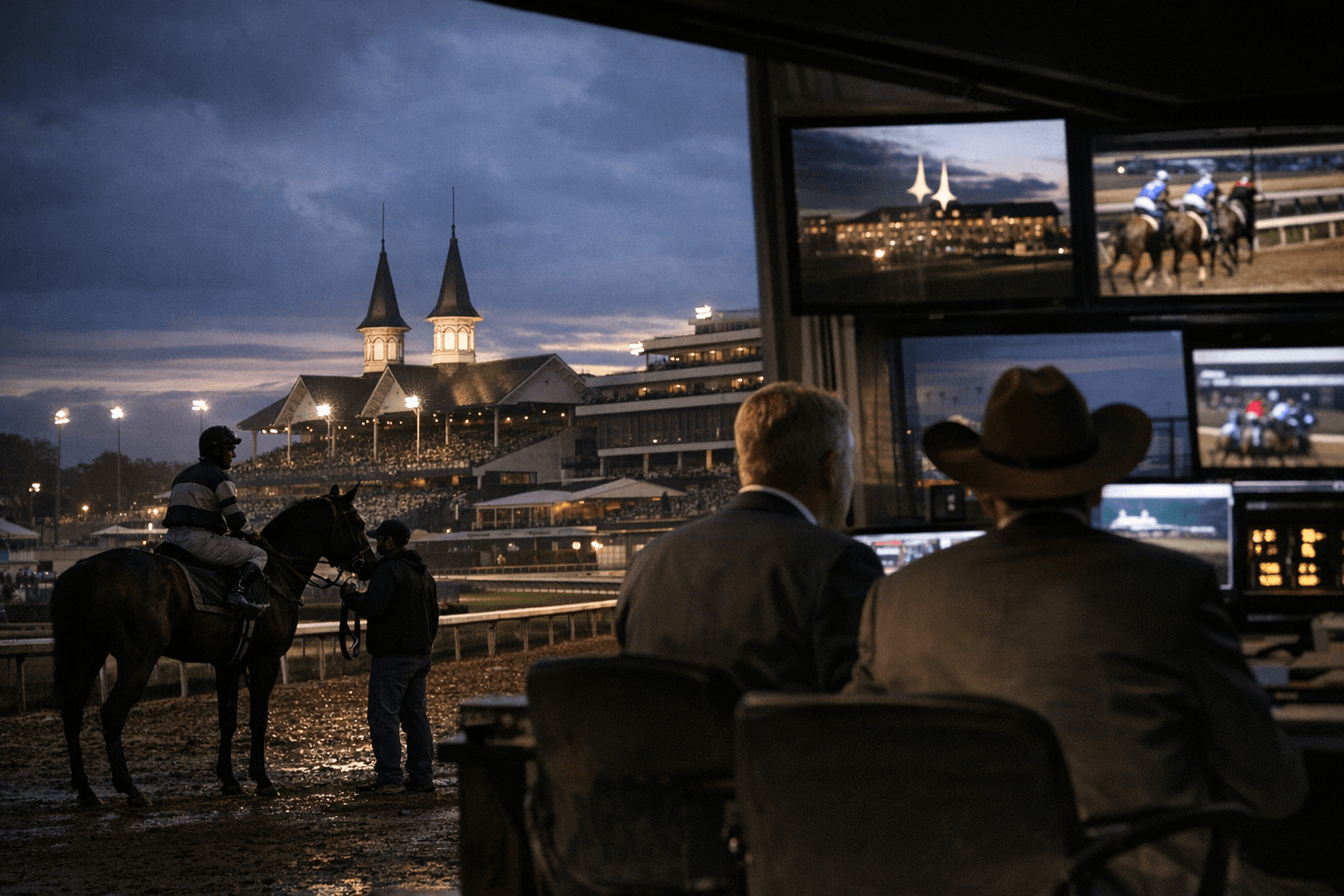
The pressure on CDI was not trivial to ignore. A total of $234.4 million was bet on the Kentucky Derby last year and $349 million was bet on the entire card, with much of that money wagered outside the state of Kentucky through ADW outlets and off-track betting locations. Cutting that signal pipeline ahead of Derby season would have been an operational catastrophe.
On March 19, following a two-hour hearing in a Louisville federal court, pending motions were taken under submission by Judge Benjamin Beaton. Beaton, who also questioned why a company reporting $2.93 billion in 2025 revenue and $383 million in net income would dig in over an amount he called "negligible on its own balance sheet," reportedly hoped that "cooler heads would prevail." They did, by five days.
There were no outstanding fees for Fair Grounds, CDI's track in New Orleans, because Louisiana is in the midst of a five-year-old federal case that for now puts it outside HISA jurisdiction.
Other racetrack operators under HISA's authority may be more than curious about the confidential terms. One track manager told Horse Racing Nation: "If HISA is going to publish disputes, they should also publish resolutions. After all, it is a governmental entity subject to open records." HISA has argued that, even though it reports to the FTC, it is an independent operator not bound by open-government laws. That tension, and the broader question of how HISA calculates fees going forward for large-purse tracks, remains unresolved well beyond this particular agreement.
This article was produced by Prism’s automated news system from verified source data, official records, and press releases, then run through automated quality and moderation checks before publishing. The system is built and supervised by the people who set the standards it runs under. Read our full AI policy.
Did this article answer your question?