Deep Oaks d'Italia field sets up tactical San Siro test
A 16-filly Oaks d'Italia field turned San Siro into a tactical test, and Piccola Piuma’s 3 1/4-length sweep made Saxon Warrior the day’s breeding headline.
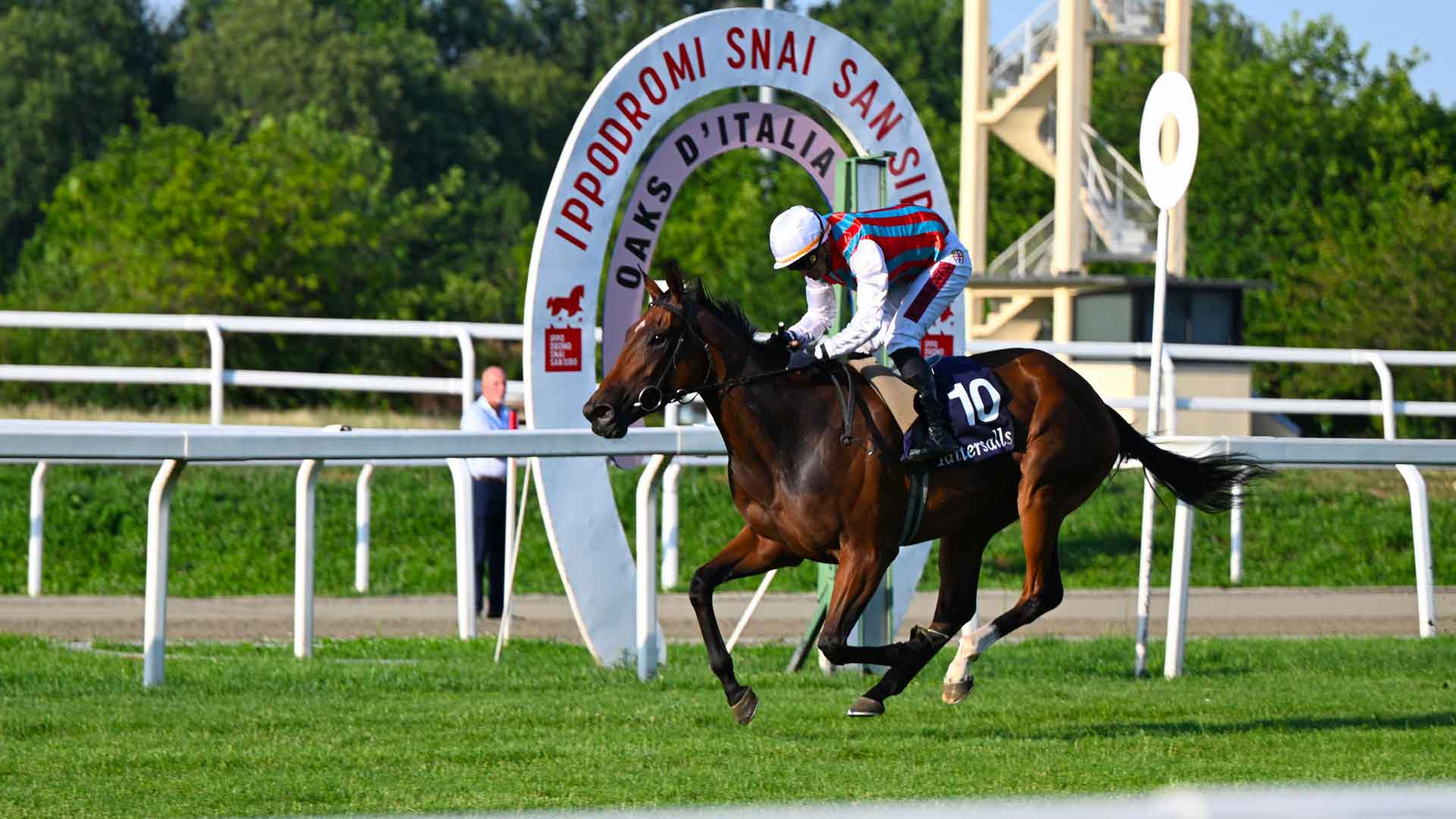
A 16-filly Oaks d'Italia field at San Siro turned the Milan Classic into a race-shape puzzle long before Piccola Piuma surged clear. With Saxon Warrior sending four runners, Lizzana arriving off Italian Guineas form, Jennifer Jane bringing a sharp Newmarket win and Arkansas carrying French black type, the 2,100-metre test demanded timing, position and patience as much as raw class.
Why this renewal mattered
The Oaks d'Italia has always been one of Italy’s most important fillies’ races, and this edition carried the kind of depth that can change a filly’s trajectory in one afternoon. Run in Milan over 2,100 metres, the race is Italy’s equivalent of the Oaks, and its modern shape still reflects a long history of adjustment, having been downgraded to Group 2 level in 2007 before returning to the 2,100-metre trip in 2025. BloodHorse reported a purse of €342,000 for the 2026 renewal, a reminder that this is not just a prestige target but a commercial one as well.
That combination of status, distance and money explains why trainers and breeders keep aiming at it. A strong Oaks d'Italia performance does more than add a line to a race record, it raises a filly’s standing in the market, sharpens a sire’s profile and marks out the best European staying fillies for bigger targets ahead. In a year with a large, international field, the race became a showcase for all of those pressures at once.
The race-shape clues were there before the start
What made this renewal so compelling was not simply the number of runners, but the mixture of proven form lines. Saxon Warrior was represented by four fillies, and that sheer volume gave the race a powerful stallion subplot. Lizzana was the obvious anchor from the local side after finishing runner-up in the G3 Premio Regina Elena, while Pomeranica and Kebrilla added further home representation and depth to the Botti team.
Across from them stood Jennifer Jane, who came to Italy after her wide-margin victory in Newmarket’s Listed Pretty Polly Stakes. Arkansas also brought a meaningful standard, having won the Prix Rose de Mai at Saint-Cloud. Put together, those profiles pointed to a race where no single style could control the outcome easily, because the field had enough class, enough pace pressure and enough competing ambitions to make traffic and timing decisive.
That is the key to understanding why this Oaks d'Italia mattered beyond the entries list. When a Classic attracts a deep and credible field, the most useful question is not who is best on paper, but who can secure the right journey. In a race like this, a filly that settles too far back can be marooned, while a filly that moves too soon can be exposed in the final 200 metres. The market value of the result is shaped by those small tactical choices.
How Piccola Piuma won the Classic
Stefano Botti read the race perfectly and claimed the Oaks d'Italia for a sixth time since 2012, this time with Piccola Piuma. BloodHorse recorded the winner as Piccola Piuma, an Irish-bred filly by Saxon Warrior out of Shaaqaaf, by Sepoy, ridden by Fabio Branca and trained by Botti, in 2:06.80 with a 3 1/4-length margin.
The telling part of the race was not just the finishing burst, but how Piccola Piuma was positioned to deliver it. TDN reported that she tracked Jennifer Jane for much of the 2,100-metre trip, which made sense in a race that looked as if it would reward the filly with the best rhythm and the cleanest stalking run. When Pomeranica moved up early in the straight, she briefly boxed in the eventual winner, a moment that reinforced just how compressed the tactical contest had become before the decisive acceleration arrived.
That is why the winning move mattered so much. Piccola Piuma did not win by simply outstaying a tired field at the end of a searching gallop. She won by handling pressure, staying balanced when space tightened and then producing the late change of gear that separated the best filly from the rest. In a race built on positioning, that was the clearest proof of quality.
What Saxon Warrior’s depth says about the sire picture
Saxon Warrior’s four-runner presence was one of the race’s most important business stories, even before the result. When a stallion puts multiple fillies into a Classic field, he is not just represented, he becomes part of the shape of the race itself. In this case, that presence was sharpened by the fact that Piccola Piuma was the winner, turning a strong numerical showing into a result that carried real breeding weight.
The deeper significance is obvious. The Oaks d'Italia is a race that can enhance a filly’s profile and, by extension, the reputation of the stallion behind her. With Lizzana, Pomeranica, Kebrilla and Piccola Piuma all tied to Saxon Warrior, this renewal gave him a visible and credible footprint in a key European fillies’ Classic. That kind of spread is exactly what breeders and owners want from a proven Classic influence.
It also underlines why San Siro remains such an important stage. The course, the 2,100-metre trip and the race’s Classic status combine to reward fillies that can handle pressure rather than merely flash speed. Piccola Piuma’s win, and the way she won it, showed a race that was as much about composure and racecraft as pedigree. On a day when the field was deep and the tactical puzzle was real, the filly who found the cleanest path and the strongest late surge made the clearest statement of all.
This article was produced by Prism’s automated news system from verified source data, official records, and press releases, then run through automated quality and moderation checks before publishing. The system is built and supervised by the people who set the standards it runs under. Read our full AI policy.
Did this article answer your question?