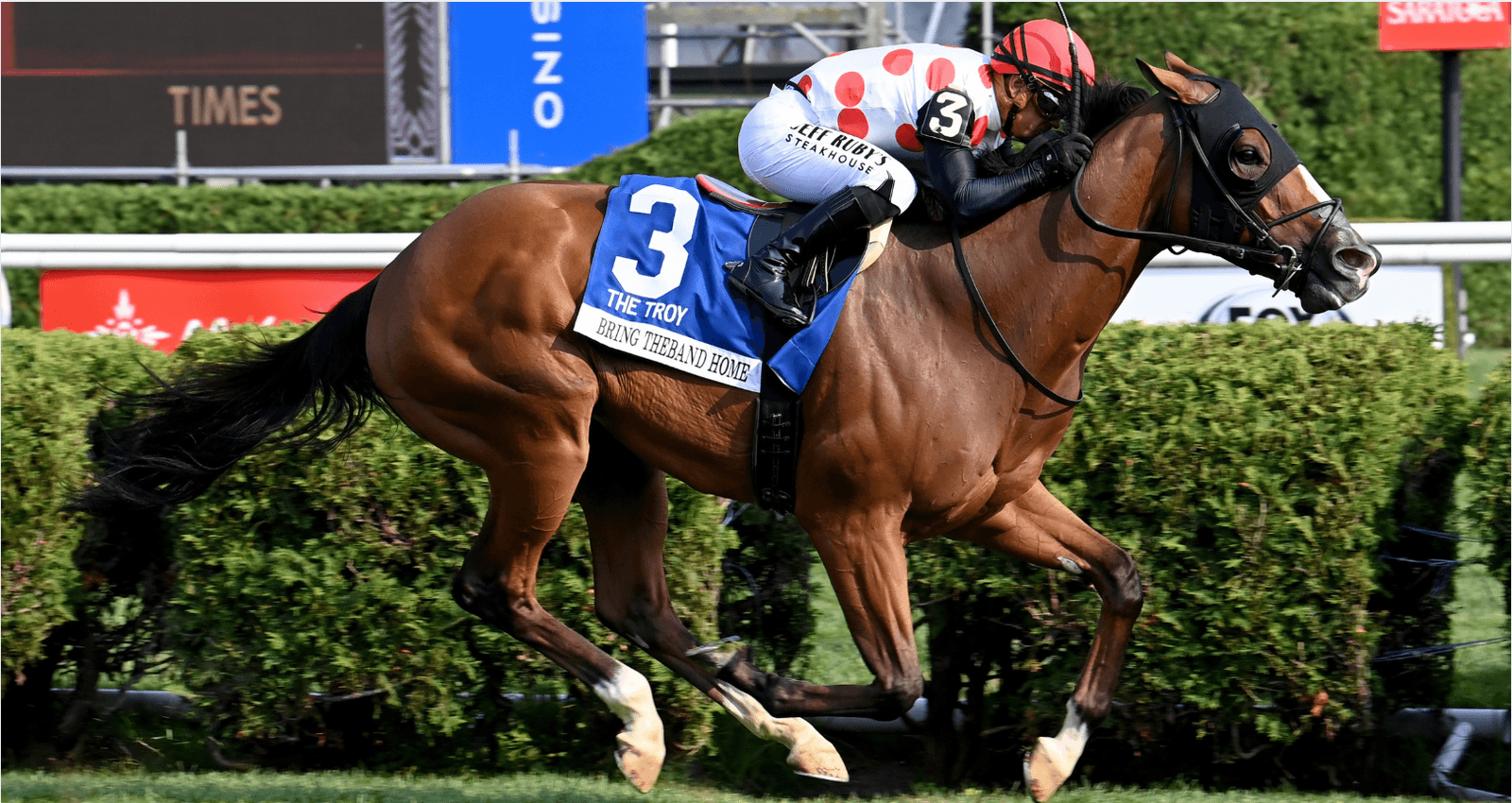
Delaware Derby, Haskell preview day headline summer 3-year-old stakes lineup
Delaware and Monmouth turn June into a sorting test for 3-year-olds, with Pegasus runners chasing Haskell entry and regional Derby hopefuls making their first case.

Delaware Derby Day and Haskell Preview Day have become the first real sorting test of the summer sophomore season, and that is exactly why this weekend matters. By the time the dust settles, the division should look a little clearer: some runners will have opened a path to the Haskell, the Travers, or other late-summer targets, while others will have been exposed as horses still looking for the jump forward.
Delaware Park launches the regional summer Derby trail
Delaware Park has turned its June stakes date into an early anchor for the meet, and the 2026 edition gives it real weight. The track opened its 89th year of live racing on Wednesday, May 13, with a 75-day schedule, then rolled into Delaware Derby Day on Saturday, June 13 as the unofficial start of the regional summer Derby season.
The Delaware Oaks and Delaware Derby were both highlighted in the track’s season announcement, which tells you how central these races are to the meet’s identity. For 3-year-olds, this is more than a local stop: it is the first summer checkpoint where a horse can prove it belongs on a stronger path or get left behind as the calendar starts to thicken with bigger stakes and deeper fields.
Monmouth Park makes the Haskell trail concrete
Monmouth Park’s fifth Haskell Preview Day, held Saturday, June 13, is built around one simple promise: if a 3-year-old wants a serious summer spot, there is a route into it. The card featured two graded stakes and four stakes overall, all of them serving as prelude races to Haskell Stakes Day on Saturday, July 18 at Monmouth Park in Oceanport, New Jersey.
The Pegasus Stakes is the most direct bridge between Saturday’s card and Monmouth’s biggest prize. Worth $125,000 and run at 1 1/16 miles, it drew six 3-year-olds all chasing their first stakes victory, and the top two finishers receive free entry into the Grade 1 Haskell. That makes the race a classic proving ground: one part talent search, one part ticket to a much bigger stage.
Schoolyardsuperman, off his Withers effort, and Tricky Business, who had been unbeaten in a maiden win at Aqueduct, give the race its sharpest intrigue. If one of them takes a step forward, the Pegasus stops being just a prep and starts looking like the kind of race that can reshape a colt’s entire summer.

The other Haskell Preview Day stakes matter too, even if the Pegasus carries the clearest consequence. The Salvator Mile and Eatontown add depth to the card and help Monmouth sell the idea that the Haskell trail is not one race, but a compact ecosystem of opportunities for horses trying to earn a seat at the table.
Churchill Downs tests stamina and staying power
Churchill Downs in Louisville, Kentucky offers a different kind of summer filter: less about pure speed into the Haskell path, more about whether a horse can stretch its class over demanding turf trips. The Chorleywood, now in its fourth running, carried a purse of $225,000 and was run at 1 3/8 miles on turf, making it one of the weekend’s most stamina-heavy assignments.
The race sat alongside the $175,000 Monomoy Girl Overnight Stakes, giving Churchill a stakes doubleheader that reached beyond simple local interest. Burnham Square added an older-horse storyline to the Chorleywood, and that matters because the summer turf route often becomes a stage for horses that can keep stepping up while others flatten out. A marathon like this does not just reward fitness, it exposes whether a runner has the ability to keep extending when the pressure rises.
Santa Anita keeps the West Coast stakes ladder moving
Santa Anita Park in Arcadia, California brought its own set of summer checkpoints into focus with a pair of Grade III stakes. The Summertime Oaks was a $100,000 race for 3-year-old fillies at 1 1/16 miles, while the San Juan Capistrano followed the next day as a $100,000 Grade III at 14 furlongs on turf.
That contrast gives the West Coast portion of the weekend its own identity. The Summertime Oaks asks whether a filly is ready to move beyond the junior stages and hold her form at a routing distance, while the San Juan Capistrano leans into pure staying power and rewards the kind of horse that can control pace over a true marathon. Together, they keep the summer stakes pipeline active for fillies and turf stayers who may not fit the Haskell mold, but still need a meaningful next target.

Laurel Park brings sprint pressure back into the picture
Laurel Park in Laurel, Maryland added one of the weekend’s sharpest pace tests with the Stormy Blues, a $100,000 race for 3-year-old fillies at six furlongs on turf. The race drew 12 declared runners and marked stakes racing’s return to the track for the first time since the Preakness, which gives it a built-in sense of renewal and a very different tactical shape from the route races elsewhere on the card.
That six-furlong setup raises the stakes for pace from the first jump. There is no time to settle in, and turf speed becomes the deciding factor, which is exactly why a full field like this can be so revealing for the division. A filly who handles that kind of pressure cleanly may not just win a stakes race, she may announce herself as the type who can travel through the rest of the summer with her confidence intact.
Why this weekend already feels like a roadmap
The larger business and cultural shift here is that the classic-season spotlight has given way to a more fragmented, but still highly meaningful, summer stakes ecosystem. Monmouth has turned Haskell Preview Day into a five-year habit, Delaware Park has made its June Derby date a recurring anchor, and the other tracks are using well-placed stakes to define where horses belong next.
For owners and trainers, that means the weekend is less about one isolated race and more about deciding whether a horse is ready for the Haskell, the Travers, or a regional summer campaign that can still produce a breakout name. For fans, it is a useful first sorting mechanism: the horses that move forward here are the ones most likely to shape the rest of the season, and the ones that do not may already be running out of room to hide.
This article was produced by Prism’s automated news system from verified source data, official records, and press releases, then run through automated quality and moderation checks before publishing. The system is built and supervised by the people who set the standards it runs under. Read our full AI policy.
Did this article answer your question?