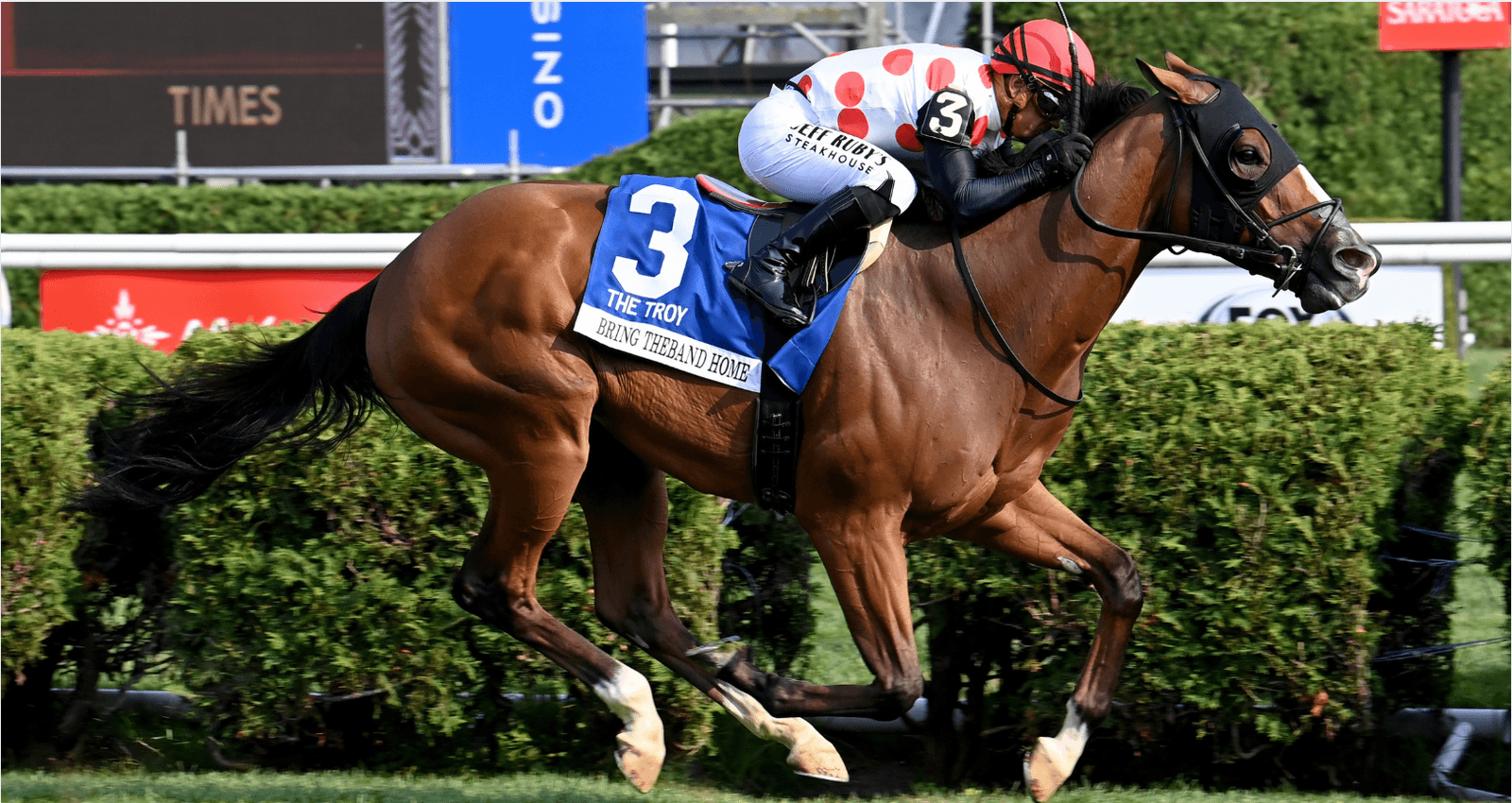
Derby Bubble Series Compares 2026 Contenders To Historic Kentucky Derby Routes
Andrew Champagne's Derby Bubble series sizes up 2026 Kentucky Derby contenders against historical horses who took the same roads to Churchill Downs.

Andrew Champagne has a specific kind of horse racing obsession, and it shows in the Derby Bubble series he assembles for Paulick Report each spring. The premise is deceptively simple: take the current crop of 3-year-old Kentucky Derby contenders, identify the prep race routes they're running, and stack them against historical horses who traveled the same path to Churchill Downs. The result is one of the sharper analytical tools available to handicappers and fans trying to make sense of a chaotic Road to the Kentucky Derby points system that can make any horse look like a contender if you squint hard enough.
What the Derby Bubble Series Actually Does
Most Derby coverage leans on current form, recent works, and trainer quotes. The Derby Bubble series leans on something more durable: historical precedent. By mapping today's contenders onto the routes taken by horses who have already run the race, Champagne and his contributors create a framework for evaluating not just whether a horse is good, but whether the specific journey it's taking has historically produced Derby horses worth betting.
That distinction matters more than casual fans might realize. The Kentucky Derby is not just a talent contest. It's a fitness and freshness test administered to horses who have been managed through a gauntlet of prep races, each carrying its own rhythm, travel demands, and points implications. A horse who wins the Fountain of Youth and rolls into the Florimda Stakes on a specific schedule is running a recognizable historical route, and knowing how that route has played out across decades gives you genuine context that raw speed figures cannot provide alone.
The March 18 Installment
The installment published March 18, 2026 represents one of the series' key mid-spring checkpoints, arriving at a moment when the field of serious Derby contenders is beginning to crystallize. By mid-March, the prep race calendar has produced enough meaningful results to identify which horses are building toward Churchill Downs on credible trajectories and which are riding points totals inflated by thin competition. Champagne's comparative framework cuts through that noise by asking a harder question: has a horse running this exact route historically translated its form into Derby relevance?
The contributors working alongside Champagne bring additional depth to the analysis, examining historical horses with the kind of granular route-mapping that goes well beyond surface-level comparisons. This isn't "Horse A reminds me of Secretariat." It's a structured evaluation of prep sequences, spacing between races, and how those factors have correlated with Derby performance over time.
Why Historical Comparisons Are Analytically Useful
The Kentucky Derby has been run since 1875, which means the sample size for any given prep route is genuinely meaningful. When Champagne's series identifies that a particular sequence of races has produced a specific win rate or finish distribution at Churchill Downs, that's not trivia. It's signal. The one-mile-and-a-quarter distance at Churchill Downs is a known quantity, and the horses who handle it best tend to share certain preparation patterns that show up repeatedly across generations.
Historical comparison also serves as a check on recency bias, which is one of the most persistent problems in Derby handicapping. A horse who ran a dazzling figure in a February allowance race can dominate the conversation in ways that obscure whether its actual prep trajectory makes sense. The Derby Bubble series forces the question back to route and precedent, which is a more disciplined analytical frame.
There's also the bubble concept embedded in the series title itself. The "bubble" refers to the boundary between horses who are realistically pointed toward the Derby and horses who are accumulating points without the profile or preparation to compete at the highest level on the first Saturday in May. Identifying who is genuinely inside that bubble versus who is occupying a spot on the leaderboard without historical backing is exactly the kind of distinction that separates sharp Derby analysis from the usual noise.
Reading the Series as a Handicapping Tool
For anyone actively handicapping the Kentucky Derby, the Paulick Report's Derby Bubble installments function as a running audit of the contender pool. Each edition updates the comparative picture as new prep results come in, which means the series rewards readers who follow it across multiple installments rather than parachuting in for a single edition.
The March 18 installment fits into that larger arc. By this point in the prep season, the horses who have run credible routes through marquee preps are separating themselves from the horses who are scratching for points in softer spots. Champagne's historical mapping puts that separation in relief, giving readers a framework for deciding which horses deserve serious Derby attention and which are better understood as bubble cases whose routes have not historically held up on the first Saturday in May.
The value of a series like this is cumulative. A single installment tells you where specific horses stand relative to historical precedent at one moment in time. Following the series from early winter through the final prep races in April tells you something more important: how the field is evolving, which horses are building on solid historical templates, and which are drifting toward Churchill Downs on routes that have rarely produced serious Derby contenders.
Churchill Downs as the Final Filter
Every analytical framework in horse racing eventually runs through Churchill Downs, and the Derby Bubble series is built around that reality. The track's unique configuration, the size of the field, and the physical demands of a mile and a quarter on a May afternoon in Louisville create a filtering effect that historical data captures better than any single prep race result.
Champagne's series, published through Paulick Report and updated across the prep season, is one of the more rigorous attempts to apply that historical filter to the current contender pool. With the 2026 Derby field still taking shape, the March 18 installment arrives at precisely the right moment: late enough in the prep season to have real data, early enough that the comparisons can still inform how you watch the remaining preps before the field is set.
This article was produced by Prism’s automated news system from verified source data, official records, and press releases, then run through automated quality and moderation checks before publishing. The system is built and supervised by the people who set the standards it runs under. Read our full AI policy.
Did this article answer your question?