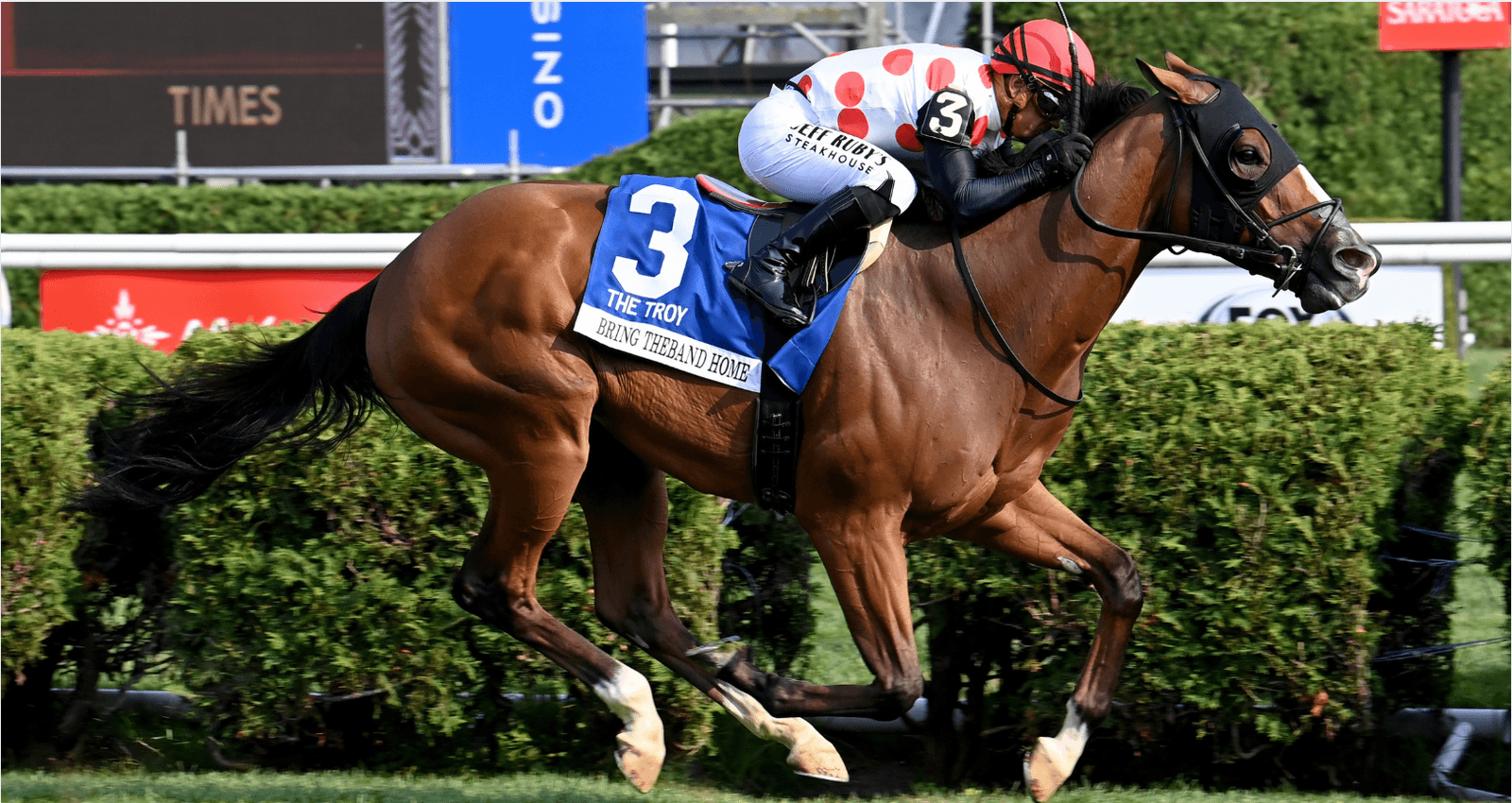
Fair Grounds Mineshaft and Laurel Stakes Highlight Feb. 14 Cards
Fair Grounds’ Mineshaft got a nod in BloodHorse’s Feb. 14 preview while Laurel Park’s Preakness Preview Day delivered Fore Harp’s big surge, Signator’s turf flourish, and a handicapping upset.

1. Fair Grounds, Mineshaft S. (presented by Hagyard, G3) previewed
The Feb. 14 BloodHorse Daily preview explicitly highlighted the Mineshaft S. presented by Hagyard (G3) at Fair Grounds as a stakes to watch, signaling national interest in the late-winter southern stakes program. While the supplied material doesn’t include entries or race-level form for the Mineshaft, the preview placement underscores the race’s role as an early-season commercial and competitive focal point for older classic-distance types and a key stop for trainers building toward spring targets.
2. “Magnitude’s recent Risen”, an incomplete preview fragment that matters to handicappers
The BloodHorse preview included the truncated fragment “Magnitude’s recent Risen,” preserved exactly as provided and incomplete in the notes. That fragment highlights a common problem for bettors and reporters: truncated or partial form references can obscure emerging horses to watch, making verification essential before placing wagers or drawing performance conclusions.
3. Laurel Park’s “Preakness Preview Day” program framework
Laurel staged a 12-race “Preakness Preview Day” program that included five stakes on the card, presented under the header “LAUREL, MD” with a weather note of “Overcast, fog.” Positioning the card as a Preakness lead-in leverages regional interest in the Triple Crown trail and helps Laurel market a full-stakes day to local fans and simulcast bettors, concentrating economic activity into a single promotional event.
4. King T. Leatherbury Stakes, $100,000 purse and local prestige
One of the five stakes that day was the $100,000 King T. Leatherbury Stakes, a race that both honors a living legend and serves as a midwinter target for older horses. The combination of a six-figure purse and the namesake’s presence cements the race as a local ceremonial centerpiece that also carries tangible competitive incentive for connections seeking black-type or seasonal momentum.
5. Fore Harp, veteran winner who “may have mellowed with age, but he hasn't slowed”
Fore Harp, described as a “newly behaved 7-year-old,” surged to the lead in the $100,000 King T. Leatherbury Stakes and “proved unreachable for eight challengers,” implying a nine-horse field and an authoritative performance. Listed at 7-1 odds, his win emphasizes the staying power of productive older runners and the betting value they can provide when form cycles favor experience over youth.
6. Trainer Robert “Butch” Reid Jr. and the 999th-career-victory phrasing
The Fore Harp victory is explicitly tied to trainer Robert “Butch” Reid Jr., with the note that the win “presented the 999th career victory for trainer Robert 'Butch' Reid Jr.” That unusual phrasing flags a milestone moment for the trainer’s career and, from a business standpoint, highlights how local circuits celebrate veteran trainers’ longevity as part of the sport’s narrative economy.
7. Leatherbury’s winners’ circle moment and ceremony
“Leatherbury then presented the glass trophy, reclaimed his crystal-handled walking stick and left.” That exact ceremonial note ties personal memorabilia and ritual to modern raceday pageantry, showing how named stakes preserve legacy while creating photo-ready moments that tracks use for promotion and fan engagement.
8. The winners’ photo ritual, “King's here,” Reid said as Jim McCue prepared the shot
The winners’ circle contained the small, human detail: “King's here,” Reid said with regard as track photographer Jim McCue prepared to shoot the winners' photo. Including the photographer Jim McCue by name and Reid’s line captures the pageant aspect of stakes racing, images and brief quips become shareable assets for social media and pressrooms, extending the race’s reach beyond the pari-mutuel windows.
9. Henry S. Clark Stakes, another $100,000 test on the Laurel card
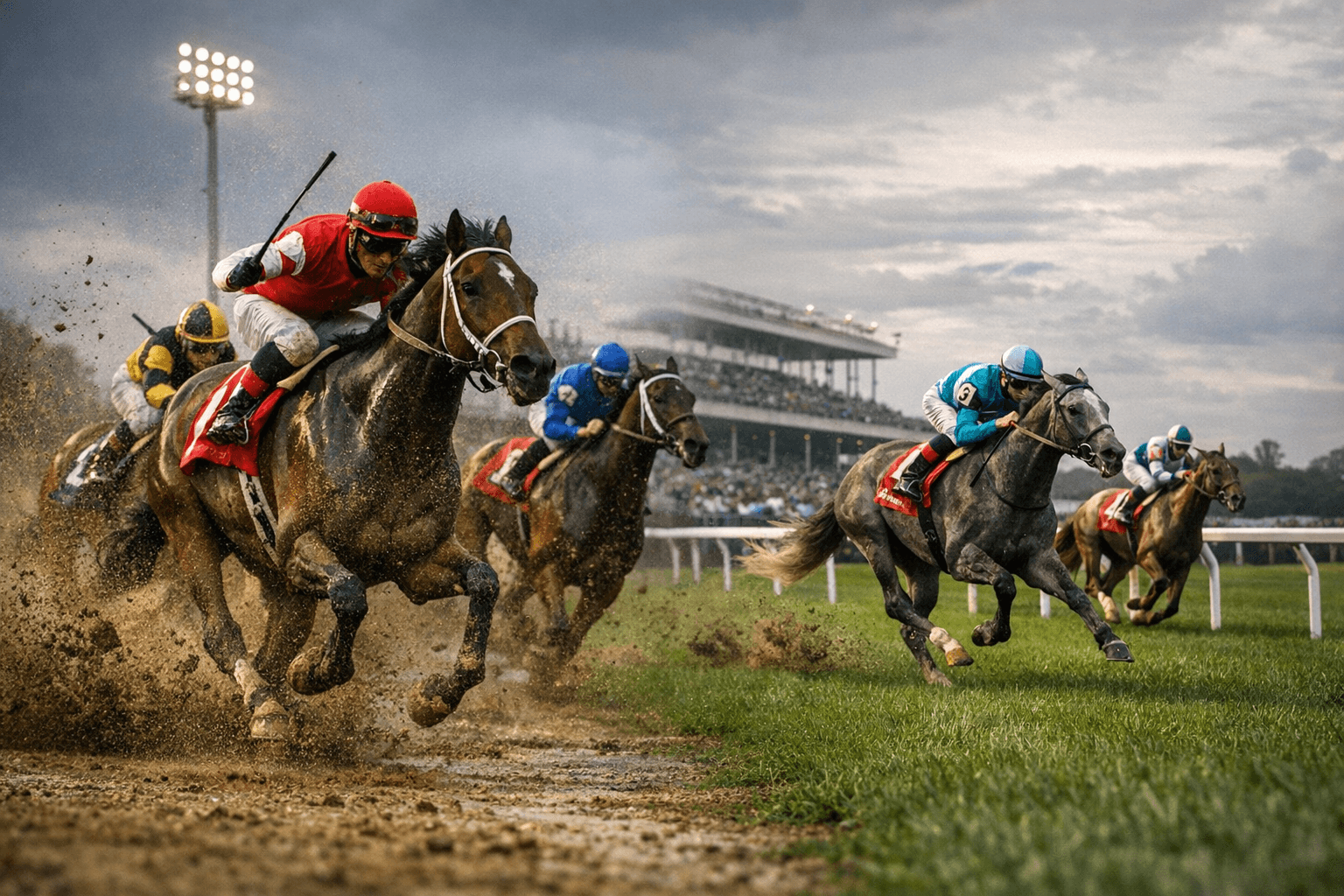
The $100,000 Henry S. Clark Stakes provided a contrasting feature on the same day, run on turf and offering older horses a midwinter opportunity to stake a claim for spring black-type. As a namesake event, the Clark carries both competitive weight and historic resonance, tying contemporary turf performers to a long lineage of east-coast training excellence.
10. Signator, turf conversion and a half-length triumph
Signator, a “dappled gray 5-year-old,” “avoided traffic congestion early and persevered late” to win the Henry S. Clark by a half-length over Mischievous Angel, with Fulmineo third and favored Neat fourth. The line “After a dozen respectable races on dirt, Signator has found splendor on the grass” points to a strategic surface switch that has paid off, illustrating how connections extract value by matching horses to surfaces and how turf/surface versatility can boost a horse’s marketability and breeding profile.
11. Henry S. Clark, the man behind the stakes name and his legacy
Henry S. Clark (1904-1999) “trained celebrated stakes winners across seven decades and entered the National Racing Hall of Fame in 1982,” and is identified as a grandson of Preakness-winning trainer William Jennings Jr. The notes list his top runners, Thinking Cap, Linkage, Tempted, Obeah, Endine and Light Hearted, reminding readers that stakes names are cultural capital: they tether present-day competition to pedigreed achievement and provide tracks narrative hooks for marketing and donor relations.
12. Preakness Preview Day Handicapping Challenge, a fan engagement capper
Laurel closed the card with the Preakness Preview Day Handicapping Challenge finale, an event designed to turn casual viewers into invested participants and to animate the betting pools. These contests are increasingly important promotional tools; they cultivate local handicapping communities and create content, like surprise winners, that tracks use to attract media attention and broader audience interest.
13. Joanne Zielinski’s dramatic handicapping upset over Brendan Fay
“Well behind the leader and down to her last bet, Joanne Zielinski made a colossal score on the Laurel Park finale today to wrest the Preakness Preview Day Handicapping Challenge from front-running Brendan Fay.” That verbatim line encapsulates an upset narrative that benefits the track’s publicity: an amateur or late-surging entrant toppling a front-runner creates compelling copy, highlights the accessibility of handicapping contests, and fuels conversation about skill versus luck in betting.
14. Program artifacts, weather and media packaging that shape perception
The day’s program carried artifacts such as the header “143rd PREAKNESS STAKES,” navigation snippets like “# News,” “Home,” “Connect with Laurel Park,” and the simple weather note “Overcast, fog.” Those small details matter, themed branding, site navigation, and even weather descriptors affect how fans consume content, how bettors interpret track bias, and how racetracks package their days for simulcast partners and sponsors, underlining the intersection of presentation, perception and commercial return on stakes days.
This article was produced by Prism’s automated news system from verified source data, official records, and press releases, then run through automated quality and moderation checks before publishing. The system is built and supervised by the people who set the standards it runs under. Read our full AI policy.
Did this article answer your question?