HIWU 2025 Report Shows Surge in Testing, Barn Searches Across Racing
Per-race testing climbed in 2025 even as the U.S. race schedule shrank, with HIWU logging more barn searches and out-of-competition samples than the prior year.
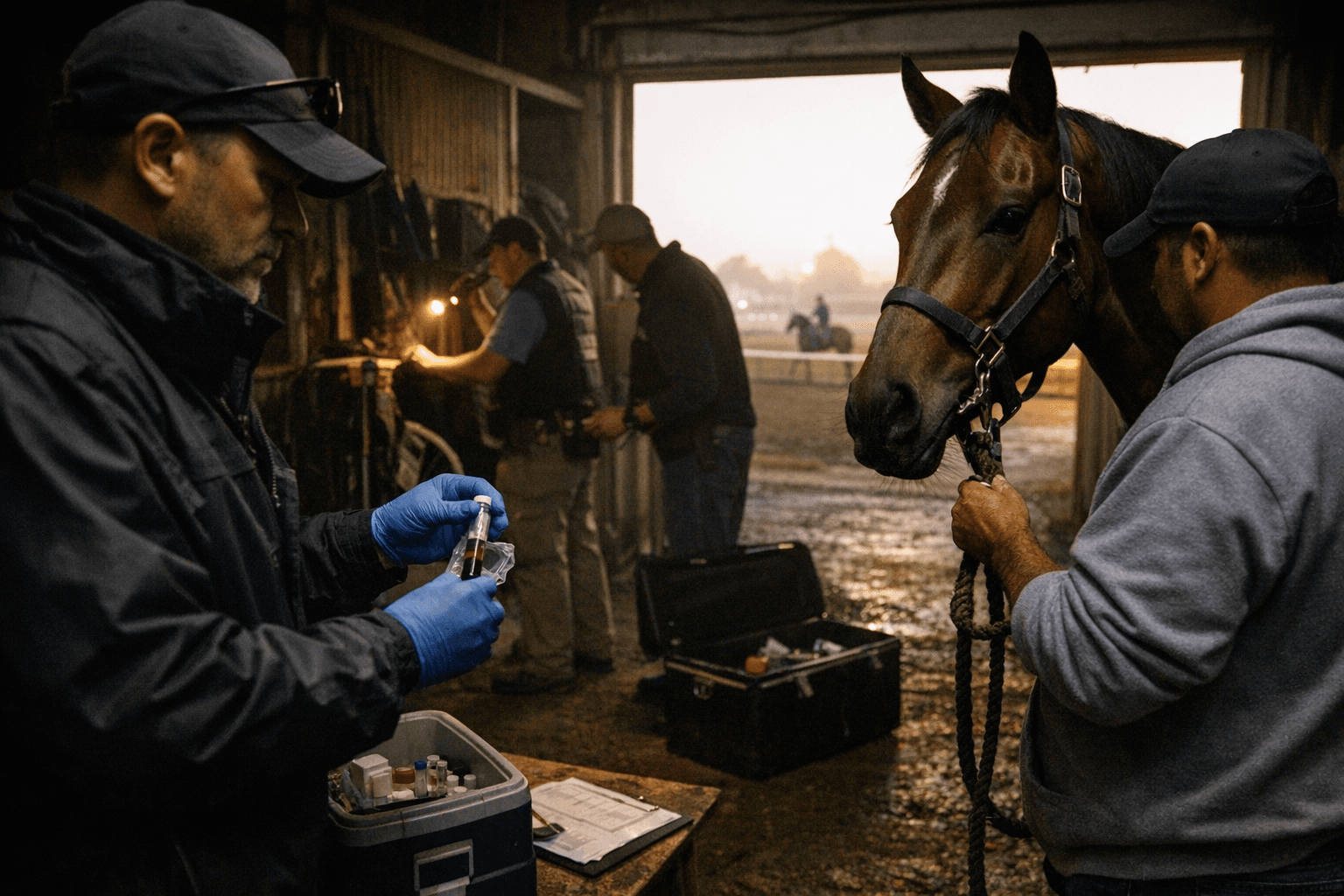
Ben Mosier's enforcement operation crossed a telling threshold in 2025: HIWU ran more tests per individual race than it had the year before, even as the total number of American Thoroughbred races declined. When testing density rises on a contracting schedule, regulators are not simply matching race-day volume; they are choosing to concentrate enforcement resources.
The Horseracing Integrity and Welfare Unit's 2025 annual report, released March 31, documented growth across nearly every enforcement metric relative to 2024. Barn searches and out-of-competition testing volume both increased year-over-year. The trajectory has been consistent since the ADMC program launched in 2023. Between that inaugural year and 2024, barn searches jumped from 141 at 38 tracks to 404 at 51 tracks, with 118 products recovered and submitted to laboratories and 11 possession cases filed. The 2025 figures built further on that base.
"HIWU's 2025 Annual Report reflects our team's continued success in administering HISA's ADMC Program," said Mosier, the unit's executive director. "With our role in the Thoroughbred industry now established, we have been able to invest in meaningful projects that will ensure a professional, effective, and fair program that will benefit racing participants for years to come."
Those projects included three infrastructure additions in 2025 designed to lock in enforcement consistency for years beyond the current report. HIWU launched the HISA Equine Analytical Laboratory accreditation program, known as HEAL, to standardize laboratory quality across HISA-covered jurisdictions. Sample collection equipment was standardized nationwide. And a centralized Learning Management System went live to handle the training and recertification of sample collection personnel, targeting the procedural variability that had allowed inconsistency to persist across state lines.
For trainers at HISA-covered tracks, the practical consequence of a higher tests-per-race figure is direct: the probability of being tested on any given race day is greater than it was a year ago. Out-of-competition sampling adds a second pressure point that operates entirely outside the race calendar, reaching horses in their home barns. Medication logs, veterinary oversight documentation, and clear protocols for periods between races are no longer precautionary best practices; they are the operational baseline.
The 2025 report also noted an expansion of HIWU's educational outreach, including updated guidance for covered persons on regulated substances and threshold levels. That pairing of heavier enforcement with broader education reflects the ADMC program's stated aim: reducing inadvertent violations, not simply catching them. The open question, as testing volume continues to grow, is whether the appeals pipeline and results-management timelines are scaling at the same pace, a friction point that will only become more visible as the program matures.
This article was produced by Prism’s automated news system from verified source data, official records, and press releases, then run through automated quality and moderation checks before publishing. The system is built and supervised by the people who set the standards it runs under. Read our full AI policy.
Did this article answer your question?