Iltis bloodline shapes generations from Florida to Formidable Man
A $5,000 claim became a Florida breeding engine, and Formidable Man now gives that line a fresh Grade I payoff. The family still shapes stakes racing in America and Europe.
From a cheap claim to a lasting racing engine
Iltis turned a $5,000 claim into one of the most durable bloodlines in modern racing, and Formidable Man is the latest stakes horse to prove the family still matters. What began with a mare who bled badly in a race has become a story about how value, patience, and breeding choices can echo across generations, continents, and surfaces.
The appeal here is not nostalgia for its own sake. It is the reminder that the racing business still runs on hidden upside, where a modest purchase can become a foundation for future Grade I talent and a lasting commercial pedigree.
How Florida became part of the story
The turning point came when Iltis entered the breeding program at Ocala Stud, where Rough’n Tumble and the O’Farrell family helped put Florida on the Thoroughbred map. Thoroughbred Heritage identifies Rough’n Tumble as the foundation sire of the Florida breeding industry, and that context gives the line its real weight: this was not just one family producing one good horse, but an entire regional program finding its identity through a mare and her descendants.
That Florida connection matters because it shows how breeding influence travels through infrastructure as much as genetics. Ocala Stud was not just a farm in the background. It was the setting where a claimed mare was transformed into a broodmare whose offspring would shape championship results and, eventually, modern stakes form.
My Dear Girl made the first leap
Rough’n Tumble’s first Florida-bred crop included My Dear Girl, Iltis’s daughter, and she quickly validated the family’s promise by becoming the Florida champion 2-year-old filly of 1959. That title was more than a line in a pedigree page. It marked the point where the family stopped being a promising breeding experiment and became a proven source of elite racehorses.
My Dear Girl then extended the value of the line in the breeding shed, producing seven stakes winners. Among them were In Reality, Return to Reality, Superbity, and Gentle Touch, names that show how one mare can seed an entire branch of the breed. Thoroughbred Heritage’s account of Mrs. Frances Genter owning My Dear Girl adds another layer to the story, because it frames the mare not just as a runner, but as a broodmare whose influence could be measured across multiple stakes performers.
Why the broodmare side still drives the market
This is where the article stops being a pedigree lesson and becomes a business story. Broodmares like My Dear Girl and Iltis create compounding value, because their daughters and granddaughters can keep generating runners long after the original race records fade. That is the real modern payoff for breeders and buyers: a family line that keeps resurfacing in graded company can justify investment across years, not just one sale or one foal crop.
Treasure Chest shows that same principle from a different angle. BloodHorse notes that she was the third of Iltis’s daughters by Rough’n Tumble and that, while she was not in My Dear Girl’s class, she was still highly useful in her own right. Her record of 10 wins from 49 starts and two stakes victories is exactly the kind of résumê that keeps a family commercially alive, because useful runners can still become valuable producers.
Treasure Chest carried the family beyond Florida
Treasure Chest also demonstrates how bloodlines do not stay locked inside one region. The notes point to her becoming a key ancestor in Europe, which is a reminder that breeding influence is global even when it starts in one state and one stable. A family that begins with a Florida claim can end up shaping pedigrees far from Ocala, proving that the market for good broodmare families is international and long memory often matters more than fashionable trend lines.
That reach is one reason this family remains relevant to readers who track more than immediate results. The same female line that helped shape Florida breeding also connects to broader elite stock, showing how one mare’s descendants can feed both American and European racing cultures.
The line keeps finding current stakes winners
The family’s modern relevance does not stop with the classic names. The notes tie the branch to My Miss Mo, a recent Black-Eyed Susan winner, which is exactly the sort of present-tense hook that keeps old bloodlines alive in the public imagination. A pedigree only stays important if it keeps producing horses people are betting on, talking about, and sending into stakes company.
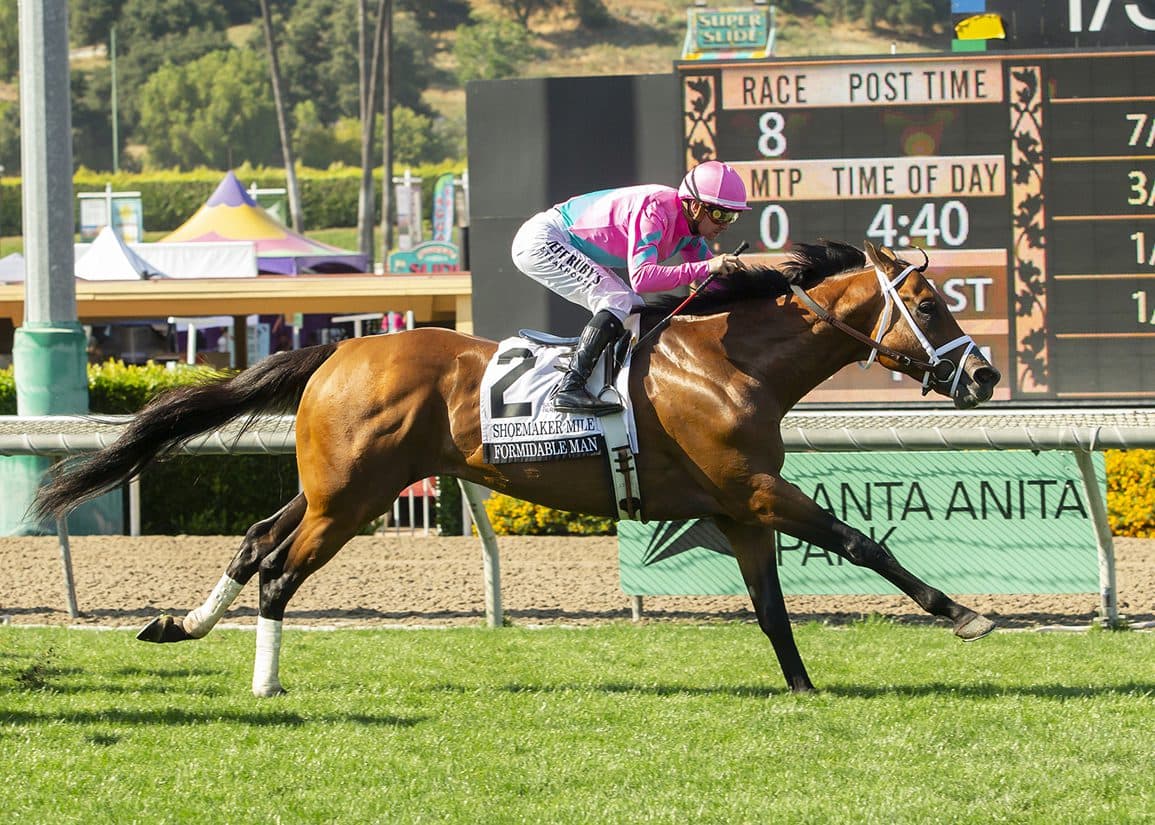
That is why Formidable Man is such a clean modern endpoint for this story. He won the GI Shoemaker Mile at Santa Anita Park on May 25, 2026, and BloodHorse now lists him as a Grade I winner at ages 3, 4, and 5. That kind of age-spanning success matters because it shows longevity as well as class, and longevity is one of the rarest and most bankable traits in the sport.
Formidable Man gives the pedigree a fresh payoff
Formidable Man’s recent form gives the family its sharpest contemporary relevance. In 2025, he won the GII Eddie Read Stakes and became five-for-five at Del Mar, a sign that he was not merely talented but also highly effective at a specific top-level venue. BloodHorse’s stakes record page pegs his lifetime mark at 15 starts with 8 wins, 2 seconds, no thirds, and earnings of more than $1.15 million, numbers that place him firmly in the business class of active racehorses.
Those results matter beyond one horse because they show how a deep female line can support a horse with multiple conditions for success. A family that keeps producing horses with stamina, class, and adaptability gives trainers and owners options across racing calendars and surfaces, and that flexibility has real economic value.
Why this family still matters now
Chris McGrath’s point in tracing Iltis through Treasure Chest to Formidable Man is that breeding is not a museum piece. It is a living system in which a mare claimed for a small price can end up shaping high-end racing decades later. That is the enduring lesson of this family: value can be created from humble beginnings, and the strongest bloodlines are the ones that keep producing proof in the present tense.
For Florida breeding, for international pedigrees, and for the current stakes scene, the Iltis line remains a working asset. Formidable Man is not just another graded winner sitting atop a page of names. He is the latest confirmation that some families keep returning to the center of the sport, because the best breeding decisions never really stop paying out.
This article was produced by Prism’s automated news system from verified source data, official records, and press releases, then run through automated quality and moderation checks before publishing. The system is built and supervised by the people who set the standards it runs under. Read our full AI policy.
Did this article answer your question?