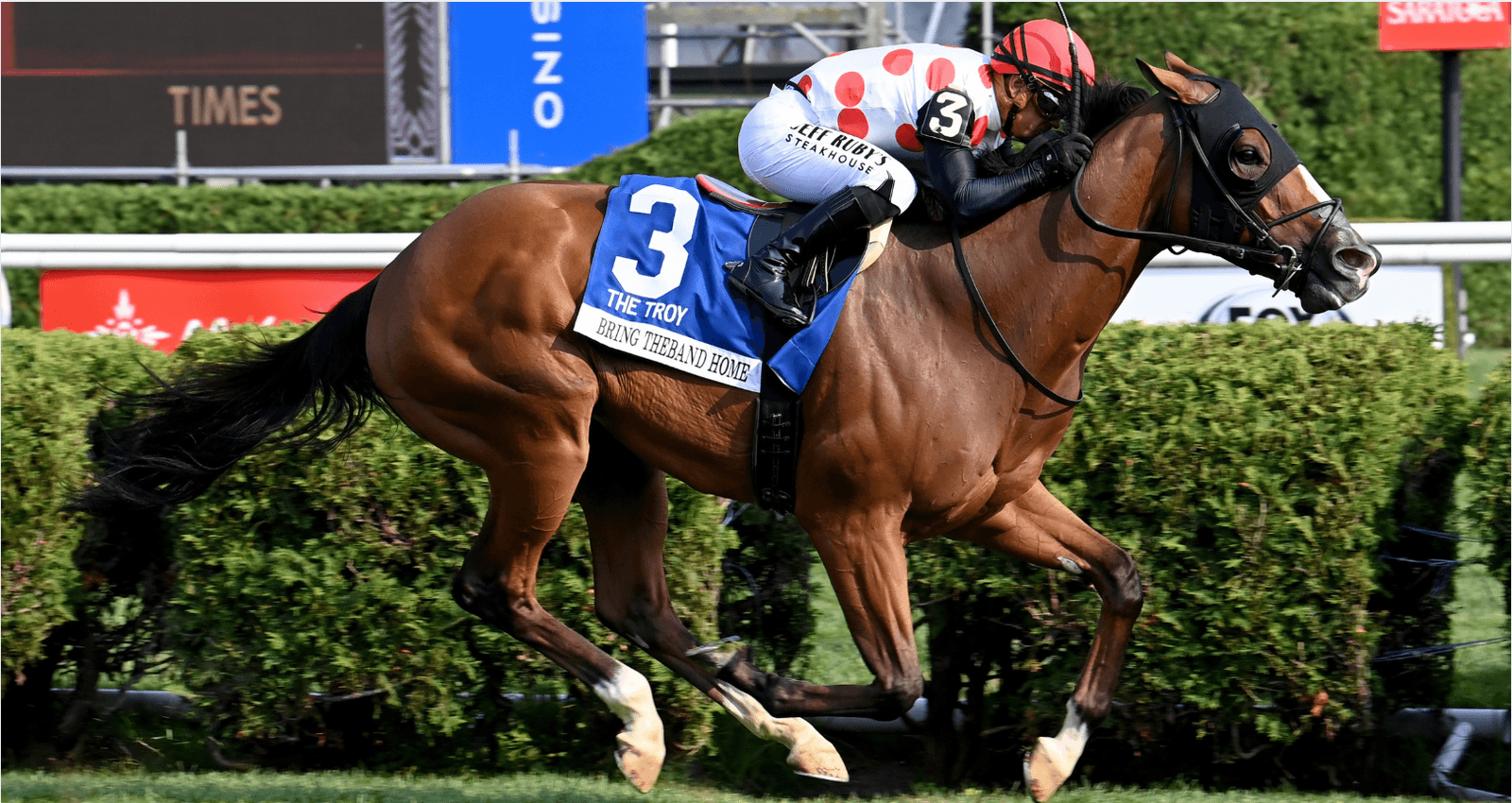
in-race wagering could help horse racing stay competitive
Horse racing’s best answer to the live-betting boom may be a bet that moves with the race itself. New Jersey and Colorado show how it can add revenue and keep tracks visible.

Why in-race wagering matters
Horse racing’s strongest answer to the live-betting era is simple: give bettors something to do while the race is still unfolding. In-race wagering lets fans bet at different points during a race, which mirrors the in-game action that already drives attention in other sports and keeps screens, phones and wallets active longer.
That matters because the sport is not just chasing novelty, it is fighting for relevance. The product itself still has speed, form and drama, but the way it is sold has often been locked in an older pari-mutuel model. If racing can turn one race into several betting moments, tracks gain a new way to monetize attention instead of waiting for a single pre-race wager.
Fixed odds is the engine behind the format
In-race wagering is closely tied to fixed-odds betting, the structure more familiar to customers in Europe than in the United States. That difference is central to the business debate, because fixed odds make it easier to present racing in the same language that sports bettors already understand from football, basketball and other live markets.
The challenge in the U.S. has been slower adoption. Racing content from the United States is already part of the betting menu for European customers, which makes the current gap feel less like a problem with the sport and more like a problem with packaging and distribution. The race is still the same race; the question is whether the industry can sell it in a way that feels modern, intuitive and legal in more places.
New Jersey built the first U.S. template
New Jersey became the first U.S. state to legalize fixed-odds horse racing wagering, and Monmouth Park set the early standard by announcing that fixed odds would begin on opening day, May 7, 2022. That was a landmark moment because it showed the format could exist alongside traditional wagering rather than replacing it.
The next step came in May 2023, when MonmouthBets launched as the first legal and regulated mobile application for fixed-odds horse racing in the United States. That mobile piece matters just as much as the betting format itself, because sportsbook-style access is where many casual bettors already live. Monmouth’s rollout also established a precedent for offering fixed odds alongside pari-mutuel wagering, and it was initially framed as a path toward broader availability online through New Jersey licensed sportsbooks.
Colorado showed the model can work on a sportsbook platform
Colorado became the second state to offer fixed-odds betting on horse races on February 21, 2024, and the details of that launch are important. The product arrived through bet365 and Sports Information Services on a licensed sportsbook platform, which placed horse racing directly beside the other sports that sportsbook customers already browse and bet.
That is exactly why Colorado’s launch resonated across the industry. Stakeholders described fixed odds as a way to put horse racing “on equal footing with other sports,” attract a wider range of casual bettors and create a new revenue stream for racetrack partners. The state’s rollout also showed that the future may not depend on track windows alone, because a mainstream sportsbook app can introduce racing to users who may never have stepped inside a grandstand.
Colorado’s involvement also reinforced the role of regulators and local racing interests, including the Colorado Division of Gaming, Bally’s Arapahoe Park and the broader racing community around Aurora, Colorado. The point was not just permission to bet differently; it was proof that racing can be distributed in the same digital channels as other live sports.
Where the money comes from
The revenue case for in-race wagering is broader than a new bet type on a racing card. More wagering windows can mean more turnover on the same event, more opportunities to engage casual customers and more chances for tracks and content partners to keep a race in front of bettors who are already shopping live markets.
That is why fixed odds is not just a technical feature. It is a business model question. If a track can hold a bettor’s attention before the break, during the run down the backstretch and again in the final stretch, it can capture more of the attention economy that now belongs to sports betting.
The bet type also has a different audience appeal. Traditional horse players may value the familiarity of pari-mutuel pools, but fixed odds are easier for casual bettors to read, especially those coming from sportsbooks. That makes the format a potential bridge to a new fan base rather than a simple add-on for existing customers.
Why the discussion keeps resurfacing
The industry conversation around fixed odds has not faded. BloodHorse reported in August 2024 that it was a major topic at The Racing and Gaming Conference at Saratoga, which underscores how central the issue has become to racing’s long-term survival strategy. The debate is no longer whether betting behavior has changed, but whether racing can change quickly enough to matter.
That conversation has been carried by industry figures including Frank Angst, Michele Fischer, Shannon Ruston, Kim Oliver, Dennis Drazin, Rajat Shah, Matt Hegarty, Chris Murphy and Steve Bittenbender, all orbiting the same core question: how does racing stay visible in a market built around constant engagement? The answer increasingly points toward fixed odds, sportsbook integration and live wagering moments that keep racing from being treated like a niche holdover.
The larger strategic choice
This is why in-race wagering feels bigger than a technical experiment. It is racing’s shot at staying in the live-betting conversation instead of being left behind by consumers who now expect action on every possession, pitch or play. Europe has already shown that racing can live comfortably inside that world, and the U.S. examples in New Jersey and Colorado show the path is real.
For tracks, the upside is straightforward: more ways to sell the same event, more reasons for bettors to stay engaged and more opportunities to convert attention into revenue. The question is not whether in-race wagering is flashy enough to matter. It is whether racing wants to build a future where every race can behave like a live betting product before the market moves on without it.
This article was produced by Prism’s automated news system from verified source data, official records, and press releases, then run through automated quality and moderation checks before publishing. The system is built and supervised by the people who set the standards it runs under. Read our full AI policy.
Did this article answer your question?