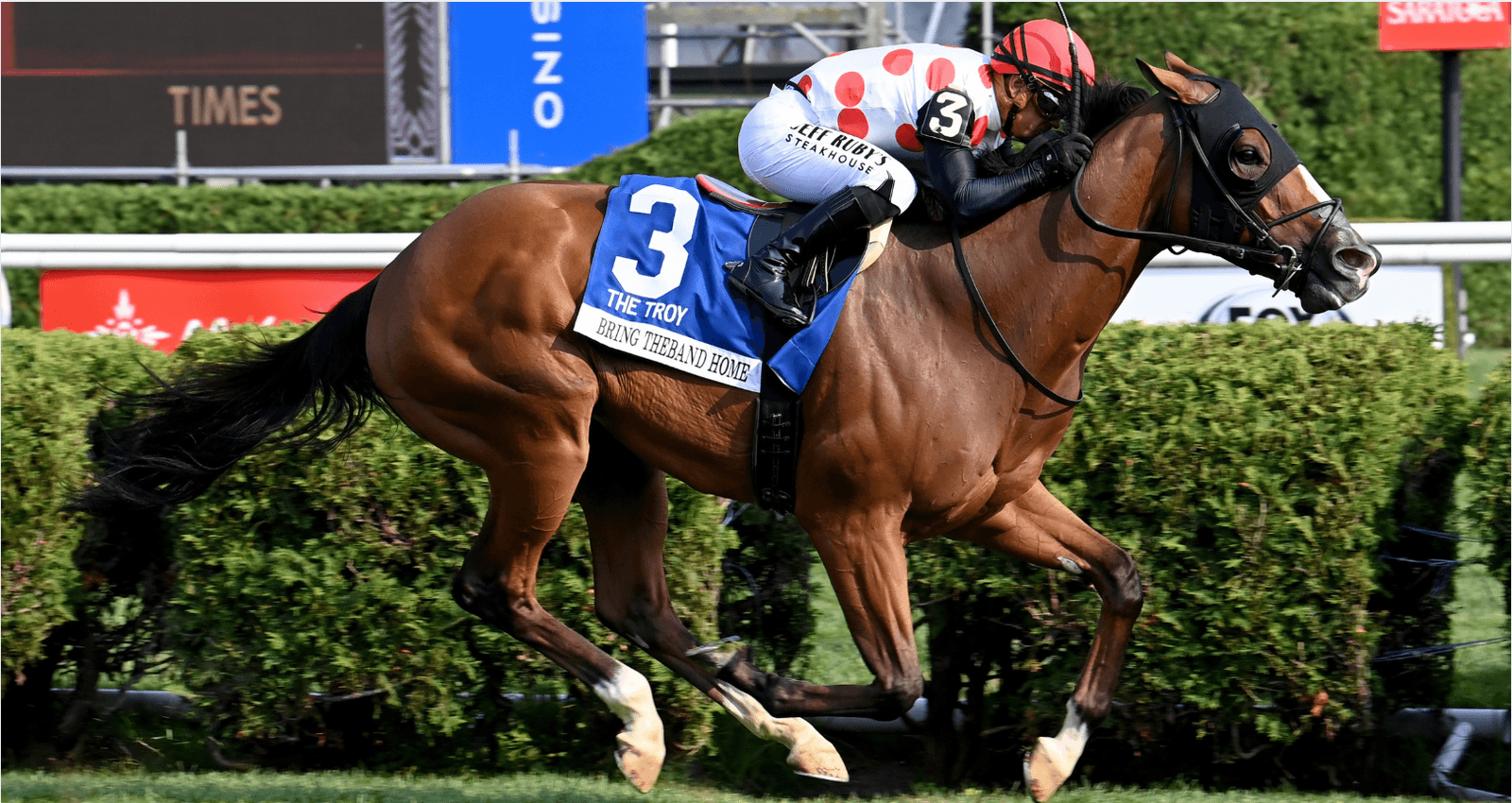
Japan’s Derby hopes split between Danon Bourbon and Wonder Dean
Japan’s Derby run now comes in two very different pedigrees: Danon Bourbon looks built for American dirt, while Wonder Dean carries a broader, less familiar bloodline map.
Two roads to Louisville
Japan’s Derby picture is no longer a novelty act. It is a two-track argument about how elite bloodlines travel, and Danon Bourbon and Wonder Dean are the cleanest examples yet. One is a Kentucky-bred colt with a pedigree that reads like an American dirt manual. The other is a Japanese-bred runner whose family tree is deeper in the modern Japanese classic system, with enough dirt on the page to make him dangerous anywhere.
That contrast matters because the Kentucky Derby is still a brutal test of surface, distance, maturity, and noise. A horse can have talent and still get exposed at Churchill Downs if the pedigree does not match the task. Japan’s best hope is not coming from one formula. It is coming from two, and that is exactly why the rest of the sport has to pay attention.
Danon Bourbon looks like the American dirt answer
Danon Bourbon earned Japan’s automatic Derby berth the hard way, stretching his record to 3-for-3 with a 3 1/2-length win over Don Erectus in the Fukuryu Stakes at Nakayama on March 28, 2026. He covered 1 1/8 miles on a muddy track in 1:50.9, a time that underlines both pace and stamina, and he did it with enough authority to make the race look like a finishing step rather than a question mark.
The pedigree is the key. Danon Bourbon is by Maxfield, a Grade 1 winner who captured the Breeders’ Futurity and Clark Stakes and ran third in the Santa Anita Handicap at 1 1/4 miles. That is the kind of sire line American handicappers instantly recognize: quality at two, quality at a mile and an eighth, and enough staying power to be taken seriously when the distance stretches again. If you want the simplest read on Danon Bourbon, it is this: he looks like a dirt colt with classic-range ambitions and a profile that should translate to Churchill better than most foreign shippers.
That does not mean he is a finished product, but it does mean the profile is easy to trust. He has already handled mud, handled 1 1/8 miles, and handled pressure well enough to win decisively. In Derby terms, that is not nothing. It is the kind of profile that makes a horse feel less like a travel story and more like a legitimate contender.
Wonder Dean brings a different kind of pedigree threat
Wonder Dean reached the Derby trail through a very different door. He won the UAE Derby (G2) at Meydan on March 28, 2026, by 2 1/2 lengths over Six Speed after finishing fourth in the Saudi Derby (G3). That sequence matters. It says he can travel, absorb a setback, and come back with a stronger performance when the target is real. He also earned 100 Derby points in Dubai, enough to stamp his ticket in the global points race.
Kentucky Derby officials list him as a dark bay colt born March 25, 2023, trained by Daisuke Takayanagi for owner-breeder Yoshinari Yamamoto, with Oisin Murphy aboard. His listed earnings are $725,172. That is a proper international résumé already, and it comes before the Derby gate even opens.
The pedigree is where the real intrigue sits. TwinSpires identifies Wonder Dean as a son of Dee Majesty, whose signature win was the Satsuki Sho, Japan’s 2000 Guineas, and whose grandsire is Deep Impact. That places him squarely inside the modern Japanese classic engine, a line that has produced elite horses across surfaces and distances. His dam, Wonder Siang Praw, won on dirt and muddy going, which gives the page a practical layer that Kentucky readers should not ignore. The bloodline does not scream “American dirt” the way Danon Bourbon’s does, but it does suggest a horse with enough wet-track and dirt influence to be more than a turf-bred stylist.
That is what makes Wonder Dean such an interesting Derby horse. He is not the obvious dirt export. He is the horse whose pedigree asks you to think harder about how Japanese breeding has broadened. Deep Impact lines have usually been treated as an expression of Japanese class and efficiency; add a dirt- and mud-winning dam, and suddenly the profile becomes less easy to pigeonhole. That kind of versatility is how a horse becomes dangerous in a race like the Derby, where chaos is part of the contract.
Japan’s road to the Derby is no longer an exception
The larger story is not just that Japan has two contenders. It is that Japan’s breeding system now produces contenders through multiple genetic routes. That is a sign of maturity, not coincidence. The Japan Road to the Kentucky Derby awards one starting berth to the top finisher, and if that horse declines, the invite can pass down the standings. That structure has turned the prep path into a serious export pipeline rather than a one-off invitation.
The historical context makes the current moment harder to dismiss. Cesario’s 2005 win in the American Oaks at Hollywood Park was widely described as the first Japanese-bred horse to win a Grade I stakes race in the United States, and it was a statement that Japanese racing could land a blow on American soil. Since then, Loves Only You and Marche Lorraine have added Breeders’ Cup victories to the record, and Forever Young has pushed the bar even higher.
Forever Young’s Breeders’ Cup Classic win helped earn him the 2025 Eclipse Award as Champion Older Dirt Male, making him only the second Japanese-based horse to receive an Eclipse Award. He also came within noses of the 2024 Kentucky Derby win, finishing just behind Mystik Dan and Sierra Leone. That near-miss matters because it proves the ceiling is not theoretical anymore. Japan is not simply shipping over curiosity horses. It is sending runners that can win at the top level and nearly win the biggest race in America.
What the pedigree split tells you about Derby handicapping
This is where the practical value lives. Danon Bourbon is the cleaner American dirt read: Maxfield on top, mud handled, distance already proven at 1 1/8 miles, and a profile that points toward Churchill Downs without a lot of translation. Wonder Dean is the more layered case: classic Japanese sire line, dirt-competent dam, international seasoning in Saudi Arabia and Dubai, and a resume that suggests adaptability rather than a single-track identity.
If you are mapping the Derby through pedigree, the contrast is useful. Danon Bourbon looks like a horse built to carry speed over a classic dirt trip. Wonder Dean looks like the kind of horse whose deeper bloodline context may matter more than the label on the page, especially if the Derby pace gets lively and the track asks for both stamina and balance. One horse offers familiarity. The other offers range.
That is why Japan’s Derby hopes matter beyond one spring race in Louisville. The country’s influence is now showing up through different bloodline models, and both are credible. One path looks American enough to fit right in. The other looks distinct enough to keep changing how the rest of the sport thinks about what a Derby horse can be.
This article was produced by Prism’s automated news system from verified source data, official records, and press releases, then run through automated quality and moderation checks before publishing. The system is built and supervised by the people who set the standards it runs under. Read our full AI policy.
Did this article answer your question?