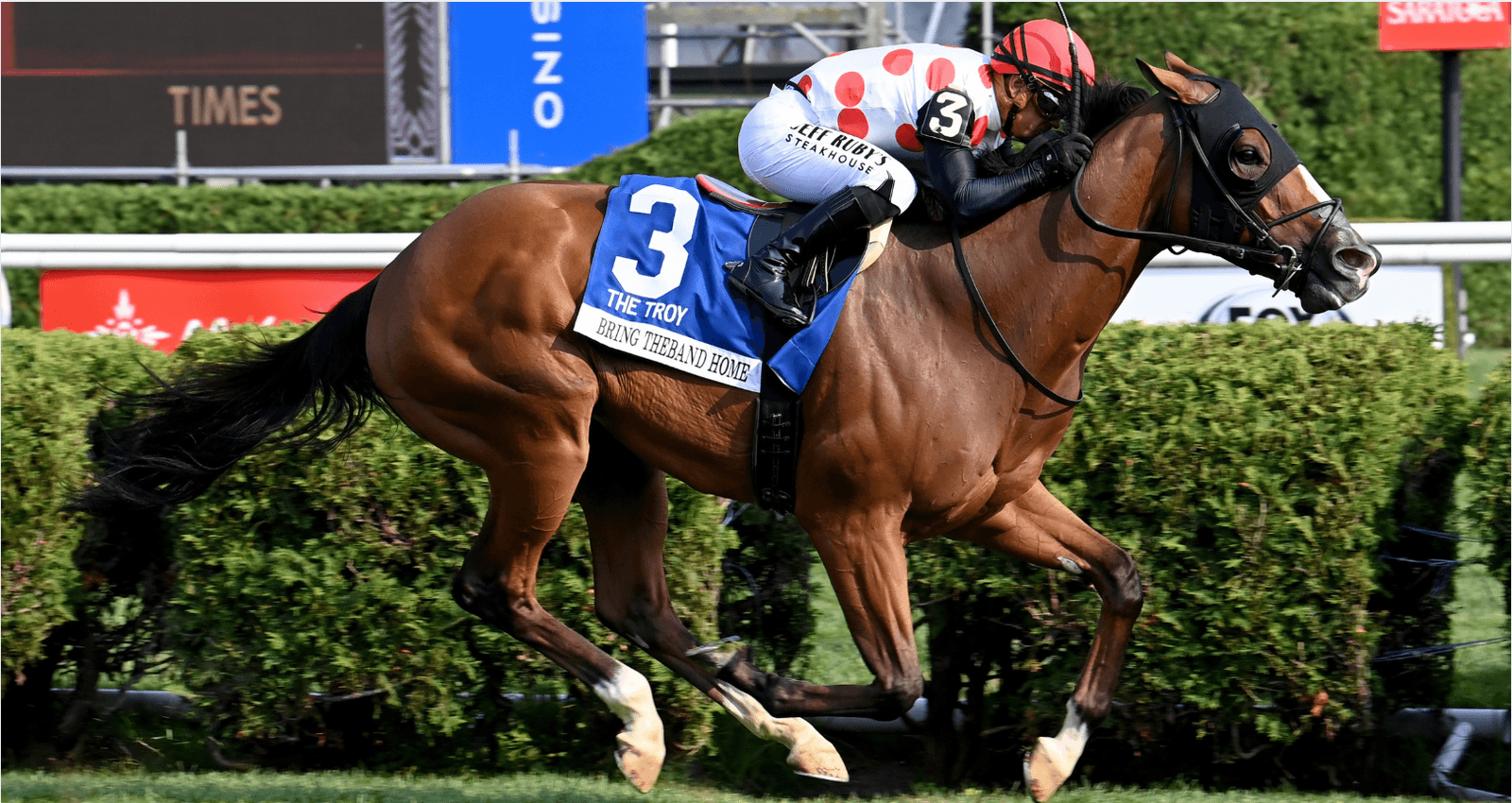
Joe Nevills Breaks Down Turf Paradise's Two-Year Lease And Future Outlook
Gary Hartunian's Skyfall 7 LLC has doubled attendance and lifted on-track handle 24% at Turf Paradise — but bloodstock editor Joe Nevills asks whether a two-year lease is enough to secure the track's future.
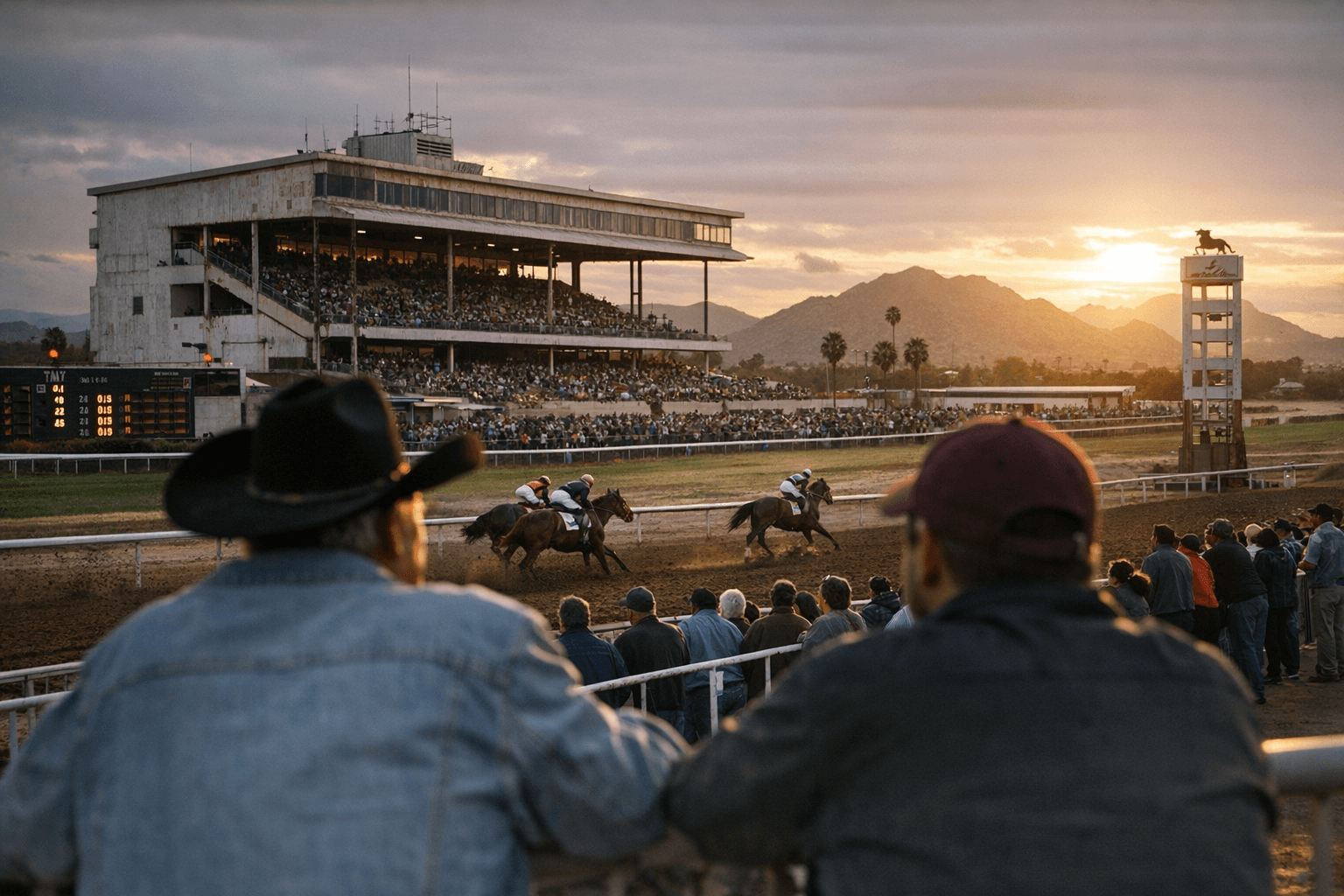
Turf Paradise in Phoenix, Arizona is now operating under a two-year lease signed by California horse owner and real estate developer Gary Hartunian's Skyfall 7 LLC with longtime track owner Jerry Simms. The deal covers not just the 70-year-old facility itself but also management of its 38 off-track betting facilities located throughout the state. The arrangement puts Paulick Report bloodstock editor Joe Nevills in a familiar position: weighing a story where the headline numbers look promising but the structural questions remain stubbornly open. In the latest installment of the Paulick Report's "Ask Joe Anything" video series, Nevills turns his lens on whether the activity under Hartunian's watch adds up to a durable future for one of the Southwest's most historically significant racetracks.
A Track in Transition
Turf Paradise opened its doors on January 7, 1956, making Valley history as the first organized professional sports franchise in Arizona. Seven decades later, the track is entering what sources have called "a time of transition," with the management change representing new ownership for the first time in 25 years, with Hartunian taking over for Jerry Simms, who had owned Turf Paradise since 2000.
During its monthly meeting on December 15, the Arizona Department of Gaming's Racing Commission granted conditional approval for Hartunian's Skyfall 7 LLC to lease Turf Paradise, as well as its network of off-track betting facilities. Hartunian and Simms signed the underlying agreement on August 29, 2025. The agreement covers a two-year lease of the property with a purchase agreement for all equipment necessary to run a race meet, and it can be extended on a year-by-year basis for up to three additional years.
What Hartunian and Skyfall 7 Have Done
Since Hartunian took the reins, Turf Paradise has undergone a change in management, a social media rebrand, and efforts to improve the on-track experience. The early returns on those efforts are notable. Skyfall 7 LLC has invested heavily in renovations and operations, with attendance doubling and on-track handle rising 24%.
Hartunian and Tom Ludt, hired as the track's new general manager, inherited a racetrack that needed repairs to both the physical plant and its reputation. Ludt, a veteran industry executive who formerly served as president of Santa Anita in California, has overseen multi-million-dollar improvements to the clubhouse and grandstand, landscaping, and more. Hartunian, according to Ludt, has "an amazing focus on visuals," which led to landscaping improvements, cleaning, fresh paint, parking lot repaving, and other details.
Among the first new features fans encountered was a VIP player's lounge on the fourth floor, offering a premium atmosphere and a private outdoor patio with sweeping views of the racetrack. The new regime is also looking to build on last year's results, when Turf Paradise posted the lowest death rate in its history: one horse death on the main track and three on the turf track, for a rate of 0.73 per 1,000 races in 2025, lower than the 1.11 national average.
The Question Nevills Is Asking
The Paulick Report's "Ask Joe Anything" series is built on a straightforward premise: bloodstock editor Joe Nevills takes questions submitted by Patreon subscribers and followers on Paulick Report's social media channels and gives his honest read. As the series' own framing notes, "Does he always have an answer (or at least a good answer)? No. Does he always try to make it entertaining? Yes."
In this episode, the central question Nevills is wrestling with is whether the venue's long-term health is actually secure under a two-year lease structure. It is a legitimate concern. Like Southern California tracks, Turf Paradise operates without the benefit of slots, gaming revenue, or state subsidies. General manager Ludt has acknowledged the need to increase purses and is aware of the influence Native American tribes have on state officials in Arizona, as well as California, making gaming legislation to benefit horse racing unlikely.
There is also the longer game Hartunian is already scoping out. Once all applications are approved, Ludt said, Hartunian will begin looking for property in the Phoenix area to build a new racetrack. Hartunian is president and CEO of Landmark LA Capital Group, which builds and manages multi-family residential buildings in Southern California. Turf Paradise is already benefiting from an exodus of horses from Northern California with tracks there closed. If Santa Anita were to close, Turf Paradise could help fill many of the winter racing dates lost in Southern California and form a circuit with Del Mar, which races in the summer and fall out of a state-owned facility. Whether a two-year lease gives Hartunian enough runway to realize that kind of regional positioning is precisely the question Nevills is pressing.
Other Topics Covered in the Episode
The Turf Paradise segment is the headline question of the installment, but the "Ask Joe Anything" format covers ground well beyond any single track. Among the other questions Nevills addresses in this episode:
- What is the horse racing industry doing to attract the under-40 crowd? Fan development is one of the most persistent structural challenges across American horse racing, and Ludt himself has noted the opportunity in the Phoenix market, where the greater Phoenix area has a population approaching six million.
- Is starting with a different breed a good path into racehorse ownership? This question speaks directly to the barriers new owners face when entering the sport, and whether Quarter Horse or other non-Thoroughbred racing offers a more accessible on-ramp.
- Why are some trainers still slow to accept StrideSAFE technology? StrideSAFE uses sensors to analyze the gait of horses in-race to identify musculoskeletal injuries and abnormalities before they lead to a serious injury, and it is the only product that can analyze a horse's stride at 40 mph. Of the 20 horses that suffered fatal musculoskeletal injuries during a major trial period, 17 had received a red rating in a race before suffering a catastrophic breakdown. Those ratings were issued in either the race immediately prior to the breakdown or two or three races back, meaning the technology detected 90% of those horses that suffered a catastrophic injury, sometimes weeks or even months in advance. Given that track record, trainer resistance to adoption remains a pointed and unresolved conversation in the industry.
How to Access the Full Episode
The version of the episode available publicly is a free excerpt of a more extensive Patreon video. Nevills's complete breakdown of Turf Paradise's prospects, along with his full answers to the ownership and StrideSAFE questions, is available to Paulick Report Insider Patreon subscribers through the full "Ask Joe Anything" video library.
The two-year lease gives Turf Paradise a defined horizon, but the investments in the physical plant, the attendance gains, and the ambition to build a new Phoenix-area track entirely suggest Hartunian is playing a longer game than the contract term implies. Whether the track's finances and Arizona's regulatory and gaming landscape allow that vision to survive past May 2027 is the question Nevills is right to keep asking.
This article was produced by Prism’s automated news system from verified source data, official records, and press releases, then run through automated quality and moderation checks before publishing. The system is built and supervised by the people who set the standards it runs under. Read our full AI policy.
Did this article answer your question?